Impacted Members/Scientists: Request a membership waiver, seek meeting support, and other resources. Learn more. For the latest public policy updates, please visit this page.




8 January 2026
AAS Names Recipients of 2026 Awards & Prizes
PRESS RELEASE
** Contact details appear below. **
The American Astronomical Society (AAS), a major international organization of professional astronomers, today announced the recipients of some of its 2026 prizes for outstanding achievements in research and education.
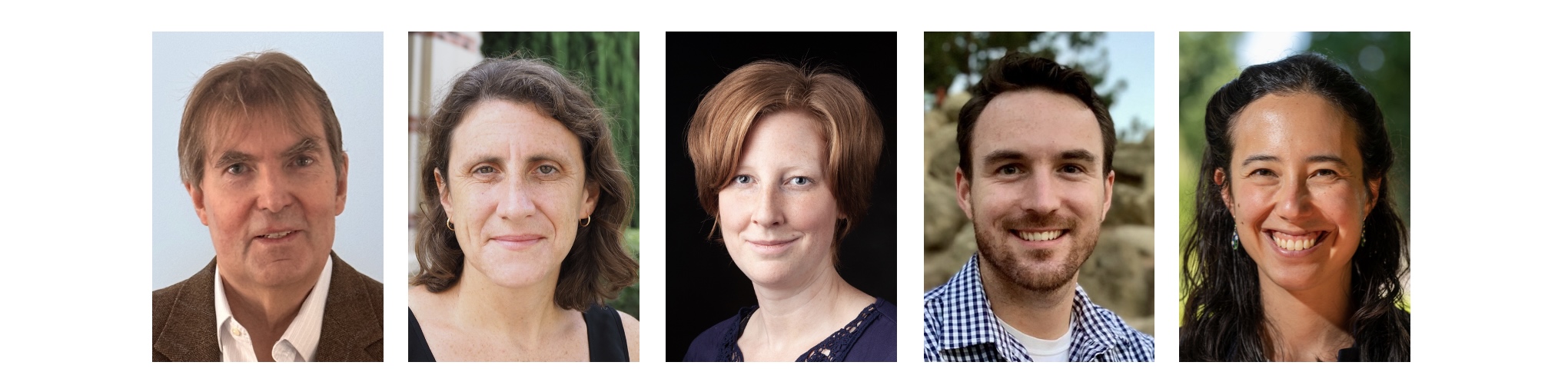
The 2026 Henry Norris Russell Lectureship, celebrating a career of eminence in astronomical research, goes to Lars Hernquist (Center for Astrophysics | Harvard & Smithsonian) for a lifetime of pioneering theories, numerical techniques, and simulations that underpin our understanding of galaxy formation, structure, and evolution, the formation of stars and supermassive black holes, and the large-scale structure of the universe; and for training and mentoring generations of early career astronomers.
The Dannie Heineman Prize for outstanding mid-career work in astrophysics is given jointly by the AAS and the American Institute of Physics. For 2026, the prize goes to Alice Shapley (University of California, Los Angeles) for landmark observational campaigns and creative techniques that redefined the forefront of the field of galaxy formation and evolution. Using large telescopes on the ground and in space, Shapley has transformed our view of the spectral energy distributions of galaxies from the ultraviolet through the optical, helping us to understand the complex physical interplay between energetic radiation, ionization of gas, atomic excitation, line emission, metallicity, and dust. Shapley’s work has provided a deeper understanding of the cycle of galactic outflows and infall, star formation histories, and fates of galaxies across the mass spectrum.
This year's Annie Jump Cannon Award in Astronomy, for outstanding research and promise for future research by a female researcher within five years after earning her PhD, goes to Mary Anne Limbach (University of Michigan) for pioneering the detection of white dwarf exoplanets and exomoons, and for developing innovative observing methods that open new windows into the diversity, evolution, and habitability of planetary systems.
The 2026 Helen B. Warner Prize is awarded for observational or theoretical research by a young astronomer to Kyle Kremer (University of California, San Diego) for innovative theoretical work illuminating the dynamics of compact objects in dense stellar systems. A number of Kremer’s results have had a major impact across several subfields of astrophysics, including globular clusters, gravitational wave sources, and neutron stars.
The 2026 Newton Lacy Pierce Prize, which is awarded for outstanding achievement in observational astronomical research based on measurements of radiation from an astronomical object, goes to Anna Ho (Cornell University) for pioneering rapid multi-wavelength investigations of extreme explosions powered by stellar death, revealing ultra-bright short-duration optical flaring associated with the new class of fast blue optical transients.
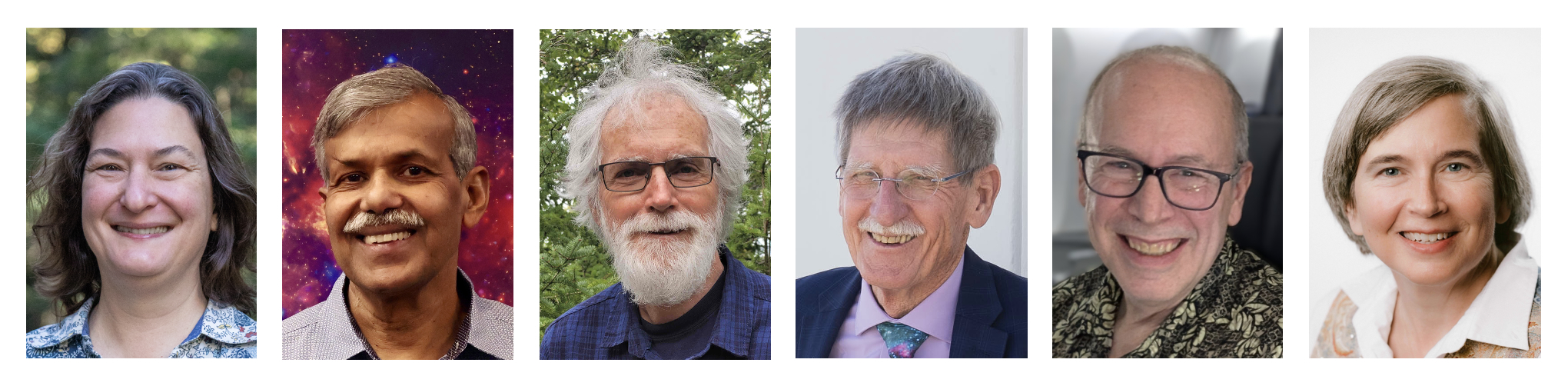
Constance Rockosi (University of California, Santa Cruz; UCO/Lick Observatory) is receiving the Joseph Weber Award for Astronomical Instrumentation for her significant contributions to spectrographs and instruments at several ground-based observatories — including the Low-Resolution Imaging Spectrograph and Keck Cosmic Web Imager at Keck Observatory, the Shane Adaptive Optics Infrared Camera at Lick Observatory, the Baryon Oscillation Spectroscopic Survey instrument for the Sloan Digital Sky Survey, and the Dark Energy Spectroscopic Instrument on the Mayall Telescope — and for her critical leadership roles on these impactful instrumentation projects over her career.
The 2026 Beatrice M. Tinsley Prize, which is awarded every two years to recognize an outstanding research contribution to astronomy or astrophysics of an exceptionally creative or innovative character, goes to Kailash Sahu (Space Telescope Science Institute) for his groundbreaking work on relativistic deflection due to microlensing as a tool to detect isolated stellar-mass black holes and to measure the masses of stars and stellar remnants.
Peter Martin (Canadian Institute for Theoretical Astrophysics (CITA), hosted by the University of Toronto) is receiving the 2026 George Van Biesbroeck Prize, which is awarded every two years to honor a living individual for long-term extraordinary or unselfish service to astronomy, often beyond the requirements of his or her paid position. Martin is recognized for his exceptional leadership in astronomy and his pivotal role in establishing the Canadian Institute for Theoretical Astrophysics and the Dunlap Institute at the University of Toronto — world-leading centers for research and training. Martin has also provided major national and international service, including as president of the Canadian Astronomical Society, and significant contributions to public outreach through initiatives such as Mystical Landscapes, CoolCosmos, and the West African International Summer School for Young Astronomers.
The AAS Education Prize recognizes outstanding contributions to the education of the public, students, and/or the next generation of professional astronomers. For 2026, the recipient is Edwin Krupp (Griffith Observatory) for his five decades of innovative leadership of the historic Griffith Observatory, for the carefully woven exhibits and planetarium shows that have entranced millions of visitors and educated thousands of Los Angeles school students, and for his books and articles ranging from columns in Sky and Telescope to children's books to volumes on archaeoastronomy; all have served significantly to share his joy of learning about the cosmos with the public.
The 2026 Chambliss Astronomical Writing Award for astronomy writing for an academic audience, specifically textbooks at either the upper-division undergraduate or graduate level, is awarded to Marc Pinsonneault and Barbara Ryden (The Ohio State University) for the textbook Stellar Structure and Evolution (2023 Cambridge University Press). Pinsonneault and Ryden successfully incorporate innovative pedagogical features into this graduate-level text, emphasizing intuitive understanding through both qualitative and quantitative reasoning, with a clear and easy to follow progression of learning.
Special Honors for the 247th AAS Meeting
The Society’s Vice Presidents select two special invited lecturers that traditionally bookend the AAS’s winter meeting: the Fred Kavli Plenary Lecturer and the Lancelot M. Berkeley–New York Community Trust Prize lecturer.
For the 247th meeting, the Vice Presidents selected Daniella Mendoza DellaGiustina (University of Arizona's Lunar and Planetary Laboratory) to give the Fred Kavli Plenary Lecture, honoring her in her capacity as Deputy Principal Investigator of the OSIRIS-REx sample-return mission, a spacecraft that visited and collected samples from the near-Earth asteroid 101955 Bennu, providing information about the formation and evolution of our solar system.
The Lancelot M. Berkeley–New York Community Trust Prize is awarded for highly meritorious work in advancing the science of astronomy, and this year’s prize goes to the Dark Energy Spectroscopic Instrument (DESI) collaboration, an international experiment to constrain possible models of dark energy. The annual Berkeley prize winner is chosen by the three AAS Vice Presidents, in consultation with the Editor in Chief of the AAS journals, to honor significant research published within the preceding 12 months. The DESI collaboration is honored for work creating the largest 3D map of the universe, which enables the study of the effects of dark energy over cosmic time, and particularly for precise measurements of baryon acoustic oscillations as a function of redshift all the way to z = 2.3, when the universe was less than three billion years old.
AAS Division Prizes
Most of the AAS’s six subject-specific divisions also award prizes, and two of them — the Historical Astronomy Division (HAD) and the Laboratory Astrophysics Division (LAD) — recently announced some of their 2026 awardees.
Thomas A. Hockey (University of Northern Iowa) is receiving the 2026 HAD LeRoy E. Doggett Prize, which recognizes individuals who have significantly influenced the field of the history of astronomy through a career-long effort. Hockey is acknowledged for advancing the history of astronomy through seminal scholarship, stewardship of the Biographical Encyclopedia of Astronomers, preservation of astronomical heritage, and dedicated leadership within HAD.
LAD’s highest honor, the Laboratory Astrophysics Prize for significant contributions to laboratory astrophysics over an extended period of time, was awarded to Daniel Savin (Columbia University and the American Museum of Natural History) this year in recognition of his contributions to studies in X-ray astrophysics and early universe star formation, and for his extensive service to the laboratory astrophysics community. Gabi Wenzel (Massachusetts Institute of Technology; Center for Astrophysics | Harvard & Smithsonian) was selected to receive the 2026 LAD Early Career Award for her transformative discoveries of polycyclic aromatic hydrocarbon molecules in the interstellar medium. And LAD’s inaugural Mid-Career Award goes to François Lique (University of Rennes) for his major contributions to the calculation of collisional excitation and reactive rate coefficients for molecules of astrochemical relevance.
Buchalter Cosmology Prizes
Ari Buchalter (CEO, Place Exchange) is an astrophysicist-turned-entrepreneur who remains keenly interested in cosmology. In 2014 he created the Buchalter Cosmology Prizes to reward new ideas or discoveries that have the potential to produce breakthrough advances in our understanding of the origin, structure, and evolution of the universe beyond current standard cosmological models. The 2025 winners of the Buchalter prizes are as follows: The $10,000 First Prize was awarded to Christopher Cain (Arizona State University), Matthew McQuinn (University of Washington), Evan Scannapieco (Arizona State University), Anson D'Aloisio (University of California, Riverside), and Hy Trac (Carnegie Mellon University), for their work entitled "Kiloparsec-scale turbulence driven by reionization may grow intergalactic magnetic fields," accepted for publication in Physical Review D. Receiving the $5,000 Second Prize are Adam Smith (University of Sheffield), Maria Mylova (Kavli Institute for the Physics and Mathematics of the Universe; Perimeter Institute for Theoretical Physics), Philippe Brax (Paris-Saclay University, Carsten van de Bruck (University of Sheffield), Clifford Burgess (Perimeter Institute for Theoretical Physics; McMaster University; Dublin Institute for Advanced Studies), and Anne-Christine Davis (University of Cambridge), for their work entitled "A Minimal Axio-dilaton Dark Sector," published in the Journal of Cosmology and Astroparticle Physics. The $2,500 Third Prize was awarded to Harsh Mehta and Suvodip Mukherjee of the Tata Institute of Fundamental Research for their work entitled "A Diffused Background from Axion-like Particles in the Microwave Sky," published in the Journal of Cosmology and Astroparticle Physics. For more information about these prizewinning articles, see the Buchalter Cosmology Prize website.
Contacts

Images of the AAS prizewinners are available from Crystal Tinch, AAS Communications & Engagement Coordinator.
The American Astronomical Society (AAS), established in 1899, is a major international organization of professional astronomers, astronomy educators, and amateur astronomers. Its membership of approximately 8,000 also includes physicists, geologists, engineers, and others whose interests lie within the broad spectrum of subjects now comprising the astronomical sciences. The mission of the AAS is to enhance and share humanity’s scientific understanding of the universe as a diverse and inclusive astronomical community, which it achieves through publishing, meetings, science advocacy, education and outreach, and training and professional development.