Impacted Members/Scientists: Request a membership waiver, seek meeting support, and other resources. Learn more. For the latest public policy updates, please visit this page.




26 August 2025
DESI Collaboration to Receive 2026 Berkeley Prize
The Dark Energy Spectroscopic Instrument (DESI) collaboration will receive the 2026 Lancelot M. Berkeley–New York Community Trust Prize for Meritorious Work in Astronomy. Awarded annually since 2011 by the American Astronomical Society (AAS) and supported by a grant from The New York Community Trust, the Berkeley prize includes a monetary award and an invitation to give the closing plenary lecture at the AAS winter meeting. The 247th AAS meeting will be held in Phoenix, Arizona, from 4 to 8 January 2026.
DESI is an international experiment with more than 750 researchers from over 70 institutions around the world and is managed by the US Department of Energy’s Lawrence Berkeley National Laboratory. The state-of-the-art instrument, which captures light from 5,000 galaxies simultaneously, was constructed and is operated with funding from the DOE Office of Science. DESI is mounted on the US National Science Foundation’s Nicholas U. Mayall 4-meter Telescope at Kitt Peak National Observatory (a program of NSF NOIRLab) in Arizona.
DESI’s scientific goal is to constrain possible models of dark energy, the mysterious form of energy that is thought to dominate the universe's mass–energy content. Over a five-year period, the collaboration has mapped the locations of galaxies and quasars from our cosmic backyard out to 11 billion light-years away.
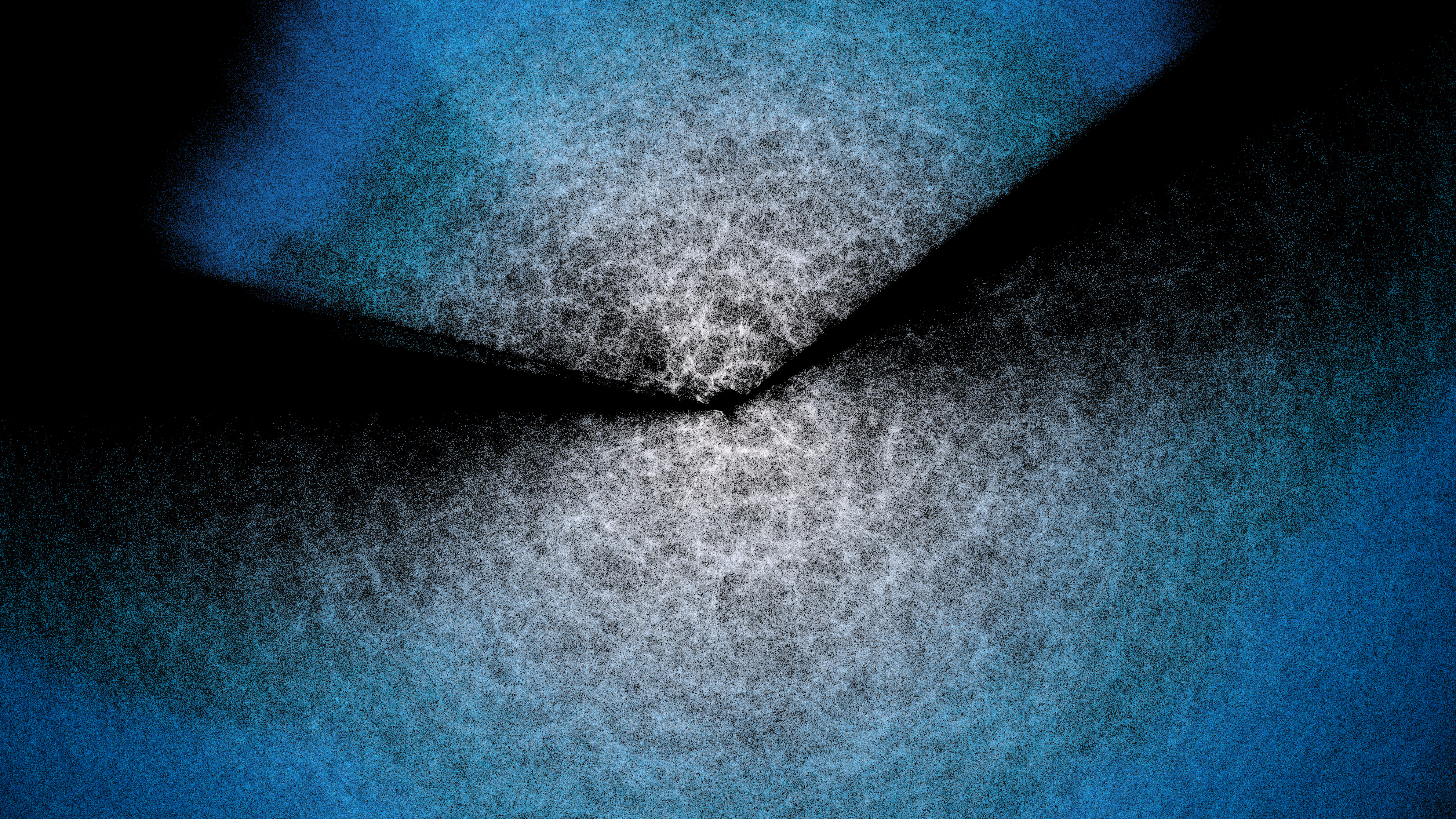
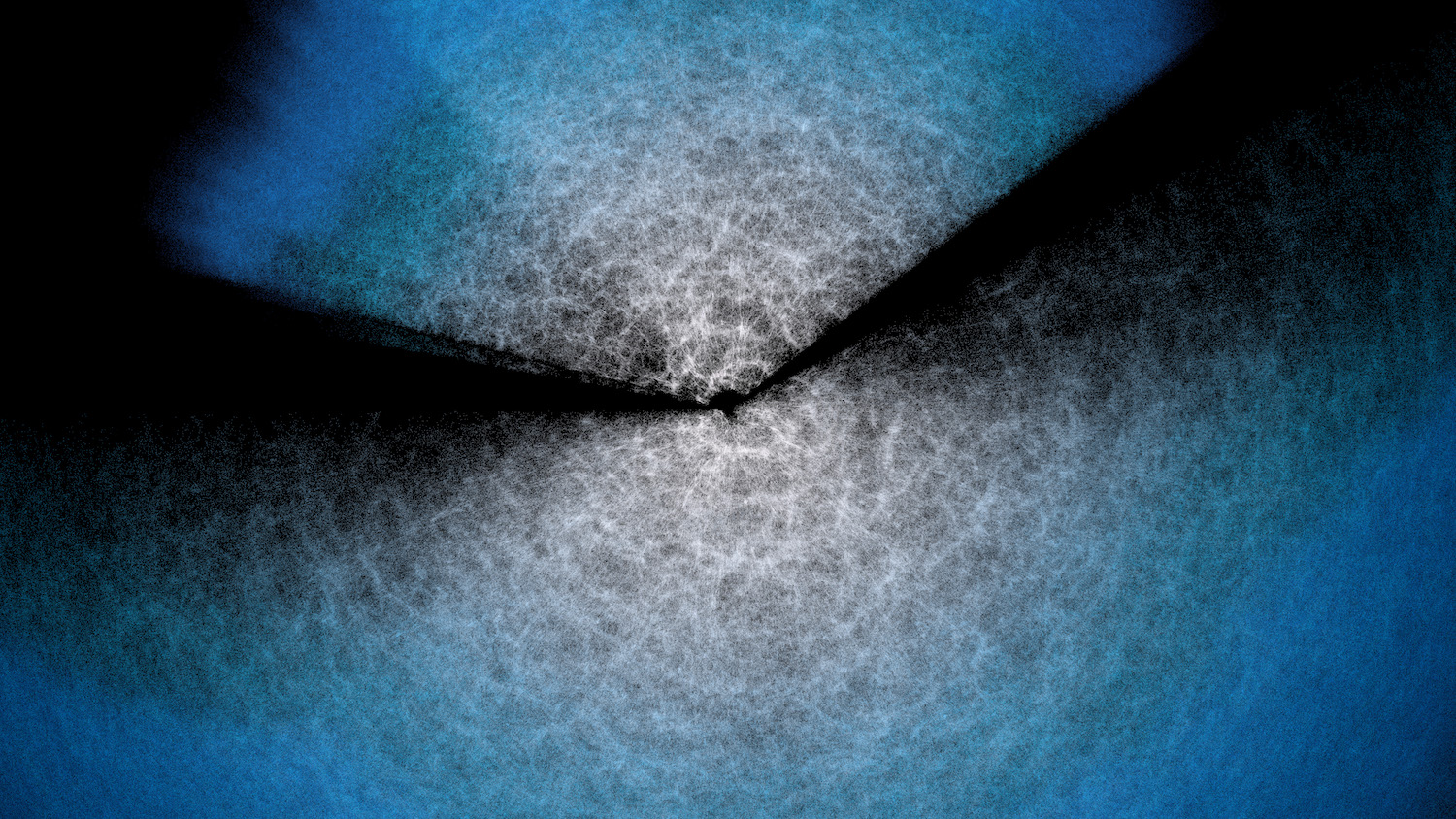 The DESI collaboration is being honored with the 2026 Berkeley prize for their work creating the largest 3D map of the universe, enabling the study of the effects of dark energy over cosmic time, and particularly for precise measurements of baryon acoustic oscillations as a function of redshift all the way to z = 2.3, when the universe was less than three billion years old.
Each year the three AAS Vice Presidents, in consultation with the Editor in Chief of the AAS journals, select the Berkeley prize winner for meritorious research published within the preceding 12 months. This year’s prize recognizes the DESI team for not one, but two articles in the past year. The first, published in February 2025 in the Journal of Cosmology and Astroparticle Physics, presents results from the measurement of baryon acoustic oscillations — a pattern of subtle variations in the density of baryonic matter imprinted by sound waves traveling through the early universe — based on data from the first year of DESI operations. The second, released by the collaboration in March 2025, encompasses the first three years of DESI operations, analyzing a sample of more than 14 million galaxies and quasars to test the leading cosmological model.
“DESI's record-breaking map of the universe is transforming our understanding of dark energy and the cosmos itself,” says AAS Senior Vice President Dawn Gelino. “This prize recognizes a monumental collaborative achievement that will guide cosmological models for decades to come.”
In addition to producing the largest-ever 3D map of the universe, the DESI collaboration's observations provide a valuable test of Lambda CDM, a model of our universe that contains ordinary matter, cold dark matter, and a cosmological constant that is associated with dark energy. Paired with other cosmological indicators such as supernovae, DESI data suggest that dark energy may not be constant after all, and may instead fluctuate across cosmic time. This provides mounting evidence that revisions to our leading cosmological model are needed.
The Berkeley Prize will be accepted on behalf of the collaboration by Daniel Eisenstein, a professor at Harvard University, member of the DESI Executive Committee, and former DESI spokesperson. Eisenstein will give the prize lecture on Thursday afternoon, 8 January 2026, at the Phoenix Convention Center in Phoenix, Arizona.
Contacts

Image:
https://aas.org/sites/default/files/2025-08/DESI Y3P Datapoints Flat Still-blue.jpg
The DESI Collaboration, which consists of volunteers across the globe, will receive the 2026 Lancelot M. Berkeley–New York Community Trust Prize for Meritorious Work in Astronomy. The prize lecture will be given by Daniel Eisenstein on behalf of the collaboration at the 247th meeting of the American Astronomical Society, to be held in Phoenix, Arizona, 4–8 January 2026. Photo provided by the DESI collaboration. Credit: DESI collaboration and KPNO/NOIRLab/NSF/AURA/R. Proctor.
The New York Community Trust (The Trust) is the community foundation for New York City, Westchester, and Long Island. One of the oldest and largest community foundations in the United States, its mission is to foster and engage in enduring and innovative philanthropy. Since 1924, The Trust has brought together the local knowledge and diverse expertise of its team and nonprofit and philanthropic partners to support thriving and equitable communities and help donors champion the causes they love. The Berkeley Prize is funded through a grant from The Trust from a fund that carries out the legacy of Lancelot M. Berkeley, a New York Lawyer and astronomy enthusiast who died in 1945. In his will, he instructed his estate be used to support “through an annual award, highly meritorious work in advancing the science of astronomy.” The Trust is also a regional philanthropic leader. It established the first donor-advised fund in 1931 and works at the forefront of critical causes, including education, health care, racial and gender equity, immigrant services, affordable housing, and LGBTQ+ rights.
The American Astronomical Society (AAS), established in 1899, is a major international organization of professional astronomers, astronomy educators, and amateur astronomers. Its membership of approximately 8,000 also includes physicists, geologists, engineers, and others whose interests lie within the broad spectrum of subjects now comprising the astronomical sciences. The mission of the AAS is to enhance and share humanity’s scientific understanding of the universe as a diverse and inclusive astronomical community, which it achieves through publishing, meetings, science advocacy, education and outreach, and training and professional development.