Impacted Members/Scientists: Request a membership waiver, seek meeting support, and other resources. Learn more. For the latest public policy updates, please visit this page.




Dannie Heineman Prize for Astrophysics
The Dannie Heineman Prize for Astrophysics is awarded jointly by the American Institute of Physics and the American Astronomical Society and is funded by the Heineman Foundation. It was established to recognize outstanding mid-career work in the field of astrophysics.
History:
The American Astronomical Society joined with the American Institute of Physics in 1978 to award a prize to recognize an individual who had made a series of major contributions to astronomy and/or astrophysics.
Eligibility:
No restrictions are placed on citizenship or country of residence. The nominee must be at a mid-career stage, i.e., 10–20 years as a professional astronomer.
Criteria:
- Nominees should exhibit outstanding mid-career work in the field of astrophysics.
- Nominees should have high impact on their field in astrophysics (e.g., publications, teaching, leading, or playing a significant role in major research efforts or development of major software tools)
Self-nominations are allowed. For questions, please contact the AAS Secretary.
Nomination Deadline: 30 June
Nomination Process
Prize Winners
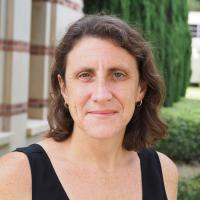
2026 - Alice Shapley
For landmark observational campaigns and creative techniques that redefined the forefront of the field of galaxy formation and evolution.

2025 - Priyamvada Natarajan
For groundbreaking contributions to our understanding of dark matter substructure in galaxy clusters, the formation and fueling of black holes, and their feedback into the surrounding environment.

2024 - John Carlstrom
For his pioneering work on microwave interferometry and his leading role in the development of the South Pole Telescope.

2023 - Karen Meech
For her pioneering work expanding and pushing boundaries in the field of small-body solar-system observational science, and for her transformative contributions that have shaped the broader field of planetary science.

2022 - Norman Murray
For his deep theoretical insight into an exceptionally broad range of astrophysical phenomena, including the dynamics of planetary systems, accretion disk winds in active galactic nuclei, and star formation and feedback in galaxies.

2021 - Robert Lupton (shared w/David Weinberg)
For essential contributions to facilitating, guiding, and participating in transformative science resulting from modern large-scale astronomical surveys at optical wavelengths, in particular the Sloan Digital Sky Survey.

2021 - David Weinberg (shared w/Robert Lupton)
For essential contributions to facilitating, guiding, and participating in transformative science resulting from modern large-scale astronomical surveys at optical wavelengths, in particular the Sloan Digital Sky Survey.

2020 – Christopher Kochanek
For combining observations and theory to make outstanding contributions to astrophysics in topics ranging from the use of gravitational lenses for studies of dark matter halos and quasar accretion disks.

2019 – Edwin (Ted) Bergin
For his pioneering work in astrochemistry and innovative contributions to our understanding of the physics and chemistry of star and planet formation, and for his tireless efforts to improve diversity and inclusion in astronomy.

2018 – Vicky Kalogera
For her fundamental contributions to advancing our understanding of the evolution and fate of compact objects in binary systems, with particular regard to their electromagnetic and gravitational wave signals.

2017 – Lars Bildsten
For his observationally grounded theoretical modeling of stars, which has yielded fundamental insights into the physics of stellar structure and evolution, compact objects, and stellar explosions.

2016 – Wendy L. Freedman
For her outstanding contributions and leadership role in using optical and infrared space- and ground-based observations of Cepheid variable stars, together with innovative analysis techniques, to greatly improve the accuracy of the cosmic distance scale
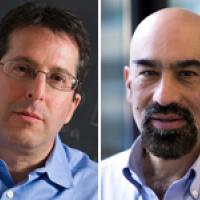
2015-Marc Kamionkowski & David N. Spergel
For their outstanding contributions to the investigation of the fluctuations of the cosmic microwave background, which have led to major breakthroughs in our understanding of the universe.

2014 – Piero Madau
For fundamental contributions to our understanding of the era of first light in the universe, the ionization and heating of the intergalactic medium, and the formation and evolution of galaxies.