Impacted Members/Scientists: Request a membership waiver, seek meeting support, and other resources. Learn more. For the latest public policy updates, please visit this page.




Beatrice M. Tinsley Prize
In honor of Beatrice Tinsley's unique achievements in the science of astronomy, the Tinsley Prize recognizes an outstanding research contribution by an individual, or individuals, to astronomy or astrophysics. Consistent with Tinsley's own work, the award focuses on contributions that are of an exceptionally creative or innovative character and that have played a seminal role in furthering our understanding of the universe.
This prize is usually awarded every two years. Nominations are accepted in 2026 for selection in 2027. It can be awarded irrespective of the candidate's citizenship, country of residency, or career stage.
History:
Established January 1985.
Eligibility:
No restrictions on the candidate’s citizenship or country of residence.
Criterion:
Outstanding research in astronomy or astrophysics that is
• Exceptionally innovative or
• Highly creative
Self-nominations are allowed. For questions, please contact the AAS Secretary.
Nomination Deadline: 30 June
Nomination Process
Support
Prize Winners
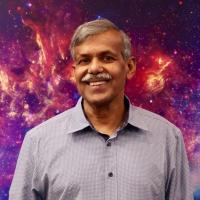
2026 - Kailash Sahu
For his groundbreaking work on relativistic deflection due to microlensing as a tool to detect isolated stellar-mass black holes and to measure the masses of stars and stellar remnants.

2024 - Dennis Zaritsky
For his innovative observations probing the structure and evolution of galaxies.
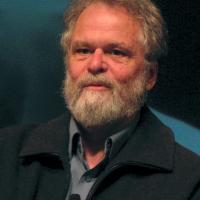
2021 – Bill Paxton
For his inspired work on providing, maintaining, and supporting the use of open-source stellar-evolution codes that have seeped into the foundation of research and education efforts.

2020 – Krzysztof Stanek (shared w/Christopher Kochanek)
For their innovative contributions to time-domain astronomy and, in particular, their leadership in the All-Sky Automated Survey for Supernovae (ASAS-SN).

2020 – Christopher Kochanek (shared w/Krzysztof Stanek)
For their innovative contributions to time-domain astronomy and, in particular, their leadership in the All-Sky Automated Survey for Supernovae (ASAS-SN).

2018 – Julianne Dalcanton
For her pioneering use of large surveys to study low-surface-brightness galaxies and her leadership in developing Hubble Space Telescope surveys to create a legacy of data on resolved stellar populations of nearby galaxies.

2016 – Andrew Gould
For his development of gravitational microlensing as an important tool for the discovery and characterization of exoplanets.

2014 – Chris Lintott
For his insight and creativity that created a transformative approach to science by engaging nonscientists in cutting edge research.

2012 – Ronald L. Gilliland
For his innovative work on ultra-high signal-to-noise observations related to time-domain photometry and the opening of this new frontier.

2010 – Drake Deming
For his innovative and pioneering work detecting thermal infrared emission from transiting extrasolar planets using the Spitzer Space Telescope.