Impacted Members/Scientists: Request a membership waiver, seek meeting support, and other resources. Learn more. For the latest public policy updates, please visit this page.




Henry Norris Russell Lectureship
The Russell Lecturer is normally chosen annually on the basis of a lifetime of eminence in astronomical research. The award includes a suitably engraved certificate, an invitation to deliver a lecture dealing with a broad astronomical field at a meeting designated by the Board of Trustees, travel expenses to the meeting at which the Russell Lecture is given, and publication of the lecture (or research related to the subject of the prize, though publication of the lecture is strongly preferred) in a Society journal.
Eligibility:
Unrestricted.
Criteria:
- Lifetime of eminence in astronomical research.
- Impact on astronomy — publications and citations; leadership in research programs or major astronomical missions.
- Significance of the research.
- Influence on young astronomers, colleagues, and overall advancement of the field.
Self-nominations are allowed. For questions, please contact the AAS Secretary.
Nomination Deadline: 30 June
Nomination Process
Support
Lecturers
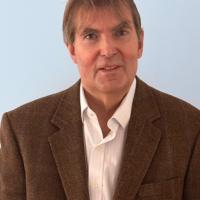
2026 - Lars Hernquist
For a lifetime of pioneering theories, numerical techniques, and simulations that underpin our understanding of galaxy formation, structure, and evolution, the formation of stars and supermassive black holes, and the large-scale structure of the universe.
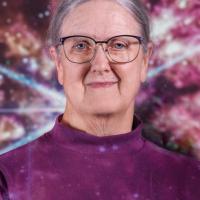
2025 - Marcia Rieke
For fundamental contributions to infrared astronomy in space and on the ground, especially in the construction of JWST and its NIRcam instrument; for her observations of galaxies and their active nuclei in the local and distant universe.

2024 - Neta Bahcall
For her central contributions to determining the average density of matter in the universe and establishing the concordance model of cosmology, and for her dedication to astronomical education and her exemplary service to the community.

2023 - Frank Shu
For his seminal contributions to theoretical astrophysics, from the formation of stars and planetary systems to the structure of disk galaxies; for his sustained leadership in the global astronomical community.

2022 - Richard Mushotzky
For a lifetime of innovative X-ray and multiwavelength research, including foundational studies of the properties of active galactic nuclei and the composition and structures of hot gas in clusters of galaxies.

2021 - Nick Scoville
For lifelong contributions to our understanding of molecular gas and star formation in the Milky Way and other galaxies, for visionary leadership, and for inspiring generations of early career astronomers.

2020 - Scott Tremaine
For his lifelong contributions to our understanding of the dynamics of natural cosmic systems on scales ranging from comets to clusters of galaxies, and for his mentoring of junior colleagues and leadership of major astronomical research institutions.

2019 – Ann Merchant Boesgaard
In recognition of her pioneering, sustained work in using light-element abundances to test Big Bang nucleosynthesis and to probe stellar structure and stellar evolution.
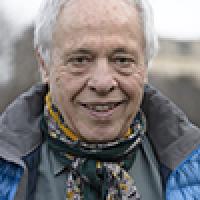
2018 – Joseph Silk
For his lifetime contributions to our understanding of the early universe and galaxy formation. Underpinning his scholarly impact is an extraordinary publication record that includes more that 800 refereed articles and eight books.
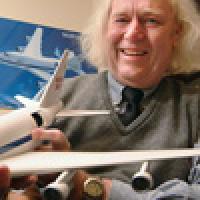
2017 – Eric Becklin
For his leadership role over the last half century in turning infrared astronomy into a fundamental tool for understanding the universe.
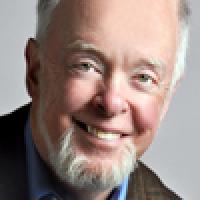
2016 – Christopher F. McKee
For his innovative ideas, powerful theoretical insights, and practical models that have had significant impact on many areas of astrophysics.
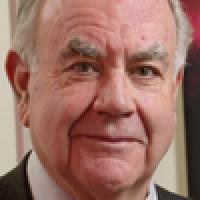
2015 – Giovanni Fazio
For his pioneering work on gamma-ray and infrared instrumentation, which has advanced our understanding in many areas of astronomy, ranging from near-Earth objects to high-redshift galaxies.
2014 – George Field
For a lifetime of contributions to our basic understanding of diffuse plasmas in the universe that continue to motivate current astronomers.