Impacted Members/Scientists: Request a membership waiver, seek meeting support, and other resources. Learn more. For the latest public policy updates, please visit this page.




George Van Biesbroeck Prize
The Van Biesbroeck Prize is normally awarded every two years and honors a living individual for long-term extraordinary or unselfish service to astronomy, often beyond the requirements of his or her paid position. Nominations are accepted in 2027 for selection in 2028.
History:
Established in 1979 by the Van Biesbroeck Award, Inc., as an Arizona area award. Beginning in 1988, individuals from throughout the United States were eligible. The AAS assumed responsibility for the Prize in June 1997.
Eligibility:
Nominee must be a resident of North America (including Hawaii and Puerto Rico) as of the date the award is announced (usually at the January AAS Meeting following selection).
Criteria:
- Length of service — nominee engaged for many years in serving the astronomical community.
- Service exceeded the requirements of the nominee’s paid position.
- Impact — their service benefited a significant part of the astronomical community.
Self-nominations are allowed. For questions, please contact the AAS Secretary.
Nomination Deadline: 30 June
Nomination Process
Support
Prize Winners
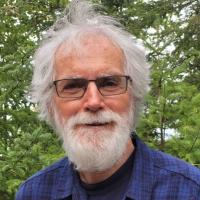
2026 - Peter Martin
For his exceptional leadership in astronomy and his pivotal role in establishing the Canadian Institute for Theoretical Astrophysics and the Dunlap Institute at the University of Toronto — world-leading centers for research and training.

2024 - Frederick Seward
For the establishment and implementation of the first open, peer-reviewed Guest Observer program for a Principal-Investigator-led NASA space-based observatory.

2022 - Donald York
For exceptional vision in the conception and design of the Sloan Digital Sky Survey (SDSS), a major imaging and spectroscopic survey that has created the most detailed three-dimensional maps of the universe ever made.

2020 – Roc Cutri
For his long-standing and selfless service and support for ground- and space-based infrared astronomy, including his leadership, development, and management of public data products.

2018 – Debra Meloy Elmegreen
For her unselfish service to astronomy on regional, national, and international scales, including strengthening public appreciation and support for astronomy, making our community more diverse and inclusive, and acting as a role model and mentor to genera

2016 – Richard (Rick) A. Perley
For his tireless and unrelenting career-long service to the global astronomical community, and the dedication of his unparalleled expertise in radio interferometry to the design, commissioning, and optimization of the world’s premier radio telescope, the

2014 – Michael Hauser
For strategic vision that guided first his early career involvement in the IR space missions when he established and led the IR group at Goddard, and later his role as the STScI deputy director playing a key part in turning STScI into a multi-mission inst

2012 – C. Megan Urry
For her tireless efforts to enhance the participation of women in astronomy and other scientific disciplines, through the organization of meetings, written works, lectures and effective mentoring, done outside and in addition to her work as a scientist.

2011 – David S. Leckrone
For three decades of selfless dedication to the instrumenting, servicing, and science programs of the Hubble Space Telescope, through informed advocacy, technical management, and outreach to diverse constituencies in education, government, the science com