Impacted Members/Scientists: Request a membership waiver, seek meeting support, and other resources. Learn more. For the latest public policy updates, please visit this page.




5 August 2025
The Unknowns of Science (Policy)
Cecilia Ochoa
University of California, Riverside
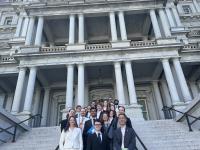
This year’s Congressional Visit Days (CVD) took place amid mass layoffs across numerous federal agencies and rumored budget cuts at many agencies. To say I was visiting DC in chaotic times would be an understatement. However, despite the uncertainty, I, along with the other CVD volunteers, was eager to learn more about how policy affected our science and to share with our representatives how the cuts and chaos were directly affecting the science community.
As a first-year graduate student, I spent the majority of the academic year focused on problem sets and exams, but it was hard to ignore the news headlines and the stories that were beginning to circulate of cuts to PhD acceptances, REU programs being cancelled, and, of course, federal scientists suddenly losing their jobs. I would have liked to have been able to focus solely on the unknowns of science, rather than navigating the uncertain landscape of US science. However, questions of funding and research opportunities made it difficult for me to simply be a graduate student.
CVD provided an opportunity for me not only to find answers to some of my questions but also to get directly involved in the policy world, even if it was just for a short period. I was excited about the prospect of advocating for and sharing my research with my elected officials. At the same time, the prospect of meeting with elected officials was absolutely nerve-wracking.
To prepare us for these meetings, we spent the first two days listening to a variety of talks and panels from folks involved in the policy-making process. We heard from current and former researchers, astronomy advocates, and current congressional staffers. A majority of the talks centered on the budget and went into great detail about how a budget gets created, passed, and eventually enacted.
The talks were about what I had expected, given that the presidential budget request had not yet been released at the time, but rumors (which were later confirmed to be true) had been circulating about the damaging cuts to science. Despite the talks being expected, I still learned a great deal and developed an appreciation for the lengthy process. I especially grew an appreciation for those who had been working tirelessly behind the scenes to protect US science and scientists.
What I didn’t expect was how little anyone knew about what would happen in 2025. I came to CVD hoping to gain clarity and return to my institution with words of hope about how our research will be okay. Unfortunately, this was not the case. Over and over, we heard the phrase, “in a normal year this would happen, but we don’t know what’s going to happen,” and I heard the words “unprecedented times” too many times to count.
In all honesty, the first part of CVD was disheartening. Hearing repeatedly about the potential for massive cuts and funding uncertainty was/is terrifying. However, there is still work that can be done to prevent and protect science and scientists.
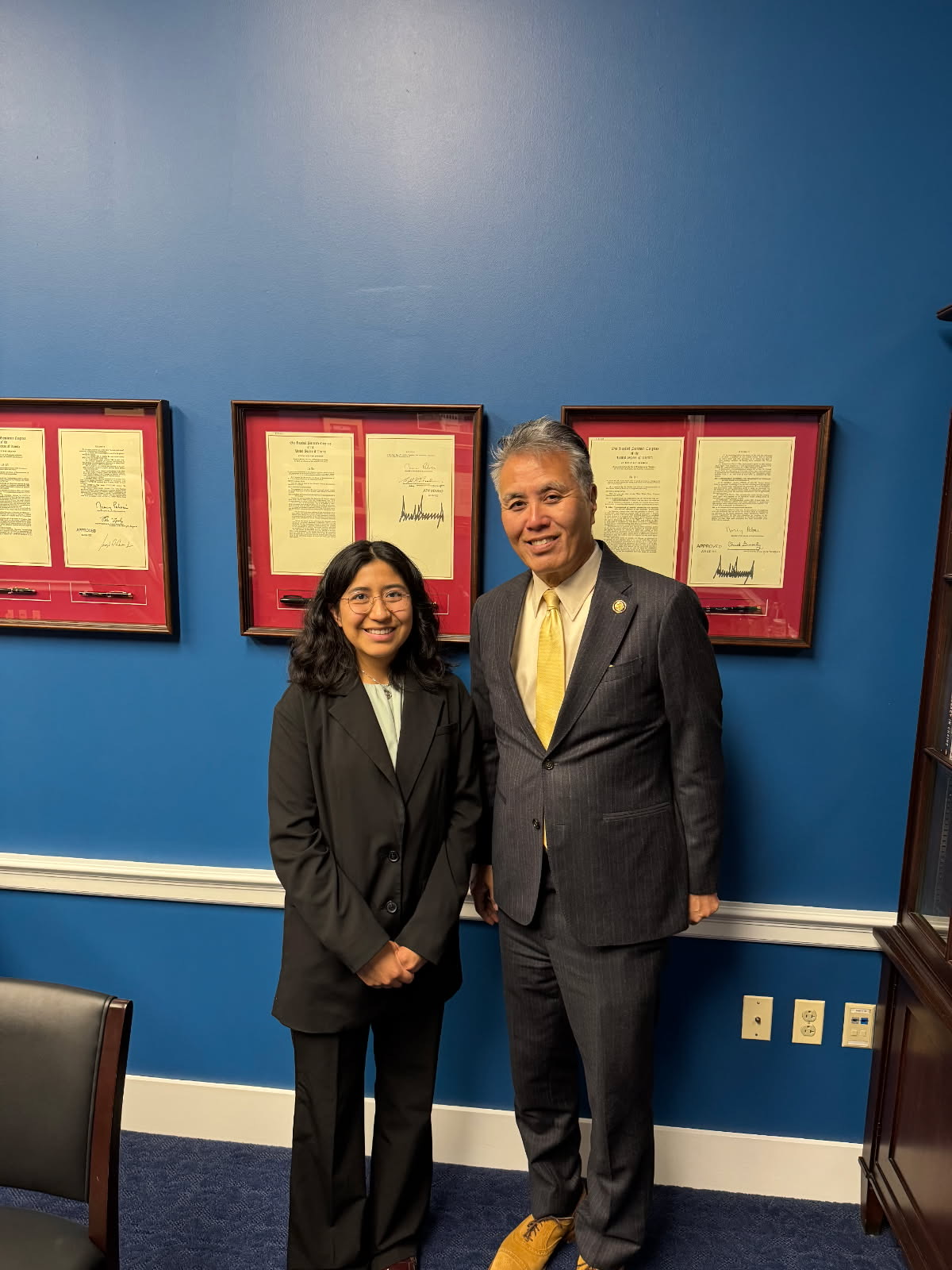
The third and final day of CVD was dedicated to discussing the importance of astronomy with representatives. In preparing for these meetings, I realized that despite how interesting I find my research, US representatives care about what their constituents need. While a constituent might think that astronomy is cool, that constituent might be less than thrilled to pour millions of dollars into funding it. After all, it’s hard to see the direct impact that detecting black holes and neutron stars has on day-to-day life if you aren’t an astronomer. Therefore, it falls on us, you and I, to reach out to representatives and explain what the impact of astronomy research is on their constituents. It’s worth taking a break from our work to have these conversations so that scientists, elected officials, and the general public can see the beauty and benefits of funding science in the US.
After a day of running between the House and the Senate, I left with a sense that I had done something to protect the funding for my research, but that the work is far from over. While this year's CVD primarily focused on advocating for science funding, there are numerous other issues important to US astronomers, such as dark skies and space debris, that also require advocates.
This year has been challenging for many reasons, but I truly believe that continued advocacy and communication between scientists and policy makers can make a real impact on the future of US astronomy and science overall. I encourage everyone to make a phone call, send an email, write a letter, or even schedule an appointment to meet with their representatives (it’s not as intimidating as it may seem!) and explain what impact current policies have already had on your research and what the proposed budget cuts could mean.
Related Posts
Inside the Web of Policy: A High Schooler’s Experience in Advocacy
9 Jul 2025
Thamarie Pinnaduwage, a high school senior from Northern Virginia, shares her experiences shadowing the AAS public policy team for two weeks.
Rocket Science Needs Rocket Fuel: An Early Scientist’s Experience on the Hill
28 May 2025
Eshan Raul from the University of Wisconsin-Madison shares his experiences from AAS's Congressional Visits Day.
Space at Stake: Texas Astronomers Take Stand Against Government Cuts
21 May 2025
Avery Abramson from the University of Texas at Austin shares her experiences from AAS's Congressional Visits Day.
Empowered by Advocacy: My Experience at the 2025 AAAS CASE Workshop
16 Apr 2025
Faith Simmons shares her experiences at the AAAS Catalyzing Advocacy in Science and Engineering (CASE) workshop.
Science Takes a Village
8 May 2024
Each year, the AAS brings volunteers to Washington, DC, to learn how to advocate for science as part of our Congressional Visits Day (CVD). In this guest post, Lindsey Wiser describes her experience at this year's CVD.