Impacted Members/Scientists: Request a membership waiver, seek meeting support, and other resources. Learn more. For the latest public policy updates, please visit this page.




20 May 2025
Anyone Can Make a Difference
Dr. Samantha Garza
National Radio Astronomy Observatory
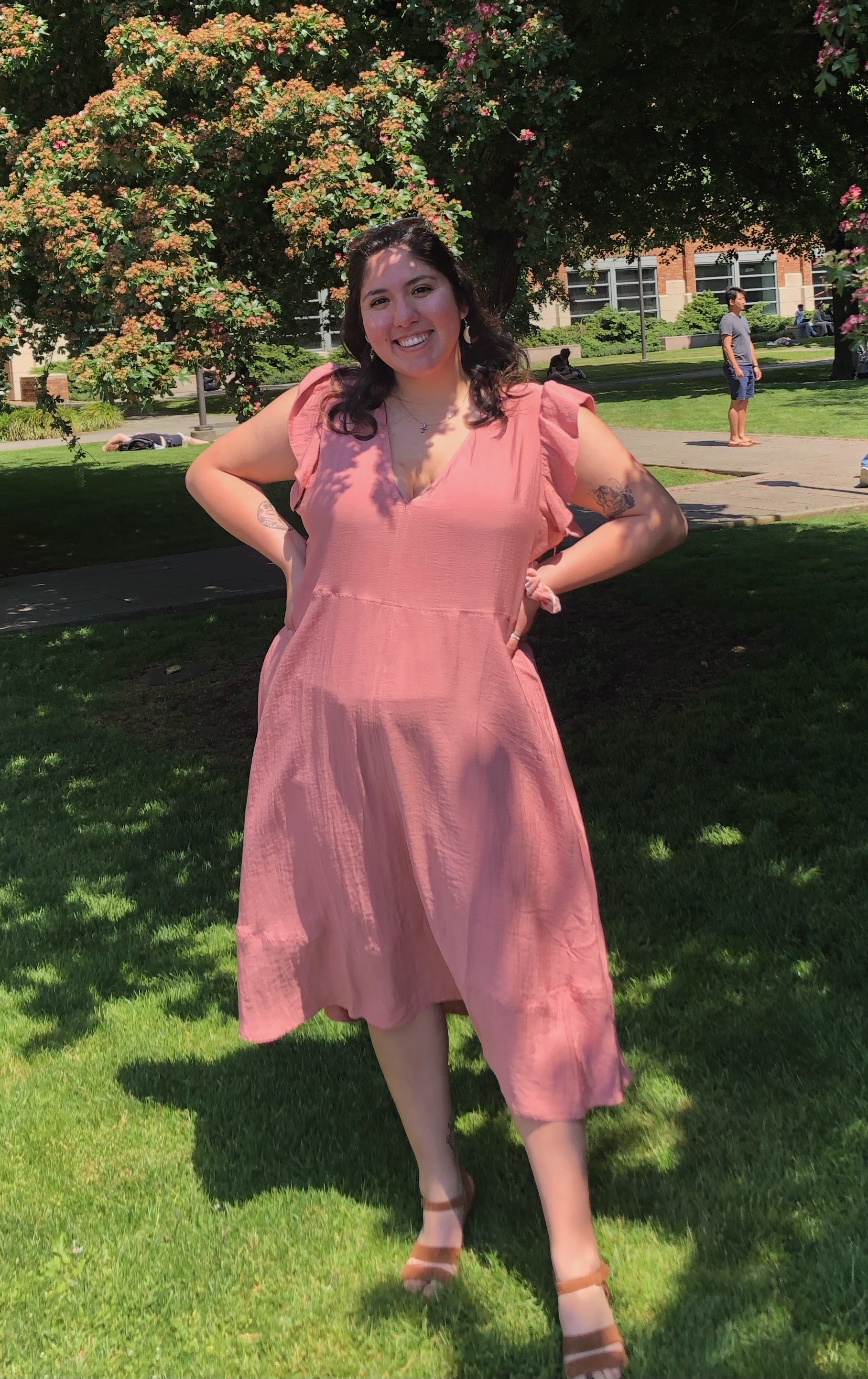
Becoming involved in policy and governmental affairs is not something I would have thought I’d mark off my "things I became passionate about in my 20s" bingo card, but it has been a welcome interest in my life for the past few years. I started gaining momentum on the policy train ever since the Fiscal Year 2026 (FY26) Presidential Budget Request was released and I started actively seeking ways to advocate for astronomy. However, my full-steam-ahead moment was when I was selected to participate in the American Astronomical Society 2026 Congressional Visits Day. It was during this jam-packed workshop that I learned that we all have the ability to make a difference on the issues we find important.
In a way, astronomy chose me a long time before I chose it back. Growing up in Houston, Texas, or "Space City," I had an inherent love for the stars and NASA, but I had always been more interested in a future centered on medicine. Until my junior year of high school, I was ready to declare pre-med in college with the goal of being a pediatrician one day. But after taking physics that year, I became fully hooked on the subject. When I started classes at the University of Dallas two years later, I was registered as a physics student. I found my way to astronomy that following summer when I was accepted to do research through the National Astronomy Consortium (NAC), a program designed to provide research opportunities, long-term mentoring, professional development, and support to underrepresented students in STEM fields. The three months I spent in Madison, Wisconsin, mapping the inner arms of the Milky Way galaxy were some of the best months of my life, and this was the final push I needed into the astronomy field. It was that summer that I decided I wanted to continue studying galaxies and that I was dedicated to ensuring other aspiring astronomers got access to the same training and experiences. For the rest of my undergraduate degree, I mentored other undergraduates on how to apply for and succeed in research positions, leading to several of my peers getting accepted to their top-choice programs!
When I transitioned to graduate school at the University of Washington to observe and study the elements in galactic atmospheres, I continued mentoring undergraduates and transitioned to spending the bulk of my time on education and public outreach endeavors. Over time I found myself more excited about sharing science with the public and working one-on-one with students than I was for other aspects of my degree. While I still loved researching galaxies and being on the forefront of new discoveries, I found myself longing to make a difference on a community level. While I was wrestling with these feelings and deciding on future career paths, the political landscape had started to change as a new power stepped into the White House. I didn’t know it yet, but it would be this administration's actions that would alter the course of my academic journey.
Only a few days into 2025, I received an email that the program that gave me my first research experience and launched my academic career, NAC, was shut down in order to comply with the rescission of White House Executive Order 13985: "Advancing Racial Equity and Support for Underserved Communities Through the Federal Government." Since the program fell under the Office of Diversity and Inclusion, it was halted indefinitely and cut off professional development opportunities to a generation of aspiring young astronomers. I was devastated and frustrated with the current political proceedings, but the last straw for me was when the President’s Budget Request came out a few months later. After reading the FY26 President’s Budget Request released in May 2025, which included a 47% reduction for NASA Science, the elimination of the NASA Office of STEM Engagement, and a 57% decrease to the National Science Foundation, I felt like this was a sign to finally make up my mind between a future career in research or public service. I chose the latter.
Over the next year, I educated myself on the inner workings of Congress, attended advocacy and policy seminars, and participated in "Stand Up for Science" rallies while continuing to lead and participate in public outreach initiatives in my community. Even with just my small actions, I felt like I was making a difference that would not only help the astronomy community but everyone in and affected by the science field. After earning my PhD, I fully transitioned from academia to education and public outreach to work for the National Radio Astronomy Observatory as an education specialist. It was here that I really began the public service work that I had decided to do several months ago. My days are extremely rewarding, and never the same, as I travel around to schools to give planetarium shows, facilitate astronomy workshops, and manage a chapter of Astronomy on Tap. While in this position, I learned about AAS Congressional Visits Day, an opportunity to learn and practice advocacy skills in Washington, DC, and I quickly applied. After a few weeks I learned that I had been selected to participate and was excited to begin my astronomy advocacy journey.
The first two days of the program were a crash course in AAS and American Association of Physics Teachers priorities; an introduction to federal research and science funding; and updates on the current goings on at NASA, the US Department of Energy, and the National Science Foundation. We also explored certain subjects, including dark and quiet skies and education policy, in preparation for our day of Hill meetings. I soaked up as much information as I could and found that even after a stream of back-to-back presentations and discussions, I was still energized and ready to keep learning. My favorite part of the workshop was the congressional staffers panel where three current staffers gave us advice and tips on how to have a successful meeting and effectively communicate on science and education policy. The biggest takeaway that I had was that the difference between a good meeting and a bad one is being able to read the mood of the staffer or congressperson you are talking to. The panelists really drove the point home that the meetings should be thought of as conversations, and successful advocates allow the staffer or representative to share their perspectives or stories that have. In this way you are focusing on building a relationship with your audience while also getting your points across.
The follow-up presentation to the panel was a deeper dive on the basic outline of meetings on the Hill and gave us time to craft the stories we wanted to tell our representatives. We learned the basic structure of Hill visits and received tips on how to show the importance of astronomical science to the states and the country as a whole. Here the narrative focused on storytelling over detailed funding requests. Our top-line request was robust support for the astronomical sciences in the FY27 budget, including $9.0B for the NASA Science Mission Directorate, $9.9B for the National Science Foundation, and $9.5B for the Department of Energy Office of Science. However, it became clear to me that the most impactful way to direct staffers to that request was through personal stories. I knew that the story that I wanted to tell was the importance of federally supported research experiences for early-career astronomers and the impact STEM education programs have for K–12 students. I eagerly finalized my research on Texas in order to tailor my message to each of my three scheduled meetings and helped my teammates craft their own messages. While sitting at the table together, I could feel the heightened energy in the room and found that my feelings of enthusiasm and nerves were mirrored in my colleagues as we prepared to head to the Hill that following day.
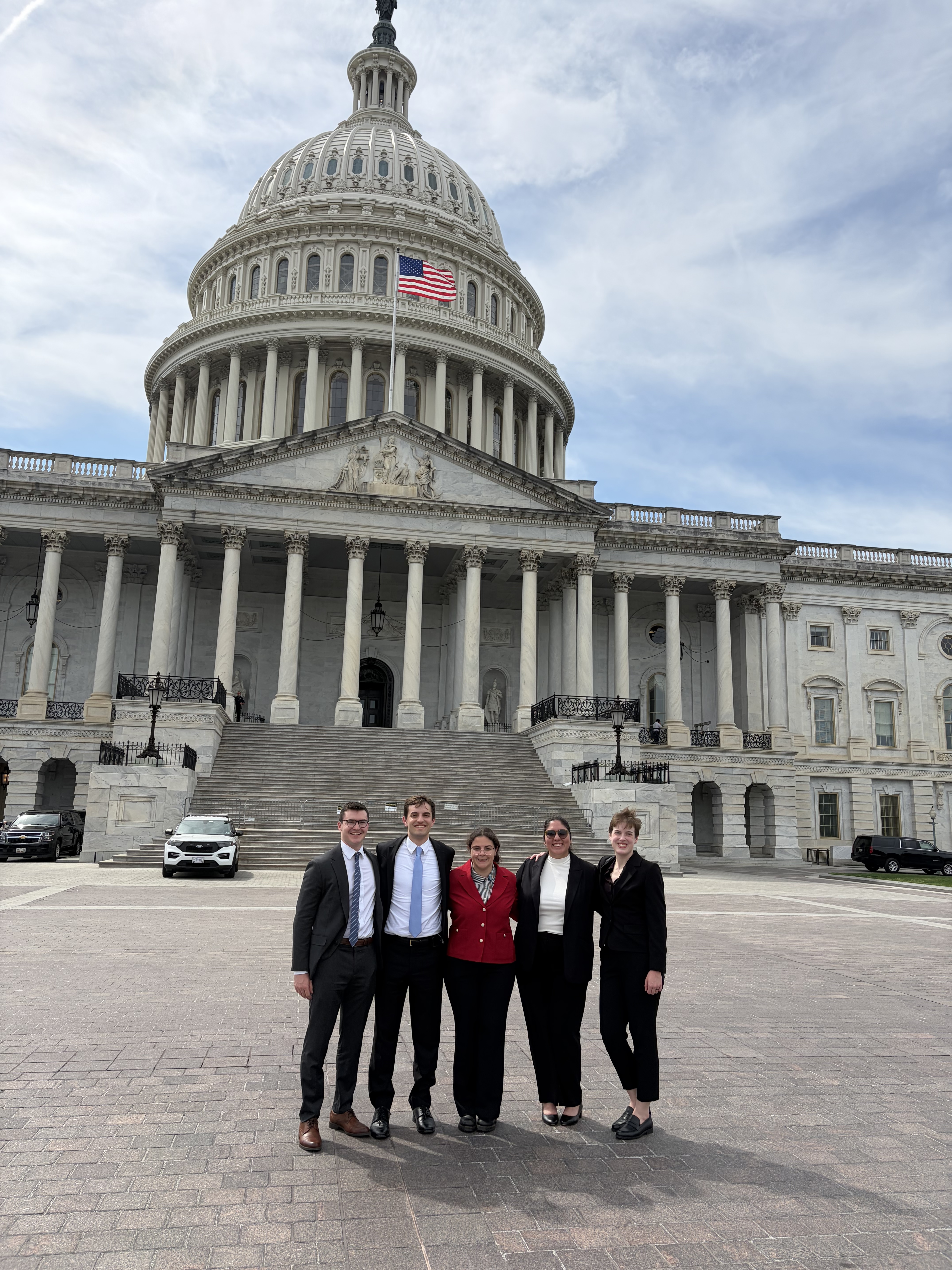
Wednesday morning finally came, and it was time to put all our new skills to work. Our team included AAS members from Illinois; Michigan; Washington, DC; and of course Texas, and we had eight meetings lined up for the day. As luck would have it… I was first. I was a little nervous being the first meeting and was a little apprehensive with how it would go, but once I stepped into Senator Cornyn’s office, I started to feel more at ease. The office decorations really made it feel like you had been instantly transported to Texas, from the pecan nuts in a Texas-shaped wicker basket to the longhorn paintings adorning the walls. It also helped that the legislative correspondent we met with was really engaged with our stories and requests. We each introduced ourselves before sharing our personal experiences as scientists. It was here that I highlighted the Senator’s previous support for STEM education and asked that he continue to do so. And before I knew it, the meeting was over! We all high-fived each other for our first successful meeting and traveled on to start our next one.
With each meeting, we got more and more into a groove and started to learn which points each of us excelled at. For example, our Illinois team member Amanda Wasserman excelled at talking about AI in astronomy and the capabilities of the Vera C. Rubin Observatory, while Joey Fogt, our Michigan constituent, had great personal stories to share about limited job opportunities in the state and how his peers were accepting research positions in other countries. After each meeting, I felt like we had really connected with the staffer through our conversations and was amazed with how eager the staffers were to hear our perspectives. It was also eye-opening to see how many other organizations were on the Hill the same day as we were, advocating for the issues that were important to them, and the sheer amount of meetings staffers had a day. It made me appreciate that we were able to have as many meetings as we did and that each of them had been a positive experience.
By the end of the Hill visits, I was physically exhausted but proud of the accomplishments of my team and empowered by the work we had done. While I sat near the steps of the Capitol Building, giving my poor feet a much needed break, I felt incredibly grateful for all that I had learned in the past few days. I couldn’t wait to get back home and continue to put my advocacy training to use for astronomy and any other issues important to me. Not everyone has the time to advocate in person on the Hill, but there are several other smaller and yet still impactful ways to engage in policy and advocate for science. I implore you to write a letter, send an email, or call your representatives to let them know your personal stories in astronomy. Each of us has the ability to make a difference, and together we have the opportunity to keep astronomy and all science moving forward.
Related Posts
Proposed Federal Science Cuts Threaten Our Future. We Went to Congress to Fight Back.
28 Apr 2026
Dr. Dan Peluso, educator at Griffin Academy and researcher at the SETI Institute, shares his experiences advocating for science and education at AAS–American Association of Physics Teachers Congressional Visits Day.
Rocket Science Needs Rocket Fuel: An Early Scientist’s Experience on the Hill
28 May 2025
Eshan Raul from the University of Wisconsin-Madison shares his experiences from AAS's Congressional Visits Day.
Space at Stake: Texas Astronomers Take Stand Against Government Cuts
21 May 2025
Avery Abramson from the University of Texas at Austin shares her experiences from AAS's Congressional Visits Day.
Empowered by Advocacy: My Experience at the 2025 AAAS CASE Workshop
16 Apr 2025
Faith Simmons shares her experiences at the AAAS Catalyzing Advocacy in Science and Engineering (CASE) workshop.
Science Takes a Village
8 May 2024
Each year, the AAS brings volunteers to Washington, DC, to learn how to advocate for science as part of our Congressional Visits Day (CVD). In this guest post, Lindsey Wiser describes her experience at this year's CVD.