Impacted Members/Scientists: Request a membership waiver, seek meeting support, and other resources. Learn more. For the latest public policy updates, please visit this page.




Harlow Shapley Visiting Lectures Program
Information for Lecturers | Lecturer application
Information for Hosts | Host application
Applications for the 2026 program closed on 31 October 2025.
If you have Qs: Email us at [email protected]!
| Fast Facts: Shapley Visiting Lectures Program | |
|---|---|
| Purpose of program | To bring the excitement of modern astronomy to broad audiences |
| Typical visit length | 2–3 days |
| Shapley Lecturer | Delivers public lecture on astronomy, plus additional student and community engagement |
| Host site | Arranges lecture venue and engagement events |
| AAS | Covers all travel costs for the Lecturer |
The AAS Harlow Shapley Visiting Lectures Program brings distinguished astronomers and astronomy educators to schools and communities across North America to share the wonder of the Universe and inspire people to bring science into their lives. Visits typically take place over 2–3 days; AAS covers all travel costs of the visiting lecturer. The program, which grew out of AAS’s Visiting Professors Program dating back to 1958, is named in honor of eminent astronomer and former AAS President Harlow Shapley (1885–1972) and has been a long-running tradition for the Society. For many years, AAS has financially supported the travel of its visiting lecturers through an endowed fund built through private charitable donations.
What does a typical Shapley Visit consist of?
A Shapley visit is more than a lecture: it’s a multi-faceted outreach event that engages students, faculty, and community members in meaningful ways. Shapley Visiting Lecturers typically make 2–3 day visits to their target community, though the duration can vary. Based on recent visits, here’s what you might expect:
- Public Lecture at the Core
Each visit centers on a broadly advertised evening lecture, free and open to the public, designed to spark curiosity and connect local audiences with cutting-edge astronomy.
- Meaningful Community Engagement
In addition to the lecture, Shapley Lecturers often participate in one or more of the following activities:- K–12 classroom visits
- Astronomy club presentations or star parties
- Meetings with educators, administrators, and community leaders
- Small-group workshops or Q&A sessions tailored to different audiences
- Lasting Local Impact
These visits often leave a legacy — departments introduce student research programs inspired by the lecturer’s visit, and some lectures are recorded and shared as enduring community resources. [See the 2024–2025 Shapley visits]
- Collaborative Planning
Each Shapley Lecture is tailored through collaboration between the Lecturer and host. The range of activities reflects local interests, venue capacity, and community needs, ensuring memorable and relevant experiences for all involved.
- Extended Itineraries for Maximum Impact
While 2–3 days is typical, some visits span multiple days and institutions to reach broader audiences. For instance:- One Lecturer delivered a central astronomy presentation across five community colleges in Dallas–Fort Worth, followed by a faculty workshop and star party, sharing insights into astrophysics and undergraduate research with hundreds of students. [See Michael Rutkowski's visits]
- Another spent four days in Casper, Wyoming, delivering tailored talks to K–12 groups, college students, and faculty, and engaging with leaders at both the college and community levels. [See Quyen Hart's visits]
Eligibility
Lecturers: Any member or affiliate of the AAS is eligible to be considered for a Shapley Lectureship. Applicants who are not yet members are welcome to apply for AAS membership after being selected. Please see the Lecturers Info page for full eligibility criteria and responsibilities.
Host sites: Any school or community organization in North America (including the United States, Canada, and Mexico) is welcome to be considered to host a Shapley Lecturer; a strong preference is given to prospective hosts that (a) do not already have a robust astrophysics research program, and (b) are able to host a broad community event that reaches people who don’t frequently engage in science. Please see the Hosts Info page for full eligibility criteria and responsibilities.
Shared Responsibilities
The Shapley Visiting Lectures Program is a partnership among the American Astronomical Society (AAS), the host site, and the Lecturer. Each plays an essential role: AAS provides financial and logistical support, the host ensures strong local engagement and a welcoming environment, and the Lecturer brings expertise, inspiration, and a personal connection to astronomy. Together, these three partners create a meaningful experience for students, educators, and communities.
|
AAS Provides |
Host Site Provides |
Lecturer Provides |
|
Covers all Lecturer travel costs (airfare, lodging, meals) |
A suitable venue for the public lecture (lecture hall, auditorium, or community space) |
Delivers the main public lecture (content designed by Lecturer) |
|
Travel logistics support via third-party agency (optional) |
Local logistics such as event setup, publicity, and community engagement |
Works with host to discuss topics, logistics, and alignment with local needs |
|
Travel insurance under AAS policy |
Opportunities for the Lecturer to engage with students, faculty, and/or the community |
Prepares to share their career path and personal experiences in astronomy |
|
Optional $250 honorarium each for the Lecturer and for the host site coordinator |
Optional additional activities (classroom visits, star parties, meetings with teachers, etc.) |
Participates in at least one additional outreach activity beyond the public lecture |
|
Up to $150 in materials support for hosts |
Designated point of contact to coordinate with Lecturer and AAS |
Serves as a representative of AAS and the astronomy community |
|
Outreach resources, including the AAS Guide to Careers in Astronomy |
Documentation of the event via photos, videos, and/or testimonials |
Incorporates a short AAS info slide in the lecture presentation |
|
Recognition as part of the Shapley Program and connection to a network of science outreach professionals |
Local hospitality to make the Lecturer feel welcome |
Optionally requests topic preferences, personal background to share, or areas of emphasis |
Working Together for Impact
The success of a Shapley Visiting Lecture depends on collaboration. When AAS, the host site, and the Lecturer each bring their part to the table, the result is more than a single lecture: it’s a lasting connection between scientists and communities. By combining financial support, local knowledge, and scientific expertise, we ensure that audiences who may have limited access to astronomy can experience the excitement of discovery firsthand.
Applications for the 2026 program closed on 31 October 2025.
[ Information for Lecturers | Lecturer application ]
[ Information for Hosts | Host application ]
About Harlow Shapley
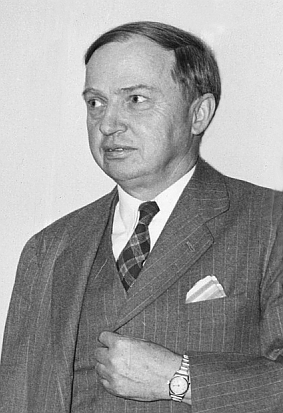
Harlow Shapley (1885–1972) was a pioneering American astronomer whose groundbreaking work transformed our understanding of the Milky Way. He served as the director of the Harvard College Observatory from 1921 to 1952, where he used observations of Cepheid variable stars to determine both the size of our galaxy and the Sun’s place within it. Shapley also played a significant role in early 20th-century scientific debates, including the famous "Great Debate" over the nature of so-called “spiral nebulae,” and helped shape the modern concept of the galaxy. He was honored with several prestigious awards such as the Henry Draper and Bruce Medals and was elected to the National Academy of Sciences. Importantly, he served as President of the American Astronomical Society from 1943 to 1946.
Shapley was one of three founding lecturers in the AAS Visiting Professors Program, which received intermittent funding from the National Science Foundation from 1958 to 1971. Upon Shapley’s passing, a private donation from the Perkin Fund (established by Richard Scott Perkin, 1906–1969, who was a close friend of Shapley for more than 3 decades) enabled AAS to continue the Visiting Professors Program beyond the end of federal support. Now renamed in Shapley’s honor, the Harlow Shapley Visiting Lectureship Program honors his legacy by continuing his lifelong mission to bring astronomy to broader communities.