Impacted Members/Scientists: Request a membership waiver, seek meeting support, and other resources. Learn more. For the latest public policy updates, please visit this page.




16 September 2024
Astropy Collaboration to Receive 2025 Berkeley Prize
The collaboration of scientists and engineers supporting the Astropy Project will receive the 2025 Lancelot M. Berkeley–New York Community Trust Prize for Meritorious Work in Astronomy. Bestowed annually since 2011 by the American Astronomical Society (AAS) and supported by a grant from The New York Community Trust, the Berkeley prize includes a monetary award and an invitation to give the closing plenary lecture at the AAS winter meeting. The 245th AAS meeting will be held in National Harbor, Maryland, from 12 to 16 January 2025.
The Astropy Project is a community effort to develop a free and open-source core software package for astronomy using the Python programming language, as well as to foster interoperability between other Python astronomy packages. The extensive Astropy code library and affiliated packages provides a unified set of tools for astronomers to undertake tasks critical for research, such as coordinate transformations, reading and writing astronomical files, manipulating quantities with units attached, and modeling and visualizing data.
The Astropy Collaboration is being honored with the 2025 Berkeley prize for their work developing and maintaining this code base, which provides underlying support for much of astronomy research as it is conducted today. In the prize citation, the AAS Vice Presidents laud Astropy as being “widely regarded as a load-bearing pillar of the global astronomical community, now forming foundational infrastructure across our field. For more than a decade, Astropy has enabled cosmic discovery across the breadth of astronomy, from supporting new students in astronomy to the operations of multibillion-dollar Great Observatories. The number of scientific results that Astropy has helped enable is truly uncountable.”
Each year the three AAS Vice Presidents, in consultation with the Editor in Chief of the AAS journals, select the Berkeley prize winner for meritorious research published within the preceding 12 months. This year’s prize is somewhat unusual in recognizing the Astropy Collaboration not for one particular article in the past year, but for the body of all three publications describing the project and its updates since its first release in 2013. “Award recognition for the Astropy Collaboration is long overdue,” declares AAS Senior Vice President Grant Tremblay. “Astropy is a major research-enabling piece of infrastructure underpinning the field of astronomy worldwide.”
The core Astropy library contains over 280,000 lines of code written by more than 450 contributors. This is supplemented by an ever-growing ecosystem of astronomy-specific software tools that can be used together with the core astropy library. With the rise in popularity of python in the astronomy community over the past decade, Astropy has become one of the dominant tools in the profession, used by tens of thousands of people.
The Astropy Collaboration consists of hundreds of volunteer contributors worldwide and is managed by a group of 45 voting members. Erik Tollerud (Space Telescope Science Institute), a founding coordinator for the collaboration, says “The Astropy project is made possible only through the efforts of its community members — a group of users and developers that agree that sharing utilities is healthy for the community and the science it produces. We’re delighted to have this outlook affirmed and our efforts recognized by the Berkeley Prize.”
The Berkeley Prize will be accepted on behalf of the team by Astropy Coordination Committee members Tollerud, Clara Brasseur (University of St Andrews), and Kelle Cruz (CUNY Hunter College and American Museum of Natural History). The three will jointly give the prize lecture on Thursday afternoon, 16 January 2025, at the Gaylord National Resort & Convention Center in National Harbor, Maryland.
Contacts

Image:
https://aas.org/sites/default/files/inline-images/Astropy_mosaic.png
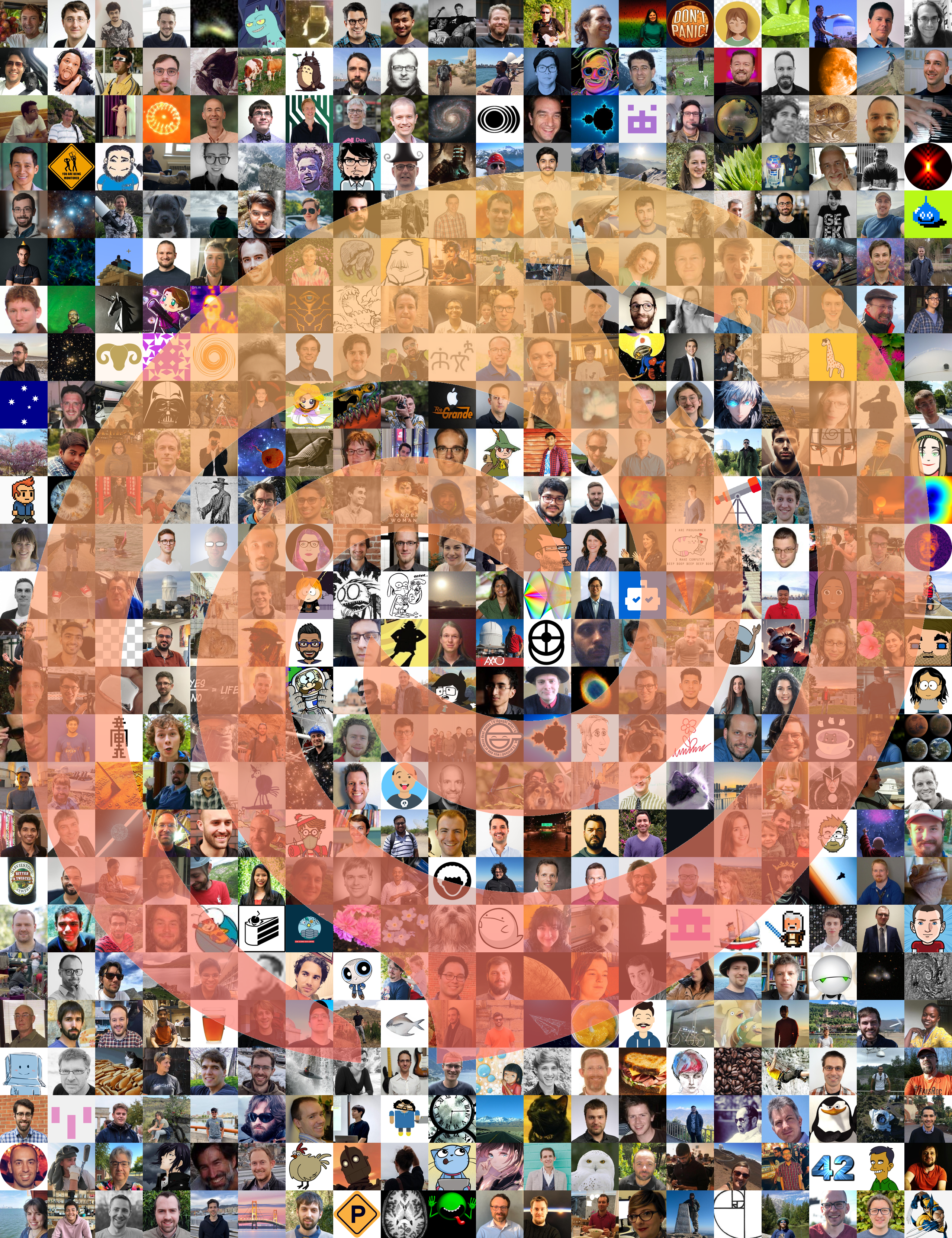
The Astropy Collaboration, which consists of volunteers across the globe, will receive the 2025 Lancelot M. Berkeley–New York Community Trust Prize for Meritorious Work in Astronomy. The prize lecture will be jointly given by Clara Brasseur, Kelle Cruz, and Erik Tollerud on behalf of the Collaboration at the 245th meeting of the American Astronomical Society, to be held in National Harbor, Maryland, 12-16 January 2025. Photo provided by the Astropy Collaboration.

The New York Community Trust (The Trust) was founded in 1924 and is the community foundation for New York City, Long Island, and Westchester. One of the largest community foundations in the nation, The Trust’s mission is to foster and engage in enduring and innovative philanthropy. The Berkeley Prize is funded through a grant from The Trust from a fund that carries out the legacy of Lancelot M. Berkeley, a New York Lawyer and astronomy enthusiast who died in 1945. In his will, he instructed his estate be used to support “through an annual award, highly meritorious work in advancing the science of astronomy”.
The American Astronomical Society (AAS), established in 1899, is a major international organization of professional astronomers, astronomy educators, and amateur astronomers. Its membership of approximately 8,000 also includes physicists, geologists, engineers, and others whose interests lie within the broad spectrum of subjects now comprising the astronomical sciences. The mission of the AAS is to enhance and share humanity’s scientific understanding of the universe as a diverse and inclusive astronomical community, which it achieves through publishing, meetings, science advocacy, education and outreach, and training and professional development.