Impacted Members/Scientists: Request a membership waiver, seek meeting support, and other resources. Learn more. For the latest public policy updates, please visit this page.




247th meeting
Meeting Program

247

247th
meeting of the American Astronomical Society
Phoenix, Arizona
4
–
8 January 2026

Plenary Speaker
Tonima Tasnim Ananna is an Assistant Professor in the Department of Physics and Astronomy at Wayne State University in Detroit. She received her undergraduate degree in physics from Bryn Mawr College and earned her PhD in astronomy from Yale University in 2019 under the mentorship of Professor Meg Urry, followed by a postdoctoral appointment at Dartmouth College with Professor Ryan Hickox. Ananna’s research applies machine learning to large surveys to uncover the demographics and growth of supermassive black holes across the Universe. In recognition of her pioneering work, she was named one of Science News’ “10 Scientists to Watch” in 2020. She has also held leadership roles in organizations that promote the participation of underrepresented groups in science, including Black in Physics and Wi-STEM Bangladesh.

Plenary Speaker
Björn Benneke is an Associate Professor in UCLA’s Department of Earth, Planetary, and Space Sciences, recognized for his leadership in uncovering the chemical compositions and climates of exoplanets through spectroscopic observations and advanced computational modeling. He currently leads five programs as Principal Investigator (PI) or Co-Investigator (Co-PI) with the James Webb Space Telescope (JWST), including the largest survey to date aimed at probing the prevalence and diversity of water-world exoplanets—work that builds on his pioneering studies of sub-Neptunes with the Hubble Space Telescope (HST). In addition, he is a member of the JWST/NIRISS instrument team and serves on the Science Advisory Councils for several major initiatives, including STScI’s landmark JWST Rocky Worlds DDT program, the NIRISS NEAT GTO program, the Thirty Meter Telescope project, and the Keck/HISPEC and TMT/MODHIS instrument development efforts. Ultimately, the goal of his work is to deliver an empirically grounded understanding of what types of planets exist in the universe, how they evolve over time, and what conditions enable the emergence of life.
Plenary Speaker
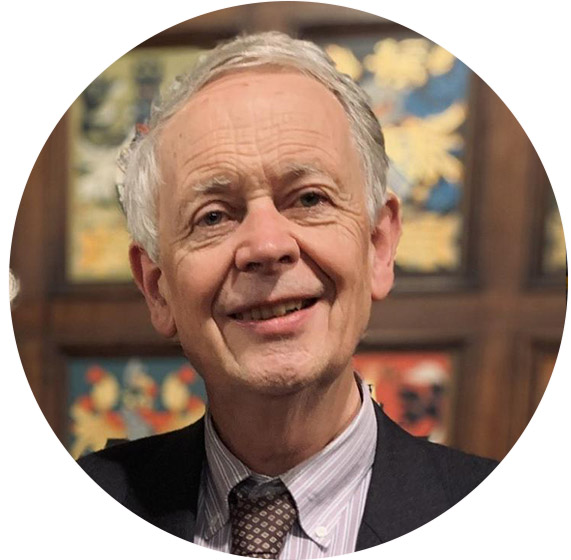
James Binney studied in Cambridge, Freiburg i Breisgau and Oxford, where in 1975 he became a research Fellow of Magdalen College. During 1975/6 he was a Lindemann Fellow in Princeton and he returned there in 1979 as a Visiting Assistant Professor. In 1981 he joined the faculty at Oxford University, where he has remained. In 2000 he was elected a Fellow of the Royal Society and in 2022 he became an International Member of the NAS. He is co-author of several text books and contributed Astrophysics and Entropy to OUP's Very Short Introduction series.
He pioneered the view that "cooling flows" are centrally heated by black holes and has worked on how virial-temperature gas feeds star formation. He has advocated modelling stellar systems with actions and shown how actions clarify the secular evolution of stellar systems.

Plenary Speaker
Adam Burgasser is a Professor of Astronomy & Astrophysics at UC San Diego, and an observational astrophysicist who studies the lowest-mass stars, brown dwarfs, and extrasolar giant planets. He has published over 350 peer-reviewed articles on these topics, using spectroscopy, high-resolution imaging, and population simulations to investigate the atmospheric, multiplicative, evolutionary, and population properties of these objects. Burgasser also conducts education research in online learning and graduate training, and works to address barriers to equity, diversity, inclusion, and belonging in science through teaching, research, and community service. Burgasser is active in AAS leadership, having served as chair of the Committee on the Status of Minorities in Astronomy and of the Ethics Working group, and as a recent Vice-President. Prior to joining the faculty at UCSD, Burgasser was Physics faculty at MIT, a Spitzer Postdoctoral Fellow at the American Museum of Natural History, and a NASA Hubble Fellow at UC Los Angeles. He has also been a US/UK Fulbright Scholar at the University of Exeter. Burgasser received his PhD in physics from Caltech in 2001.
Fred Kavli Plenary Lecturer
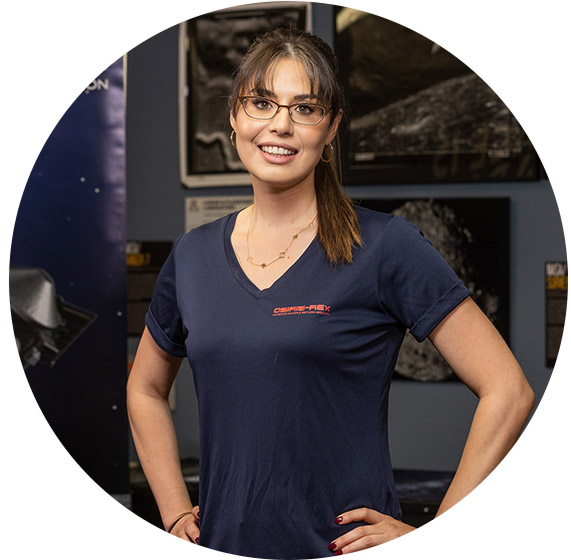
Daniella Mendoza DellaGiustina earned her PhD from the University of Arizona before starting as faculty at the University of Arizona's Lunar and Planetary Laboratory in 2022. In addition to serving as the Deputy Principal Investigator of the OSIRIS-REx sample-return mission, DellaGiustina is the Principal Investigator of OSIRIS-APEX, an extension of the OSIRIS-REx mission that will study the asteroid Apophis after its close approach to Earth in 2029. She is also leading the team building seismometers for NASA’s Artemis III mission, which will be deployed by astronauts at the Moon’s south pole in 2027 — marking the first seismic investigation of that region. DellaGiustina is the recipient of numerous awards both individually and as part of the OSIRIS-REx team.
Plenary Speaker
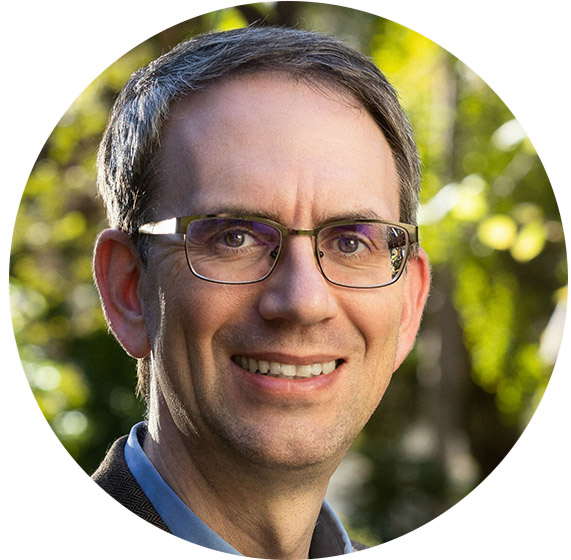
Daniel Eisenstein is the Paul C. Mangelsdorf Professor of Astronomy at Harvard University. He studies cosmology and extragalactic astronomy using theoretical and observational methods. He was part of the University of Arizona astronomy faculty for nine years before moving to Harvard in 2010. He served as the Director of SDSS-III from 2007 to 2014. He is now active in the Dark Energy Spectroscopic Instrument collaboration, serving as co-Spokesperson from 2014 to 2020. He is a member of the JWST Near-Infrared Camera instrument team and a leader of the JWST Advanced Deep Extragalactic Survey. He served as chair of the National Science Foundation Astronomy Portfolio Review committee in 2012 and of the Cosmology Science Panel of the Astro 2020 Decadal Survey. In 2014, he received the Shaw Prize in Astronomy and was elected to the U.S. National Academy of Sciences.
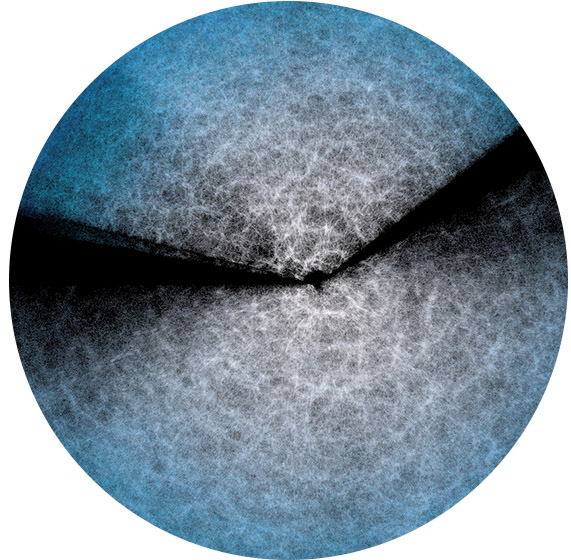
2026 Lancelot M. Berkeley–New York Community Trust Prize for Meritorious Work in Astronomy
The Dark Energy Spectroscopic Instrument (DESI) collaboration is an international experiment with more than 750 researchers from over 70 institutions around the world and is managed by the US Department of Energy’s Lawrence Berkeley National Laboratory. The state-of-the-art instrument, which captures light from 5,000 galaxies simultaneously, was constructed and is operated with funding from the DOE Office of Science. DESI is mounted on the US National Science Foundation’s Nicholas U. Mayall 4-meter Telescope at Kitt Peak National Observatory (a program of NSF NOIRLab) in Arizona.
The Berkeley Prize will be accepted on behalf of the collaboration by Daniel Eisenstein, a professor at Harvard University, member of the DESI Executive Committee, and former DESI spokesperson.

2025 Annie Jump Cannon Award in Astronomy
Maya Fishbach is an Assistant Professor at the Canadian Institute for Theoretical Astrophysics (CITA) at the University of Toronto. Fishbach studies black holes and neutron stars with a focus on stellar-mass black holes in gravitational-wave systems. Her research leverages gravitational waves and multimessenger observations to uncover how, where, and when black holes and neutron stars merge, with implications for stars, galaxies, and the cosmic expansion history. Before joining the University of Toronto in 2022, Fishbach was a NASA Einstein Fellow at Northwestern University and an NSF Graduate Research Fellow at the University of Chicago, where she got her PhD in Astronomy and Astrophysics in 2020. Fishbach is a member of the LIGO Scientific Collaboration, in which she co-chairs the Rates & Populations group. She is a Sloan Research Fellow, Scialog Fellow, and recipient of the 2023 Polanyi Prize and the 2025 Annie Jump Cannon Award. Fishbach's research is further supported by the Natural Sciences and Engineering Research Council of Canada (NSERC), the Ontario Early Researcher Award program, and the University of Toronto Connaught Fund.

Plenary Speaker
Alexander C. Furnas is a Research Assistant Professor at Northwestern University’s Kellogg School of Management, affiliated with the Center for Science of Science and Innovation, the Ryan Institute on Complexity, and a faculty associate at the Institute for Policy Research. He received his PhD in Political Science from the University of Michigan in 2020. His research examines how information, scientific knowledge and expertise shape policymaking and elite political behavior using large-scale data, survey, and computational methods. His work has been published in academic outlets including Science, Proceedings of the National Academy of Sciences, American Political Science Review, Policy Studies Journal, and the American Journal of Political Science.
Plenary Speaker
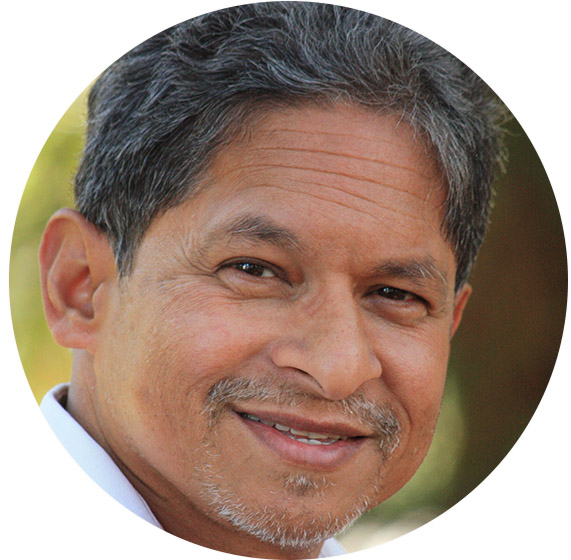
Raja GuhaThakurta is a Distinguished Professor of Astronomy and Astrophysics at the University of California Santa Cruz. He studies the formation and evolution of galaxies using the Keck telescopes, HST, JWST, etc. He founded the Science Internship Program (SIP), Shadow the Scientists (StS), and Python and Research (PyaR). These programs reside within the CrEST (Creating Equity in STEAM) department that GuhaThakurta started at UCSC. He is a member of the AURA Board of Directors, former department chair, and AAS Fellow. He received the NRC of Canada's Herzberg Memorial Prize and Fellowship in 2001 and a Sloan Fellowship in 1997. He received his PhD in Astrophysical Sciences from Princeton University in 1989.

2026 LeRoy E. Doggett Prize for Historical Astronomy
Thomas A. Hockey is honored for advancing the history of astronomy through seminal scholarship, stewardship of the Biographical Encyclopedia of Astronomers, preservation of astronomical heritage, and dedicated leadership within HAD, ensuring that astronomy’s human story is recorded, celebrated, and shared with future generations.

Plenary Speaker
Adam Leroy is a Professor in the Department of Astronomy at the Ohio State University (OSU). His research focuses on the interstellar medium, star formation, and stellar feedback and how these relate to the evolution and structure of galaxies. His work involves new surveys of local universe galaxies with NRAO’s ALMA and the Jansky VLA and NASA’s JWST. These include the PHANGS surveys and the VLA Local Group L-Band Legacy Survey. He received the 2025 Henry Draper Medal from the National Academy of Sciences and a Humboldt Research Award.

2025 Bruno Rossi Prize
Maura McLaughlin is the Eberly Distinguished Professor of Physics and Astronomy at West Virginia University. She received her B.S. from Penn State, her PhD from Cornell, and was an NSF Astronomy & Astrophysics Postdoctoral Fellow at the Jodrell Bank Observatory before joining the WVU faculty in 2006. She has received a Sloan Fellowship, a Cottrell Scholar Award, the RCSA IMPACT Award, and the Shaw Prize in Astronomy. She is Co-Director of the NANOGrav Physics Frontiers Center, which focuses on using radio timing observations of pulsars to detect and characterize low-frequency gravitational waves, and Co-Founder of the Pulsar Science Collaboratory, which engages high school and college students worldwide in pulsar science.

2025 Dannie Heineman Prize for Astrophysics
Priyamvada Natarajan, the inaugural Joseph S. and Sophia S. Fruton Professor of Astronomy & Physics at Yale and Chair of its Astronomy Department, is renowned for illuminating the nature of dark matter using gravitational lensing and tracing the growth of supermassive black holes. An external PI at Harvard’s Black Hole Initiative, she is celebrated for both scientific breakthroughs and leadership in the academic community. Her many honors include the 2025 Dannie Heineman Prize, a place on the TIME100 list (2024), and fellowships of the AAS, APS, AAA&S. and AAAS. Invested in the public dissemination of science, she has authored the critically acclaimed book Mapping the Heavens.

2025 Henry Norris Russell Lectureship
Marcia Rieke is a Regents Professor of Astronomy at the University of Arizona. Her research interests center on the study of distant galaxies. She received her degrees in physics from the Massachusetts Institute of Technology and then came to the University of Arizona in 1976 as a postdoctoral fellow and has been there ever since. She has served as the Deputy Principal Investigator on NICMOS, (the Near Infrared Camera and Multi-Object Spectrometer for the Hubble Space Telescope), Outreach Coordinator for the Spitzer Space Telescope, and Principal Investigator for near-infrared camera (NIRCam) on the James Webb Space Telescope. She has been elected to the American Academy of Arts and Science, the National Academy of Sciences, and the American Philosophical Society. She was awarded the NASA Distinguished Public Service Medal in 2023, the Gruber Cosmology Prize in 2024, and the American Astronomical Society Henry Norris Russell Lectureship in 2025.
Photo credit: Chris Gunn

Plenary Speaker
Evgenya Shkolnik is a Professor of Astrophysics at Arizona State University’s School of Earth and Space Exploration. She explores how stars shape the environments and evolution of their planets, including the impacts of space weather, both radiative and particle-driven, to understand the broader conditions for life beyond Earth. As Principal Investigator of the NASA CubeSat mission SPARCS, she leads efforts to reveal the ultraviolet variability of low-mass stars and advances research on star–planet interactions across the electromagnetic spectrum. She also co-chairs the Habitable Worlds Observatory’s Community Science and Technology Team (CSIT) and works with interdisciplinary teams of students and postdoctoral scholars, blending science and engineering to mentor the next generation of space explorers.
2025 Bruno Rossi Prize
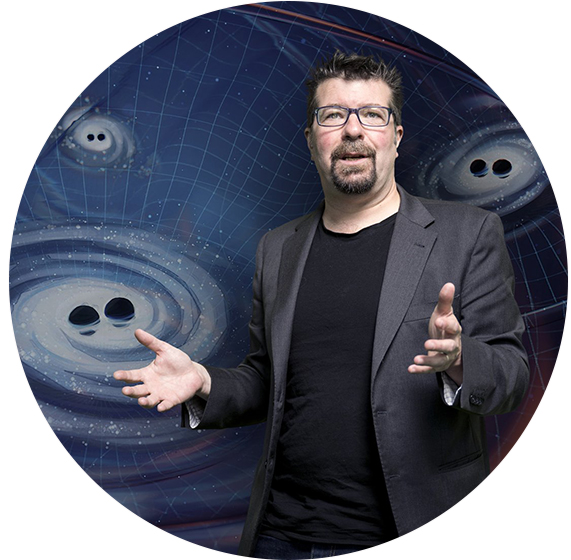
Xavier Siemens is a Professor of Physics at Oregon State University. He received his B.Sc. from Imperial College, London, his Ph.D. from Tufts University, and was a postdoctoral fellow at the University of Wisconsin—Milwaukee and Caltech. He is the Principal Investigator and co-Director of the NANOGrav Physics Frontiers Center, which uses radio timing observations of pulsars to detect and characterize low-frequency gravitational waves.
2025 Newton Lacy Pierce Prize in Astronomy
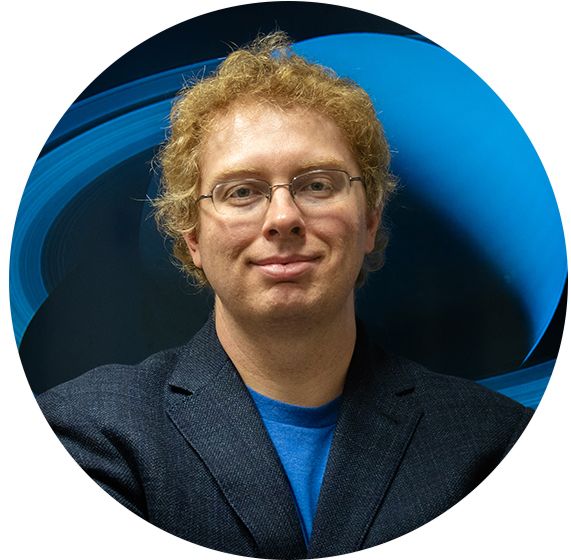
Andrew Vanderburg is an Assistant Professor of Astronomy at Harvard University. His research focuses on studying exoplanets, or planets which orbit stars other than the Sun. Andrew is interested in developing cutting-edge techniques and methods to discover new planets outside of our solar system, and studying the planets we find to learn their detailed properties. Eventually, he hopes to help answer questions like "Are the planets orbiting other stars throughout the galaxy anything like the worlds in our Solar system?" and "Could any of these planets be hospitable to life like the Earth?"