Impacted Members/Scientists: Request a membership waiver, seek meeting support, and other resources. Learn more. For the latest public policy updates, please visit this page.




245th meeting
Plenary Speakers

245

245th
meeting of the American Astronomical Society
National Harbor, MD
12
–
16 January 2025

Plenary Speaker
Giada Arney is a planetary scientist and astrobiologist in the Planetary Systems Laboratory at NASA Goddard Space Flight Center. She received her PhD in astronomy and astrobiology from the University of Washington in 2016. Her interests include astrobiology, exoplanets, and Venus. She serves as the interim Project Scientist for the Habitable Worlds Observatory and as Deputy PI for the DAVINCI mission to Venus. She also served as co-chair of the Living Worlds Working Group for the Science, Technology, Architecture Review Team (START) for Habitable Worlds Observatory. She received a NASA Early Career Achievement Medal in 2018 and was a recipient of the PECASE Award in 2019.

2025 Lancelot M. Berkeley–New York Community Trust Prize for Meritorious Work in Astronomy
The Astropy Project is a lauded community effort to develop a free and open-source core software package for astronomy using the Python programming language, as well as to foster interoperability between other Python astronomy packages.
The Berkeley Prize will be accepted on behalf of the Astropy Collaboration by Astropy Coordination Committee members Erik Tollerud (Space Telescope Science Institute), Clara Brasseur (University of St Andrews), and Kelle Cruz (CUNY Hunter College and American Museum of Natural History).
2024 Henry Norris Russell Lectureship
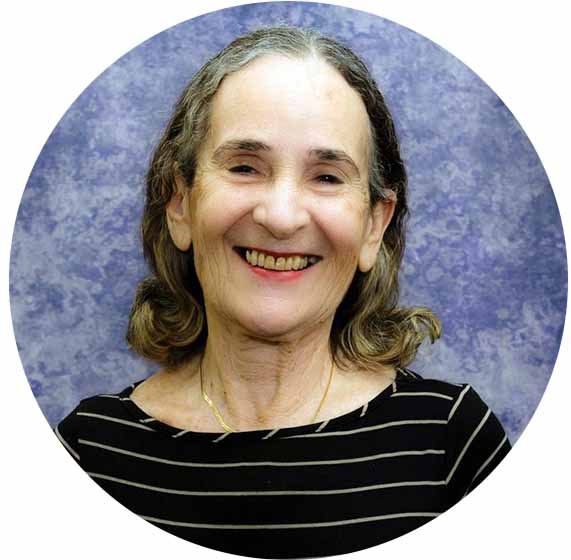
Neta A. Bahcall is the Eugene Higgins Professor of Astrophysics at Princeton University. She is Director of the Undergraduate Program in Astrophysics, recipient of the 2024 Henry Norris Russell award of the American Astronomical Society, the 2021 President’s Distinguished Teaching Award of Princeton University, past Director of the Council on Science and Technology of Princeton University, and is an elected member of the US National Academy of Sciences, the American Academy of Arts and Sciences, a Legacy Fellow of the American Astronomical Society, Past Chair of the Astronomy Section of the National Academy of Sciences, Editorial Board member of the PNAS, and past Vice-President of the AAS.

2024 Annie Jump Cannon Award in Astronomy
Jenny Bergner is an Assistant Professor of Chemistry at UC Berkeley. Her research is focused on the volatile chemistry at play during star and planet formation, and how this shapes the compositions, properties, and potential habitability of newly formed planetary systems. Her group uses telescopes like JWST and ALMA to probe the molecular composition of planet-forming material in extrasolar systems, and laboratory experiments and simulations to explore the behavior of volatile material in the extreme physical conditions of star- and planet-forming environments.

2024 Dannie Heineman Prize for Astrophysics
John E. Carlstrom is the Subramanyan Chandrasekhar Distinguished Service Professor in the Department of Astronomy and Astrophysics and the Department of Physics at the University of Chicago. He is a member of the university’s Kavli Institute for Cosmological Physics and the Enrico Fermi Institute and also holds a joint Scientist appointment at the Argonne National Laboratory. Carlstrom leads the 10 meter South Pole Telescope project, which is used to investigate the origin and evolution of the universe through measurements of the Cosmic Microwave Background. He is also the Project Scientist and NSF Principal Investigator for the cosmic microwave background experiment CMB-S4 project. Carlstrom received his B.A. from Vassar College in 1981 and his Ph.D. from the University of California-Berkeley in 1988. His honors include the Gruber Prize in Cosmology, the Magellanic Premium Medal of the American Philosophical Society, the Beatrice M. Tinsley Prize of the American Astronomical Society, and a John D. and Catherine T. MacArthur Fellowship. He is a Fellow of the APS and the AAAS, a legacy Fellow of the AAS, and is member of the American Academy of Arts and Sciences and the National Academy of Sciences.

RAS Gold Medal
Professor Gilles Chabrier received his PhD from the International Center for Theoretical Physics, changing fields to astrophysics as a postdoctoral fellow at the University of Rochester. He is the Founder and Head of the astrophysics group of École normale supérieure de Lyon and a Professor at the University of Exeter. Professor Chabrier was recently awarded the Gold Medal of the Royal Astronomical Society for his outstanding contributions to our understanding of the physics of astrophysical plasmas, to stellar and planetary astrophysics, and to Galactic astronomy. As prime examples, Professor Chabrier’s work has explored the nature of high-density environments in white dwarf interiors, leading to the transformational SegretainChabrier phase diagram. Through developing the Saumon-Chabrier theory of hydrogen pressure ionization, which led to the Saumon-Chabrier-Van Horn equation-of-state Professor Chabrier has allowed us to better understand the prevailing conditions in the interior of low-mass stars, brown dwarfs, giant planets, and the envelopes of white dwarfs and neutron stars. Within the field of Galactic astronomy, perhaps Professor Chabrier’s most impactful work is the derivation of the Galactic stellar and substellar initial mass function (IMF), the Chabrier IMF, which has become the standard IMF reference in Galactic astronomy.
Professor Chabrier has received numerous international awards, including the Johann Wempe Prize (2004), the Silver Medal of CNRS (2006), Grand Prix Jean Ricard of the French Physical Society (2010), the Eddington Medal of the Royal Astronomical Society (2011), Grand Prix Ampère of the Académie des Sciences (2014), the Fred Hoyle Medal Prize of the Institute of Physics (IOP) (2019), and Gold Medal of the Royal Astronomical Society (2024). He is an elected Fellow of the Institute of Physics.
Fred Kavli Plenary Lecturer
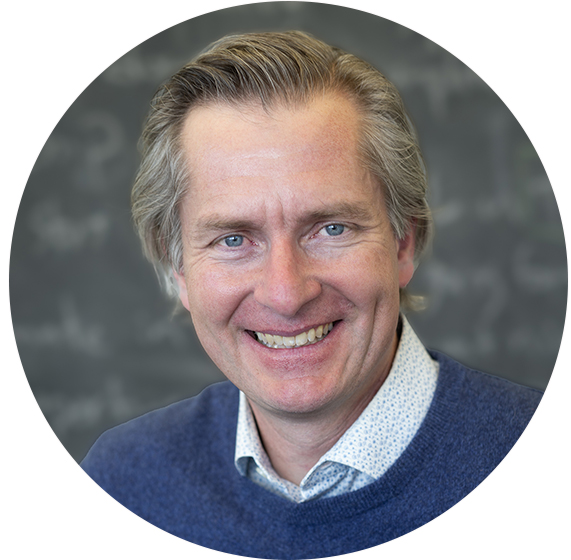
David Charbonneau is the Fred Kavli Professor of Astrophysics at Harvard University. He enjoys working with students and postdoctoral fellows to develop novel methods and instruments for the detection and characterization of planets orbiting other stars, and studies how the life cycles of the parent stars affect the presence and properties of the atmospheres of any attendant worlds. He recently co-chaired the National Academies consensus study outlining the national strategy for exoplanet research, including the search for life on planets orbiting other stars.
Image credit: Nils Lund / The Kavli Prize

2024 Newton Lacy Pierce Prize in Astronomy
Maria Drout is an associate professor in the Department of Astronomy and Astrophysics at the University of Toronto. Drout’s research focuses on understanding the evolution, influence, and ultimate fate of massive stars. She uses ground and spaced-based telescopes to study supernova explosions and other exotic transients, as well as populations of massive stars in nearby galaxies. Drout was previously a NASA Hubble Fellow at Carnegie Observatories in Pasadena, received her Ph.D. from Harvard, M.A.St from the University of Cambridge, B.Sc. from the University of Iowa. Along with collaborator Ylva Götberg, she was named to the 2024 TIME 100 Next list for their discovery of a population of hydrogen-stripped binary stars. Drout is also committed to effective science communication. She was one of the early authors of Astrobites.org and was a co-founder of the Communicating Science Workshop (ComSciCon.com).

Plenary Speaker
Kate Follette is an Associate Professor in the Department of Physics and Astronomy at Amherst College. An exoplanet astronomer, her research is motivated by a desire to understand where, when, and how planets form. She utilizes ground and space-based high-contrast imaging techniques to find and characterize young protoplanets, brown dwarfs, and circumstellar disks. She also researches STEM education and pedagogy, with a particular interest in undergraduate research mentoring and the teaching of practical numerical skills through introductory science courses for non-majors. Kate is a former Fulbright Fellow, NASA Sagan Fellow, and the recipient of a Cottrell Scholar Award.

Plenary Speaker
Jason Kalirai is the Mission Area Executive for Space Formulation at the Johns Hopkins Applied Physics Laboratory (APL). He leads a mission area responsible for the formulation of all new APL civil space initiatives, oversight of the Laboratory’s large portfolio of space science grants and cooperative agreements, and integrated initiatives that cut across our nation’s civil and national security space domains -- enabling game-changing missions and instruments on behalf of new and existing sponsors.
Jason is also the Program Chair for the Johns Hopkins Whiting School Engineering for Professionals Applied Physics Program.
Jason's work has been recognized with many awards including the American Astronomical Society’s Newton Lacy Pierce Prize, the Maryland Academy of Sciences Outstanding Young Scientist award, Baltimore Magazine’s “40 under 40” award, and 2024 Executive of the Year from the Society of Asian Scientists and Engineering.
Plenary Speaker
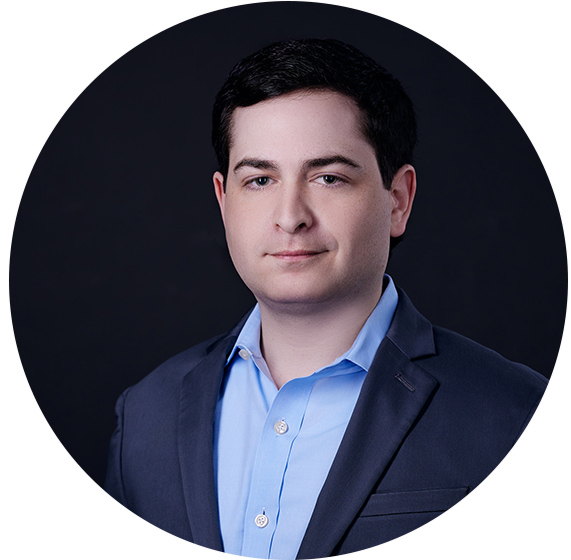
Aaron Meisner is an Associate Astronomer and Vera C. Rubin Observatory staff member at NSF NOIRLab in Tucson, Arizona. His research focuses on revealing the coldest, most ancient brown dwarfs in the solar neighborhood by combining large-scale image processing, participatory science, and machine learning techniques. He received his PhD from Harvard University in 2015 and was later a Hubble Fellow at NOAO, co-founding the Backyard Worlds participatory science project in 2017. A Forbes 30 Under 30 - Science honoree (2018), he has been recognized with various awards for his work at the intersection of big data and science popularization.

Plenary Speaker
Shouleh Nikzad is a JPL Fellow, Senior Research Scientist, Principal Engineer, a PI for Advanced Detectors, Systems, and Nanoscience, and the Science Division Leader at the NASA’s Jet Propulsion Laboratory, California Institute of Technology. She holds visiting faculty and lecturer appointments at the Caltech Physics Math, and Astronomy Division and Engineering and Applied Sciences Division. She is a fellow of the National Academy of Inventors, APS, IEEE, SPIE, and Optica. Her awards and recognitions include, AAS Weber Award, IEEE Photonics Aron Kressel Award, SPIE Luminary, SPIE Meinel Technology Achievement Award, NASA Outstanding Leadership Medal, Scientific Detector Workshop’s Lifetime Achievement Award, and IAU’s naming Asteroid (540413) Nikzad. Nikzad earned a BS in Electrical Engineering with honors from USC and an MSEE and a PhD in Applied Physics from Caltech. She holds over 20 US patents and has over 200 publications. At JPL, she established a group in ultraviolet technologies and instruments for space applications which today enjoys international recognition.

Plenary Speaker
Stella Offner is an Associate Professor of Astronomy at the University of Texas at Austin and faculty in the Oden Institute for Computational Engineering and Sciences. Her research combines high performance computing, observations, and machine learning to study how stars form and shape their environment from solar system to galaxy scales. In her role as Director of the NSF-Simons AI Institute for Cosmic Origins she aims to promote transformative AI advances to address urgent bottlenecks in astronomy research, create AI-powered astronomy infrastructure, and advance community-wide participation through accessible AI training. She is the recipient of an NSF Early Career Award and a Cottrell Scholar Award.

Plenary Speaker
David Pooley is a Professor in the Department of Physics & Astronomy at Trinity University in San Antonio, Texas. He has a broad range of interests in high energy astrophysics including supermassive black holes, supernova explosions, and close binary systems in dense stellar clusters. He received his PhD from MIT in 2003 and was subsequently a Chandra Fellow at UC Berkeley. He is dedicated to mentoring undergraduate research, having supervised over 40 undergraduates to date in obtaining, reducing, and analyzing data from Chandra, XMM-Newton, Swift, Fermi, Hubble, Spitzer, GALEX, and ground-based observatories. He is currently vice-chair of NASA's Physics of the Cosmos Program Executive Committee and chair of the Chandra Users' Committee.

Plenary Speaker
Alexandra Pope is a Professor in the Department of Astronomy at the University of Massachusetts Amherst and chair of the Five College Astronomy Department. She received her PhD from the University of British Columbia in Vancouver, Canada and was later a Spitzer Space Telescope Postdoctoral Fellow at NOAO in Tucson. Alex is an observational astronomer focused on understanding dust-obscured star formation and supermassive black hole growth in galaxies. She is the Science Lead for PRIMA, a far-infrared NASA probe mission concept, and she was a member of the NASA STDT for the Origins Space telescope. Alex is the recipient of the 2024 ADVANCE Faculty Peer Mentor Award and the 2018 Distinguished Graduate Mentor Award at UMass.
Plenary Speaker
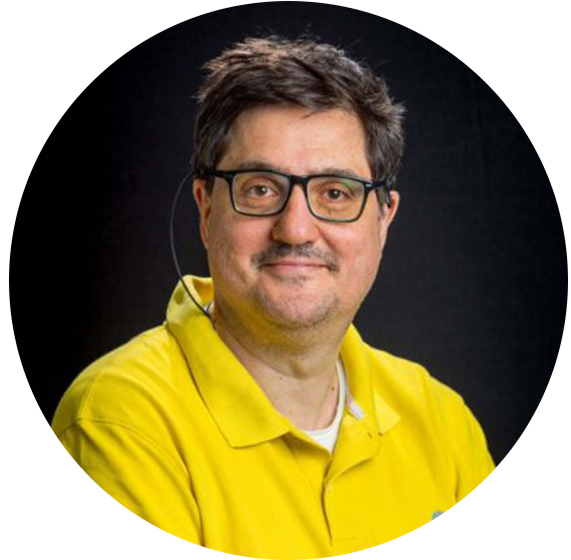
Paolo Soffitta earned his Ph.D. from Università “La Sapienza” in Rome in 1990, with a thesis on Polarimeters for X-ray Astronomy. He has contributed to many astrophysics projects, including the discovery with BeppoSAX of the extragalctic location of GRBs, awarded with the 1998 Bruno Rossi Prize. He also contributed to AGILE with the X-Ray Monitor, earning the 2012 Bruno Rossi Prize to the team. Nowdays Research Director at INAF-IAPS, following his contribution to the development of photoelectric polarimetry technology, he is the Italian Principal Investigator for the Imaging X-ray Polarimetry Explorer (IXPE) and leading the X-ray polarimetry group.

Plenary Speaker
Martin Weisskopf earned a bachelor’s degree with honors in physics from Oberlin College in Oberlin, Ohio, in 1964. After receiving his doctorate in physics from Brandeis University in Waltham, Massachusetts, in 1969, he became a post-doc and then an assistant professor at Columbia University.
He joined NASA in 1977 as senior X-ray astronomer at the agency’s Marshall Space Flight Center in Huntsville, Alabama. In addition to his work on Chandra, Weisskopf also launched a major research program in 1978 to develop and refine high-powered X-ray optics, and remains a senior co-investigator for IBIS, the European Space Agency’s international X-ray imager, which has flown on the International Gamma-Ray Astrophysics Laboratory since 2002.
Weisskopf was awarded the NASA Medal for Exceptional Service in 1992 and the NASA Medal for Scientific Achievement in 1999. He received the Hermann Oberth Award from the American Institute of Aeronautics and Astronautics in 2001, the Rossi Prize from the American Astronomical Society in 2004, and the George W. Goddard Award from the International Society for Optical Engineering in 2006.
Weisskopf is also a Fellow of the American Physical Society, the International Society for Optical Engineering, and the American Astronomical Society.
Meeting Sponsors & Partners




BRONZE


SUPPORTER