Impacted Members/Scientists: Request a membership waiver, seek meeting support, and other resources. Learn more. For the latest public policy updates, please visit this page.




11 March 2026
AAS Names Richard Teague as Fred Kavli Plenary Lecturer for 248th Meeting
With support from The Kavli Foundation, the Vice Presidents of the American Astronomical Society (AAS) name a special invited lecturer to kick off each semiannual AAS meeting with a presentation on recent research of great importance. At the 248th AAS meeting in Pasadena, California, on 15 June 2026, the Fred Kavli Plenary Lecture will be given by Dr. Richard Teague of the Massachusetts Institute of Technology (MIT).
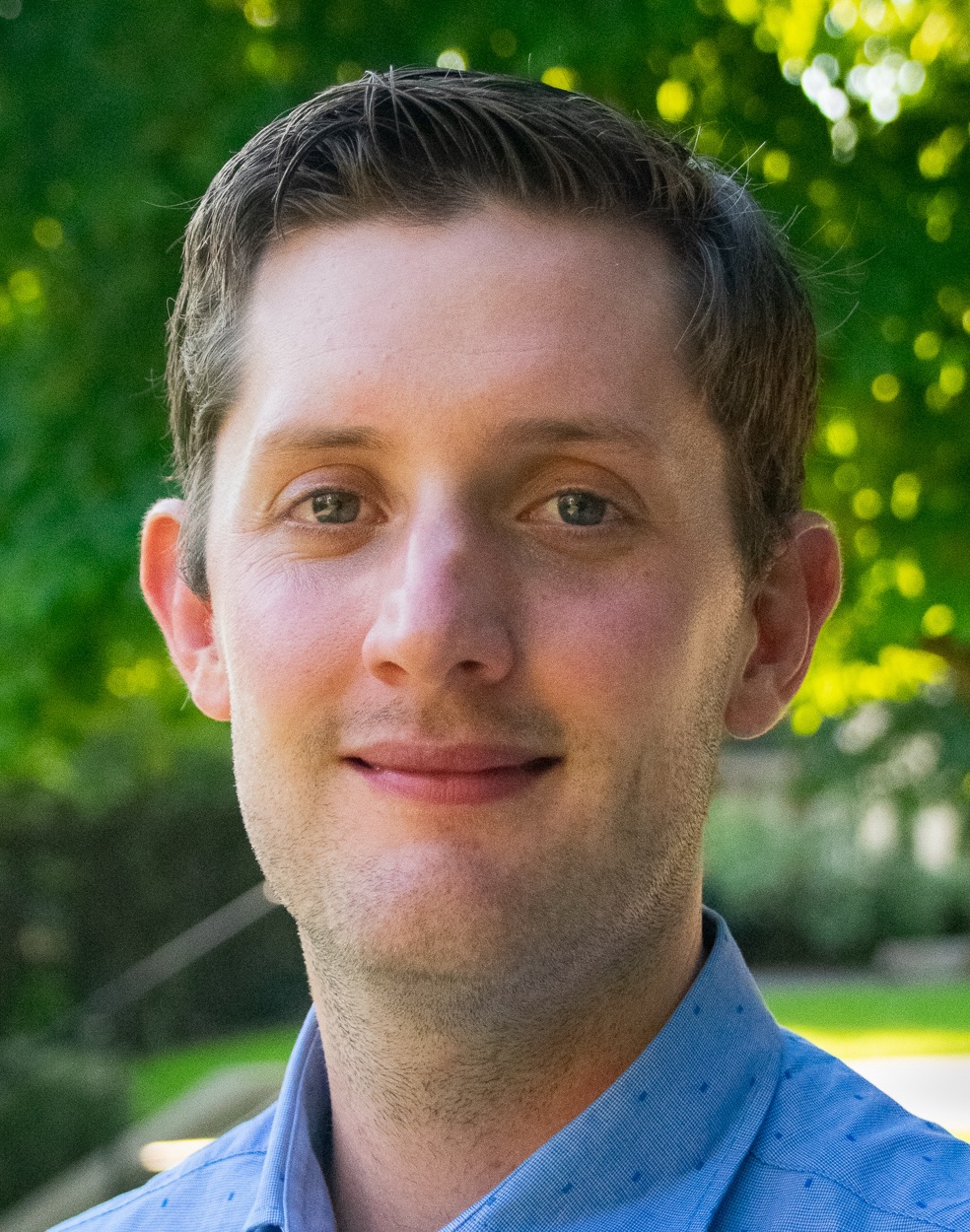 Teague has been selected to give the lecture for his pioneering work revealing the 3D kinematic velocity fields within planet-forming disks using the Atacama Large Millimeter/submillimeter Array (ALMA) — work that has enabled direct comparisons to astrophysical theory of disk motions, facilitated measurements of the unknown gas pressure structure and mass of the disks, and provided kinematical evidence for hidden gas giant planets.
Teague's work primarily uses submillimeter interferometric observations to measure the motions of gas in protoplanetary disks — the birthplaces of planets. In particular, he leverages the unparalleled spatial resolution of the powerful ALMA interferometer to obtain a view of the full structure (including three spatial dimensions and three velocity dimensions) of protoplanetary and circumplanetary disks. By using ALMA and other telescopes to map the temperatures, densities, and chemical complexities of the planet-forming material in these disks — and then comparing these observations to large-scale numerical simulations of planet formation — Teague investigates when, where, and how planetary systems form in the universe. Teague's work has established disk kinematics as a powerful tool for probing the physical conditions and unseen planetary companions within young planetary systems.
Teague earned his master’s degree in astrophysics from the University of Edinburgh and his PhD from the Max Planck Institute for Astronomy. After postdoctoral positions at the Max Planck Institute for Astronomy and the University of Michigan, followed by appointments at the Center for Astrophysics | Harvard & Smithsonian and the Smithsonian Astrophysical Observatory, Teague joined the faculty of the Massachusetts Institute of Technology in 2022.
The AAS Vice Presidents are pleased to recognize Dr. Teague’s contributions to the study of planet formation and disk dynamics with the 248th AAS Fred Kavli Plenary Lecture.
Contacts

Image:
https://aas.org/sites/default/files/inline-images/RichTeague.jpeg
Scientist Richard Teague of the Massachusetts Institute of Technology will give the Fred Kavli Plenary Lecture opening the 248th meeting of the American Astronomical Society in Pasadena, California, on 15 June 2026. Photo provided by Richard Teague.

The Kavli Foundation, established in December 2000 by Fred Kavli, a California business leader and philanthropist, is dedicated to advancing science for the benefit of humanity, promoting public understanding of scientific research, and supporting scientists and their work. The foundation’s mission is implemented through an international program of research institutes, professorships, symposia, and other initiatives in the fields of astrophysics, nanoscience, neuroscience, and theoretical physics.
The American Astronomical Society (AAS), established in 1899, is a major international organization of professional astronomers, astronomy educators, and amateur astronomers. Its membership of approximately 8,000 also includes physicists, geologists, engineers, and others whose interests lie within the broad spectrum of subjects now comprising the astronomical sciences. The mission of the AAS is to enhance and share humanity’s scientific understanding of the universe as a diverse and inclusive astronomical community, which it achieves through publishing, meetings, science advocacy, education and outreach, and training and professional development.