Impacted Members/Scientists: Request a membership waiver, seek meeting support, and other resources. Learn more. For the latest public policy updates, please visit this page.



1 October 2025
Education Committee Announces Six Winners of 2025–2026 EPD Mini-Grants
Mallory Conlon Yerkes Observatory

Tom Rice American Astronomical Society (AAS)
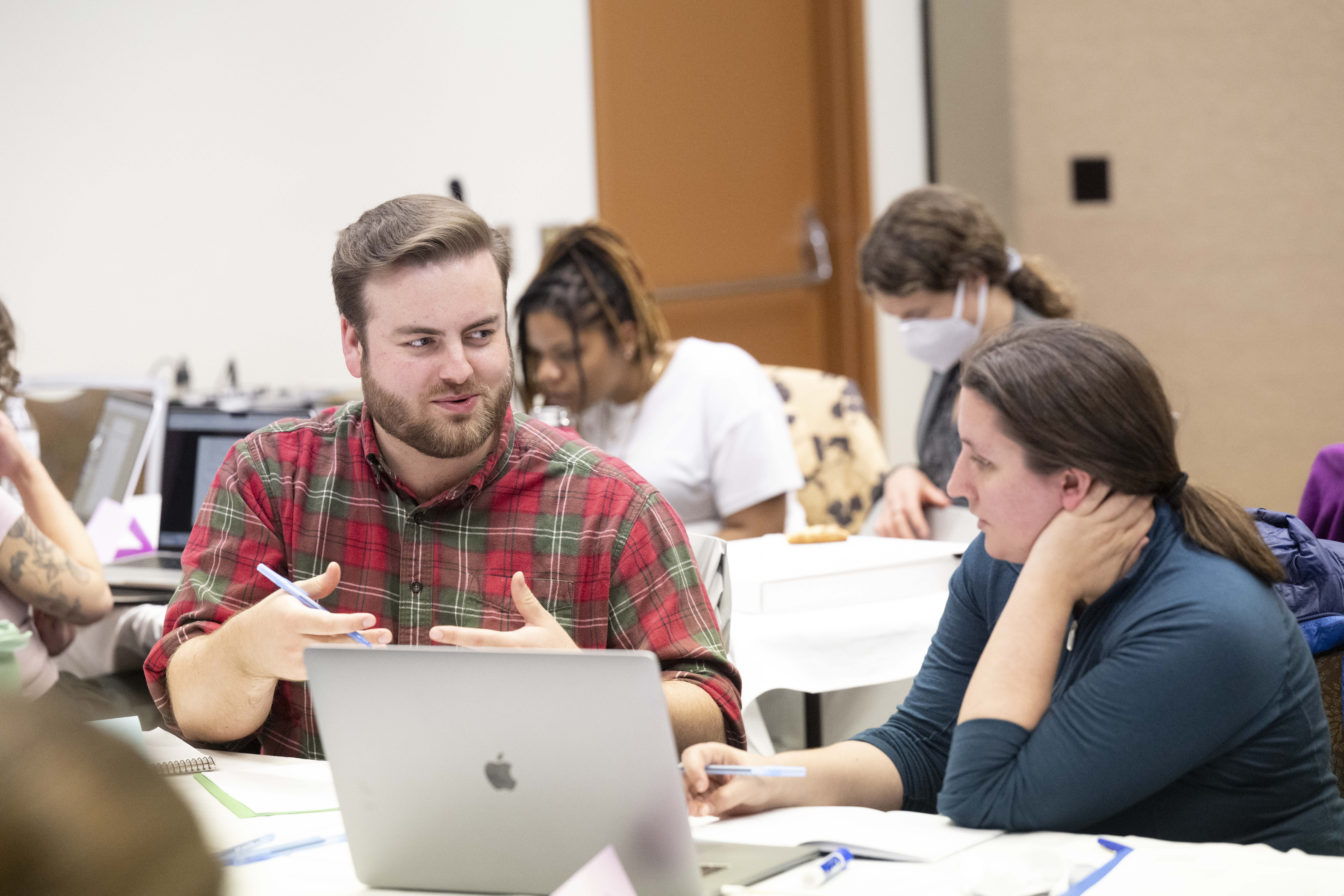
The AAS Education Committee is pleased to announce the recipients of the 2025–2026 award cycle for our Education & Professional Development (EPD) Mini-Grant program. We are proud to provide full or partial funding to the following six programs. Five of these programs will take place as workshops or splinter sessions at the AAS 247 winter meeting in Phoenix, Arizona. The other program is a virtual experience that will be available online to AAS members and the general public. To stay in the loop on what the AAS Education Committee is up to, you can sign up for the AAS Education Biweekly Newsletter. Please congratulate these winners and support their exceptional work by attending their workshops or splinter sessions at future AAS meetings and beyond!
EPD-Sponsored Workshops at AAS 247
You can sign up for these workshops when you register for this January’s AAS meeting in Phoenix, Arizona! Workshops are half-day or full-day experiences led by expert facilitators, which can help you develop critical skills; they are held on the Saturday and Sunday preceding the scientific conference program. If you have already registered, it’s not too late to add a workshop — simply log back in to the registration site, add your workshop, and check out!
Saturday, 3 January 2026
Neurodiversity, Neuroinclusion, and the Strengths of Neurodiversity in STEM
Saturday, 3 Jan | 10:00 am – 4:00 pm
This activity appears as a workshop event in the AAS meeting schedule and requires pre-registration.
Principal Investigators: Jessica Schonhut-Stasik, Olivia A. Greene, and Natasha Latouf
Research supports the benefits of neurodiversity (the cognitive differences within the human population) in STEM careers, demonstrating that individuals with neurodivergent diagnoses, such as autism, ADHD, and dyslexia, possess distinct strengths that are highly valued in STEM careers. Despite these benefits and the increased presence of neurodiversity on college campuses and high enrollment in STEM programs, neurodivergent students continue to be underserved by their departments, with high rates of mental health issues, burnout, dropout, and even termination. This EPD Proposal will fund the first-of-its-kind neuroinclusion workshop at the 2026 winter AAS meeting in Phoenix. This day-long workshop will train faculty and staff from astronomy departments in the latest research into neurodiversity, mentoring and teaching for neuroinclusion, and the Universal Design for Learning. This workshop is a collaboration between The Neuroverse Initiative (an organization that seeks to bring neuroinclusion to Space Science), the Frist Center for Autism and Innovation, and Spectrum Mentoring.
Sunday, 4 January 2026
Teaching Strategies that Work: Faculty Teaching Institute Workshop for Astronomy and Physics Educators
Sunday, 4 Jan | 8:00 am – 4:00 pm
This activity appears as a workshop event in the AAS meeting schedule and requires pre-registration.
Principal Investigators: Ed Prather, Colin Wallace, Rica French
Looking for ways to help your students improve their understanding of course topics, as well as their critical thinking and problem-solving abilities? We have all felt the frustration that comes from providing a well-designed lesson on a topic, only to have students demonstrate during office hours, on homework questions, and on exams that they have not developed a deeper understanding. In this full-day workshop, led by facilitators from the AAPT/APS/AAS Physics and Astronomy Faculty Teaching Institute, participants will learn principles of teaching and learning to guide their teaching choices, gain access to valuable resources, and receive support in planning a feasible classroom change that will improve learning for all students. Come learn a variety of effective teaching practices, such as facilitating whole-class and small-group discussions, implementing in-class voting, tutorials, and ranking tasks, as well as other active-learning curricula, and discover how to motivate students’ understanding of the role of science in society. We have specifically designed the workshop to provide a safe and supportive environment that leverages your existing expertise, fosters open discourse, and promotes reflection on your identities, beliefs, and local context. This workshop is suitable for all members of the AAS, at all stages of their career paths, including graduate students, postdoctoral researchers, middle school and high school teachers, informal educators, college faculty, research scientists, amateur astronomers, and administrators. Any instructor, regardless of their level of experience, will benefit, whether their classes are large or small, introductory or upper division, and whether they are in-person, virtual, or hybrid.
Building Thriving Departments & Programs: Strategies to Promote Recruitment, Retention, and Career Preparation
Sunday, 4 Jan | 9:00 am – 12:00 pm*
This activity appears as a workshop event in the AAS meeting schedule and requires pre-registration.
Also see an additional Special Session on this topic at AAS 247 on Monday, 5 January.
Principal Investigators: Christine O’Donnell, Mike Jackson
Astronomy, astrophysics, and physics programs face numerous challenges, including how to provide robust career preparation, create and sustain welcoming cultures and climates, and navigate threats such as small program enrollments. The Effective Practices for Physics Programs (EP3) Initiative was created to address these needs and support undergraduate physics and astronomy programs to thrive. We propose to present at the AAS 247 meeting: (1) a half-day workshop for department chairs and faculty leaders to explore EP3 resources and develop an action plan for next steps, such as how they will work with colleagues to create data-driven change efforts to address their own programs’ needs; and (2) a special session during the meeting that will engage a broader audience of faculty, staff, students, etc. to learn about the many ways that the EP3 Guide can support their needs, including improving teaching, supporting students, and advocating for change.
Just and Inclusive Classrooms: Nontraditional Grades and Assessments
Sunday, 4 Jan | 9:30 am – 1:00 pm
This activity appears as a workshop event in the AAS meeting schedule and requires pre-registration.
Principal Investigator: Mariah MacDonald, Dhanesh Krishnarao, Rachel McClure
Although deeply rooted in our curriculum and society, grades have been shown to be harmful to, and unpredictive of, student learning and ability. More alarmingly, grades encourage students to optimize their points by taking what they perceive as the easiest path, leading to rushed assignments, academic dishonesty, lower motivation, and additional barriers to learning. Ungrading, the practice of not assigning grades, can enhance student learning and engagement by focusing on feedback and growth. Similarly, switching from traditional exams to more learning-oriented assessments can improve student performance, motivation, and self-efficacy. We propose hosting a workshop at the 247th AAS meeting in Phoenix, Arizona, to help educators transition a traditional classroom to an ungraded classroom with nontraditional assessments. This workshop is open to all educators, including those currently teaching and those interested in learning more about these equitable and inclusive practices.
Monday, 5 January 2026
How to Create and Advocate for Departmental Change with the EP3 Guide
Monday, 5 Jan | 10:00 – 11:30 am
This activity appears as a special session and does not require pre-registration.
Principal Investigators: Christine O’Donnell, Mike Jackson
In this session, we will introduce participants to the Effective Practices for Physics Programs (EP3) Guide, a resource developed by the APS and AAPT to curate recommendations that astronomy, astrophysics, and physics programs can adapt to meet their local needs and contexts. The Guide (https://ep3guide.org/) includes 34 published sections with evidence-based practices that cover topics such as career preparation, research-based teaching practices, community engagement and outreach, departmental culture and climate, and leadership skills. Content on the EP3 Guide website is developed using a thorough contribution, synthesis, and peer review process; to date, over 250 people from over 100 institutions have participated in developing the EP3 Guide. This initiative also includes a process through which existing content is reviewed and updated along with the development of new content.
Leveraging the Power of Cosmic Messengers with Rubin and LIGO
Monday, 5 Jan | 12:30 – 3:30 pm
This activity appears as a splinter event and does not require pre-registration.
Principal Investigators: Ardis Herrold, Justine Schaen, and Maggie Jensen
Join us for a professional development workshop exploring the exciting field of time-domain, multi-messenger astronomy. This session highlights a unique collaboration among the NSF–DOE Vera C. Rubin Observatory, the Laser Interferometer Gravitational-Wave Observatory (LIGO), and the International Gemini Observatory. Participants will learn how gravitational wave events detected by LIGO can potentially be located using Rubin Observatory’s fast response time and wide-field imaging capabilities, enabling coordinated observations with telescopes like those at Gemini. Educators will engage with hands-on classroom activities that illustrate how different cosmic messengers contribute distinct information — and how their combined analysis deepens our understanding of cataclysmic astrophysical events. This workshop is ideal for high school and college-level (Astro 101) instructors, as well as anyone involved in astronomy education or public outreach.
Events held outside AAS meetings
Strengthening Community Across Artists and Scientists
Stay tuned! You can experience this program virtually at a future date.
Principal Investigators: Michael L. Wong, Haleigh E. Nyberg, Ashika Capirala, Lucas M. Fifer, Émilie A. Laflèche, Douglas E. Nyberg, Rebecca C. Payne, Evan L. Sneed
Art is key to effective science communication within and beyond the scientific community. However, most scientists are not trained in art or to engage with art and its role in communicating science. Even when scientists are aware of good aesthetic practices, they may not possess the skills, time, or resources to generate effective art. Thus, we aim to strengthen the community across artists and scientists in an effort to better incorporate artists into the scientific ecosystem via a two-pronged approach. First, we will host a monthly virtual art–science seminar series and a quarterly virtual art–science workshop series, where AAS members can learn from fellow scientists and artists with experience in art–science projects/collaborations. Second, we will launch and maintain an online platform, the PortAL Linking Artists and Scientists (PALLAS), to facilitate connections and spur collaborations between artists and scientists.
Congratulations again to these outstanding 2025-2026 EPD Mini-Grant recipients! Please stay tuned via the AAS Education Biweekly Newsletter for information on upcoming opportunities, including future workshops and the next Call for Proposals for the EPD Mini-Grant program, scheduled for Summer 2026.