Impacted Members/Scientists: Request a membership waiver, seek meeting support, and other resources. Learn more. For the latest public policy updates, please visit this page.




16 October 2024
This Month in Astronomical History: October 2024
Michael Marotta American Astronomical Society (Amateur Affiliate)
 Each month as part of this series from the AAS Historical Astronomy Division (HAD), an important discovery or memorable event in the history of astronomy will be highlighted. This month, Mike Marotta writes about the first artificial Earth satellite, Sputnik 1. Interested in writing a short (500-word) column? Instructions along with previous history columns are available on the HAD web page.
Sputnik 1
The launch of the Sputnik 1 on 4 October 1957 was more than another milestone in the development of technical tools for astronomy. The announcement by Pravda, the official newspaper of the Communist Party of the USSR (Figure 1), had a “Pearl Harbor effect on American public opinion.”1 Sociologists use the term “moral panic” to explain any widespread public reaction to a new perceived threat that is alleged to strike at the most basic values of a community, including its physical safety.2,3 Although criminologists point out that such threats are often illusory and are easily explained as the products of faddish news media.4 The fact remains that Sputnik 1 and the subsequent successes of the USSR extending space-borne astronomy and astronautics energized America to respond. The “space race” was on.
President Eisenhower downplayed the launch of Sputnik 1.5,6 Contrary to America’s "moral panic," the Eisenhower administration was pursuing a planned and measured program of space exploration as part of the International Geophysical Year 1957-1958. Despite the rush by the US Navy to launch its Vanguard satellite (which failed dramatically) and the US Army to loft its Explorer instrument (successfully), according to Donald A. Quarles, Deputy Secretary of Defense, there was initially no sense of special urgency aside from participating in the international scientific celebration. Moreover, it was considered important to separate the open nature of scientific research from the military requirements.11 Thus, NASA was created on 29 July 1958, its civilian mission having been divorced from the Defense Advanced Research Project Agency (DARPA).
Meanwhile, American public education in mathematics and science came under critical scrutiny, and new secondary school curricular programs were created in physics, chemistry, and biology. Widely heralded textbooks and laboratory manuals from the Physical Science Study Committee (PSSC), the Chemical Education Materials Study (CHEMS), and the Biological Sciences Curriculum Study (BSCS) were offered in high schools for those pupils who were pre-selected for university studies in science. The actual results were less than stellar.
Nationwide average scores on the Scholastic Aptitude Tests from the College Board peaked in 1964. Among the likely elements in the set of causal factors were parental education, family income, and community of origin.7 While it is true that freshmen entering college in 1963 were measurably better at physics than those from 1958, teaching from PSSC materials made little difference in university physics classes across the 1963 cohort.8,9 Objective measures of university enrollments across the years 1963 to 1967 do not support any claims for special science classes in high school leading directly to success in college science classes.8,9 Mathematics education did make a difference. By 1963, it was common for freshmen to bring with them more than two years of high school maths.10
President Eisenhower’s reserved demeanor taken for non-involvement and his Republican administration was soon eclipsed by the election in 1960 of a more youthful Democrat John Kennedy who symbolized a “New Frontier” for America. On 25 May 1961, President Kennedy addressed Congress: “I believe that this nation should commit itself to achieving the goal, before this decade is out, of landing a man on the Moon and returning him safely to the Earth. No single space project in this period will be more impressive to mankind, or more important for the long-range exploration of space; and none will be so difficult or expensive to accomplish.” Its early successes and continued achievements notwithstanding, the USSR was unable to keep up with America.
Ultimately, the launch of Sputnik 1 heralded a new revolution in astronomy as space-borne telemetry and observation followed the invention of radio astronomy, the applications of photography and spectroscopy, and, of course, the first space telescopes. Today, the huge population of machines in orbit has created a different type of concern as ground-based astronomers find their star field images overwritten by traversing satellites.
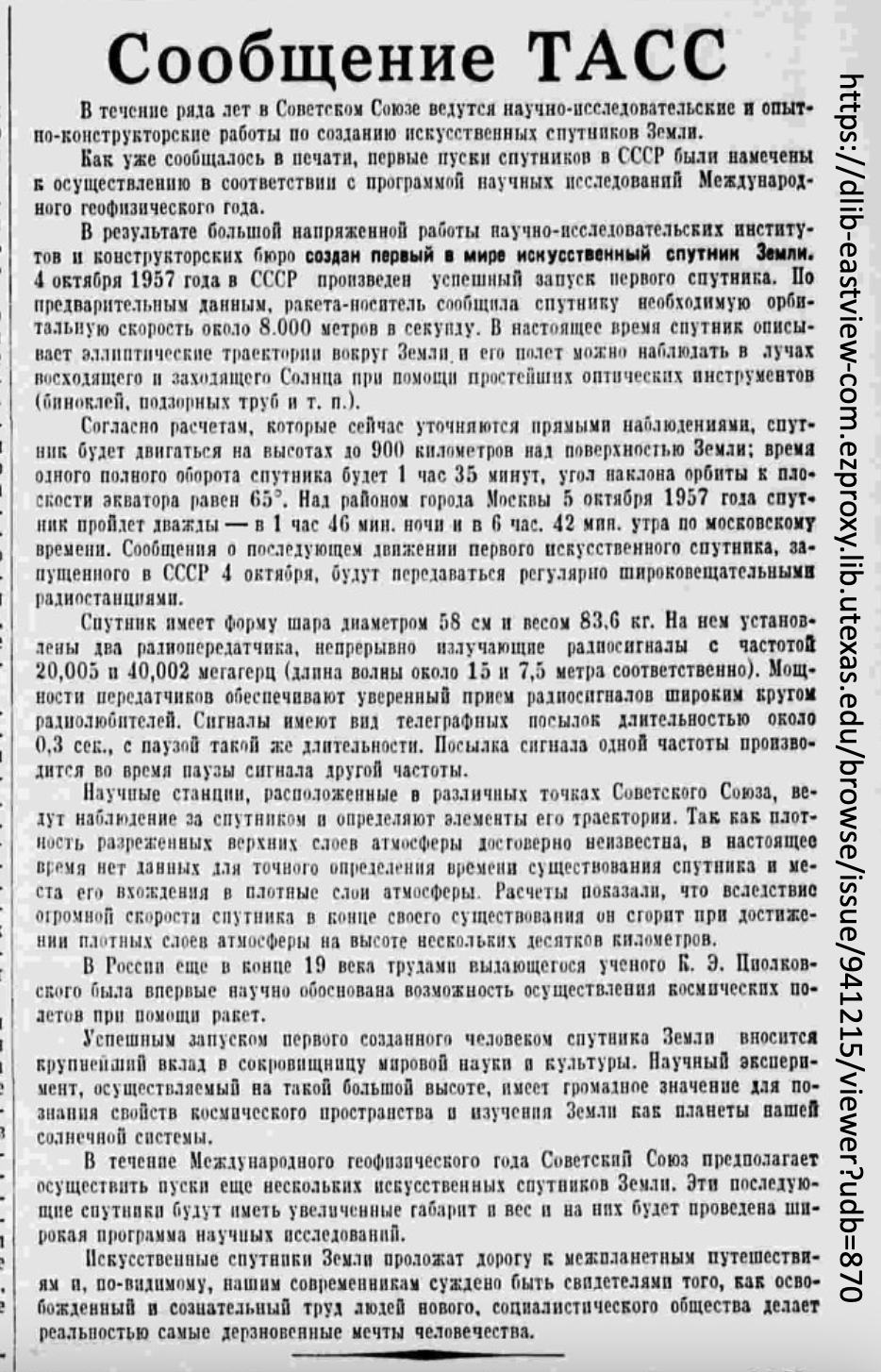
Fig. 1: First announcement in Pravda, 5 October 1957.
Translation:
For several years scientific research and experimental design work have been conducted in the Soviet Union on the creation of artificial satellites of the earth.
As already reported in the press, the first launching of the satellites in the USSR were planned for realization in accordance with the scientific research program of the International Geophysical Year.
As a result of very intensive work by scientific research institutes and design bureaus the first artificial satellite in the world has been created. On October 4, 1957, this first satellite was successfully launched in the USSR. According to preliminary data, the carrier rocket has imparted to the satellite the required orbital velocity of about 8000 meters per second. At the present time the satellite is describing elliptical trajectories around the earth, and its flight can be observed in the rays of the rising and setting sun with the aid of very simple optical instruments (binoculars, telescopes, etc.).
According to calculations which now are being supplemented by direct observations, the satellite will travel at altitudes up to 900 kilometers above the surface of the earth; the time for a complete revolution of the satellite will be one hour and thirty-five minutes; the angle of inclination of its orbit to the equatorial plane is 65 degrees. On October 5 the satellite will pass over the Moscow area twice—at 1:46 a.m. and at 6:42 a.m. Moscow time. Reports about the subsequent movement of the first artificial satellite launched in the USSR on October 4 will be issued regularly by broadcasting stations.
The satellite has a spherical shape 58 centimeters in diameter and weighs 83.6 kilograms. It is equipped with two radio transmitters continuously emitting signals at frequencies of 20.005 and 40.002 megacycles per second (wave lengths of about 15 and 7.5 meters, respectively). The power of the transmitters ensures reliable reception of the signals by a broad range of radio amateurs. The signals have the form of telegraph pulses of about 0.3 seconds duration with a pause of the same duration. The signal of one frequency is sent during the pause in the signal of the other frequency.
Scientific stations located at various points in the Soviet Union are tracking the satellite and determining the elements of its trajectory. Since the density of the rarified upper layers of the atmosphere is not accurately known, there are no data at present for the precise determination of the satellite's lifetime and of the point of its entry into the dense layers of the atmosphere. Calculations have shown that owing to the tremendous velocity of the satellite, at the end of its existence it will burn up on reaching the dense layers of the atmosphere at an altitude of several tens of kilometers. “As early as the end of the nineteenth century the possibility of realizing cosmic flights by means of rockets was first scientifically substantiated in Russia by the works of the outstanding Russian scientist K[onstatin] E. Tsiolkovskii [Tsiolkovskiy].
The successful launching of the first man-made earth satellite makes a most important contribution to the treasure-house of world science and culture. The scientific experiment accomplished at such a great height is of tremendous importance for learning the properties of cosmic space and for studying the earth as a planet of our solar system.
During the International Geophysical Year the Soviet Union proposes launching several more artificial earth satellites. These subsequent satellites will be larger and heavier and they will be used to carry out programs of scientific research.
Artificial earth satellites will pave the way to interplanetary travel and, apparently our contemporaries will witness how the freed and conscientious labor of the people of the new socialist society makes the most daring dreams of mankind a reality.
Siddiqi, Asif (trans). (2017). Published in Behind the Sputniks (1958), pp. 311-12. Selected, edited, and annotated by Asif Siddiqi. Original Uploaded Date 2017-09-28. Wilson Center Digital Archive. Woodrow Wilson International Center for Scholars One Woodrow Wilson Plaza - 1300 Pennsylvania Ave, NW, Washington, DC 20004-3027. https://digitalarchive.wilsoncenter.org/document/pravda-newspaper-article-announcement-first-satellite]
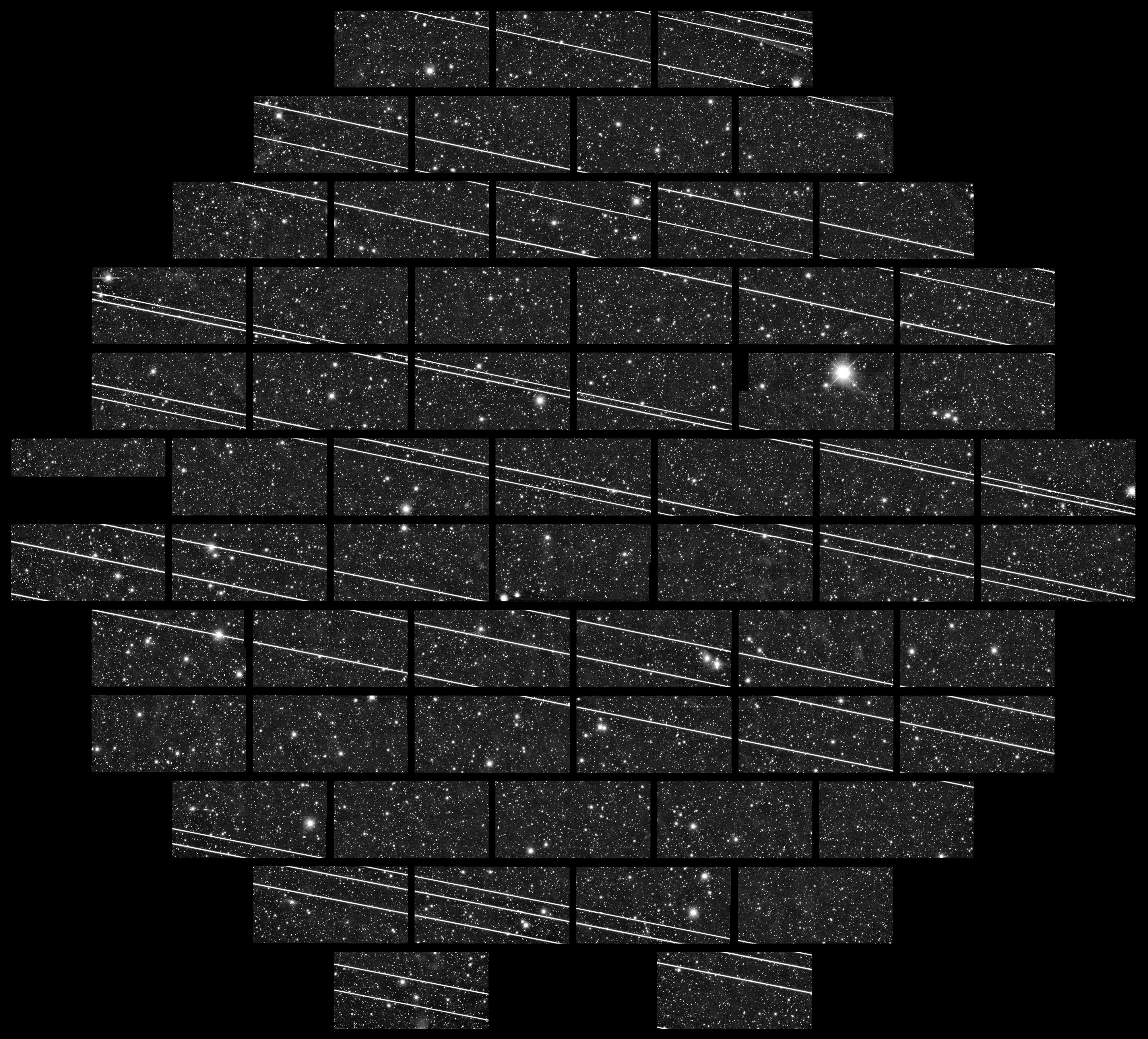
Fig. 2: https://noirlab.edu/public/images/iotw1946a/
333 seconds exposure displaying 19 streaks caused by a batch of Starlink satellites. Image Id: iotw1946a; Collage; Release date: Nov. 13, 2019, 3 a.m. 772 nm wavelength from the Víctor M. Blanco 4-meter Telescope. NSF NOIRLab (US National Science Foundation National Optical-Infrared Astronomy Research Laboratory).
References
- Launius, Roger D. (2005). “Sputnik and the Origins of the Space Age.” https://www.nasa.gov/history/sputnik/sputorig.html (Accessed 20 September 2024. 3:34 PM)
- https://en.wikipedia.org/wiki/Moral_panic
- Cohen, Stanley. (1972, 2011). Folk Devils and Moral Panics The creation of the Mods and Rockers. MacGibbon and Kee Ltd., 1972. Routledge Classics 2011.
- Barak, Gregg. (1994). Media, Process and the Social Construction of Crime: studies in newsmaking criminology, Garland Publishing, New York; London.
- https://history.state.gov/milestones/1953-1960/sputnik
- Rigden, John S. (2007). “Eisenhower, scientists, and Sputnik,” Physics Today, June 2007.
- https://en.wikipedia.org/wiki/SAT
- Kruglak, Haym. (1969). “Pre- and Post-Sputnik Physics Background of College Freshmen.” Journal of Research in Science Teaching. Vol 6., p. 42-43
- Kruglak, Haym. (1969). “Pre- and Post-Sputnik Physics Background of College Freshmen--II.” Journal of Research in Science Teaching. Vol 7., p. 41-42
- Kruglak, Haym. (1970). “High School Mathematics Background of College Freshmen before and after Sputnik.” The Mathematics Teacher. Vol/. 63. No. 4, (April 1970), p. 339-341.
- Goodpaster, A. J. (Brig. Gen). (1957). “Memorandum of Conference with the President, October 8, 1957, 8:30 AM.” https://www.archives.gov/education/lessons/sputnik-memo