Impacted Members/Scientists: Request a membership waiver, seek meeting support, and other resources. Learn more. For the latest public policy updates, please visit this page.




Impacted Members/Scientists: Request a membership waiver, seek meeting support, and other resources. Learn more. For the latest public policy updates, please visit this page.

This post is based on an American Astronomical Society press release:
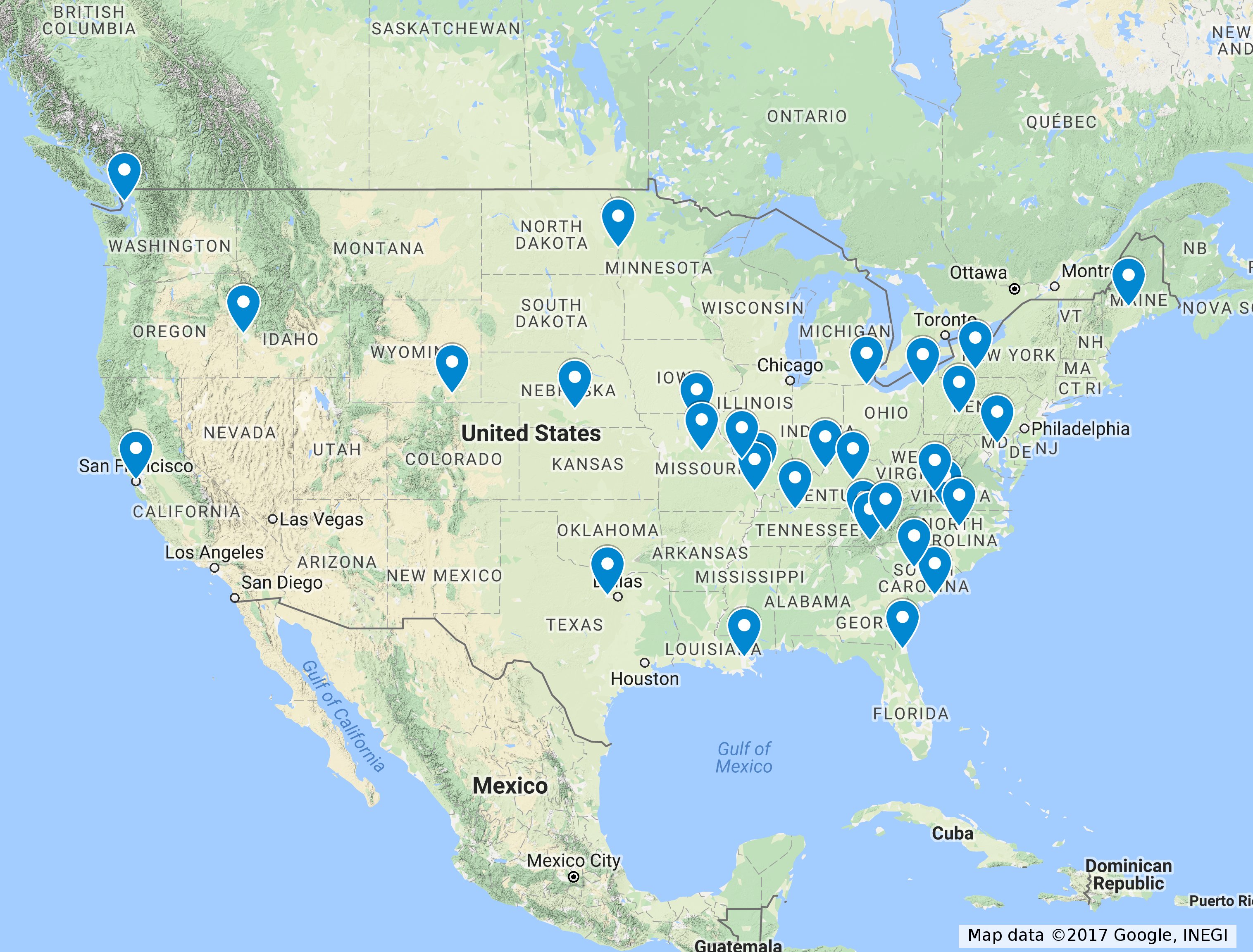
Thirty-one outreach projects in 21 states are receiving mini-grants up to $5,000 from the AAS to prepare the public for this year’s most anticipated celestial spectacle: the first total eclipse of the Sun to touch the US mainland since 1979 and the first to span the continent since 1918. This nationwide educational effort is funded by the National Science Foundation and administered by the AAS Solar Eclipse Task Force. It is specifically aimed at reaching members of under-represented groups, including women/girls, ethnic minorities, and people with physical and/or mental disabilities, who often don’t imagine themselves in science careers or who think that science is not for them.
On Monday, 21 August 2017, a total solar eclipse will darken a roughly 70-mile-wide swath of the US from Oregon (in the late morning) to South Carolina (in the mid-afternoon). Millions of citizens and visitors will have a chance to see the ethereal solar corona — the Sun’s wispy outer atmosphere — and experience “darkness at midday.” Outside this narrow path of totality, all of North America will have a partial solar eclipse. The event is being called the Great American Eclipse or All-American Eclipse because the Moon’s dark shadow crosses the entire continental US but touches no other country as it travels 8,600 miles across Earth’s surface.
The AAS mini-grants program is named for Julena Steinheider Duncombe (1911-2003), an astronomer and educator who started the country’s first school-lunch program for underprivileged children. For many years she published eclipse predictions for the US Naval Observatory. Several towns in Nebraska where she taught will be in the path of the Moon’s shadow on 21 August 2017.
The following organizations/institutions and principal investigators (PIs) are receiving Julena Steinheider Duncombe mini-grants from the AAS Solar Eclipse Task Force:
These projects will engage the public via eclipse-related education and outreach activities in a wide variety of venues, including science museums, planetariums, libraries, schools, afterschool programs, and college campuses — some in the path of totality, others in places where the eclipse will only be partial. Brief descriptions of the funded projects, and email links to the principal investigators, may be found on the AAS solar-eclipse website.