Impacted Members/Scientists: Request a membership waiver, seek meeting support, and other resources. Learn more. For the latest public policy updates, please visit this page.




246th meeting
Plenary Speakers

246

246th
meeting of the American Astronomical Society
Anchorage, Alaska
8
–
12 June 2025

Plenary Lecture
David Ciardi is the NASA Exoplanet Science Institute (NExScI) Deputy Director at Caltech/JPL and has been a leader in infrared astronomy and exoplanet research for over 20 years. He is a member of the science teams for the exoplanet-finding space missions CoRoT, Kepler, K2, and TESS where he has been a leader of the ground-based follow-up observations of transiting planet candidates from these space missions. He has extensive experience in the use of combining space-based and ground-based observations in the discovery and characterization of exoplanets. He has co-authored more than 260 refereed papers, and in 2016, he was awarded the NASA Exceptional Scientific Achievement Medal for his work on Kepler, leading the ground-based effort as part of the Kepler discovery of exoplanets.

2025 Helen B. Warner Prize for Astronomy
Susan E. Clark is an Assistant Professor in the Physics Department at Stanford University, and a senior member of Stanford’s Kavli Institute for Particle Astrophysics and Cosmology (KIPAC). Clark's research focuses on understanding cosmic magnetism and the physics of the interstellar medium. Clark and her group at Stanford work on a diverse set of problems involving Galactic and extragalactic magnetic fields, the 3D structure of the interstellar medium, interstellar turbulence, star formation, and polarized cosmological foregrounds, among other topics. Clark enjoys deciphering physical meaning from complex, multiwavelength data, and currently serves as the co-director of Stanford Data Science’s Center for Decoding the Universe. Prior to joining the Stanford faculty, Clark was a NASA Hubble Fellow at the Institute for Advanced Study, and received her PhD from Columbia University in 2017. She is a recent recipient of a Sloan Research Fellowship and an NSF CAREER award.
Photo credit: Christopher Michel
2025 Donald E. Osterbrock Book Prize for Historical Astronomy
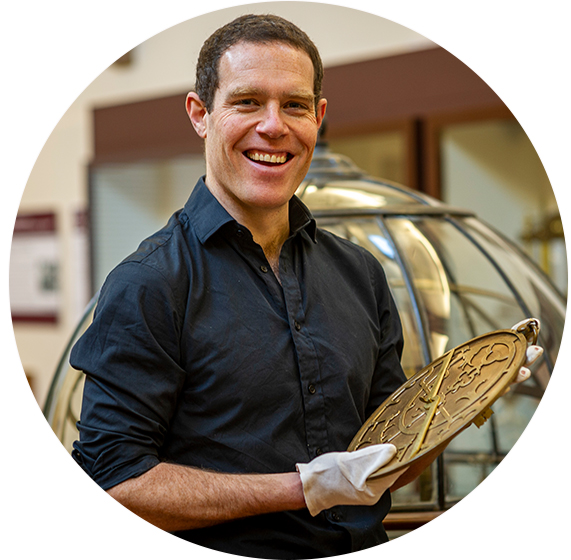
Seb Falk is a Fellow of Girton College, University of Cambridge. His research explores astronomy, and the related sciences of mathematics, navigation and medicine, in the pre-modern world. He works particularly with medieval astronomical instruments and manuscripts, examining how astronomy was studied, taught and developed in newly founded universities and monasteries, and how ideas and inventions have been communicated across diverse cultures. His first book, The Light Ages: The Surprising Story of Medieval Science, was named Book of the Year in multiple publications including The Times. Before taking a PhD in History and Philosophy of Science at Cambridge (2016), Seb was a school teacher. He is also a qualified Yachtmaster, a keen singer, and has appeared on many radio shows and podcasts.
Fred Kavli Plenary Lecture
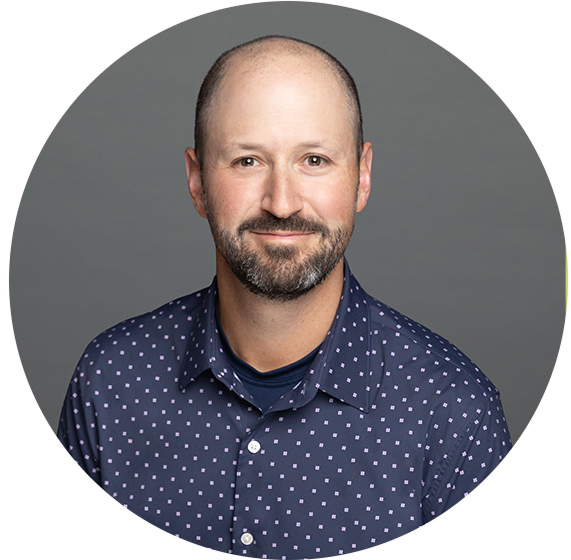
Steven Finkelstein is a Professor and the Director of the Cosmic Frontier Center in the Department of Astronomy at the University of Texas at Austin. He received his BS from the University of Washington in 2003 and a PhD in physics from Arizona State University in 2008. He was a postdoctoral researcher at Texas A&M University followed by a Hubble Fellowship at The University of Texas at Austin, where he became faculty in 2012. His research focuses on the discovery and characterization of the most distant galaxies in the universe, with an emphasis on studying their evolution from that distant epoch to today. He is the PI of CEERS and Co-PI of NGDEEP JWST Cycle 1 programs.
Plenary Speaker
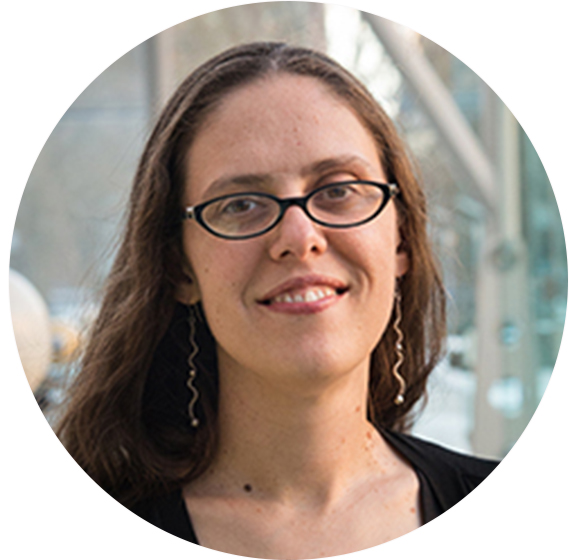
K.E. Saavik Ford is a Professor in the Department of Science at City University of New York (CUNY) Borough of Manhattan Community College, and a Professor of Physics at the CUNY Graduate Center. She is also a Research Associate at the American Museum of Natural History and; a Visiting Scientist at the Center for Computational Astrophysics at the Flatiron Institute. Her main research interests are focused on Active Galactic Nuclei (AGN), time-domain astronomy, gravitational waves, and the AGN Channel for stellar mass binary black hole mergers. She is a leader in efforts to broadly characterize 'things in AGN disks' including AGN-TDE, BBH mergers, EMRIs. She also leads development of the Monte carlo For AGN Channel Testing and Simulations (McFACTS), the first publicly available population synthesis code for the full AGN Channel. She is a founder of AstroCom NYC, an initiative to improve recruitment and retention of underrepresented minorities in astronomy and astrophysics through education, research, and mentoring. Prof. Ford is dedicated to continuously improving the environment in the profession of astronomy, to support the excellence of the whole persons who choose to become astronomers, and to encourage other astronomers to do the same.

Plenary Speaker
Erin K. S. Hicks is a Professor of Astronomy in the Department of Physics and Astronomy at the University of Alaska Anchorage. Her research explores the connection between supermassive black holes and galaxy evolution, with an emphasis on multiwavelength observations that characterize fueling and feedback processes within the circumnuclear regions of nearby active galactic nuclei. She earned her Ph.D. in Astronomy and Astrophysics at the University of California Los Angeles and was a postdoctoral researcher at the Max Planck Institute for Extraterrestrial Physics followed by an NSF Astronomy and Astrophysics Postdoctoral Fellow at the University of Washington.

Plenary Speaker
Meredith Hughes is an Associate Professor of Astronomy at Wesleyan University. Her research involves studying planet formation by observing disks of gas and dust around nearby young stars with large radio telescopes — from the planet-forming protoplanetary disk stage through the debris disk stage that is analogous to our own solar system’s Kuiper belt. She holds a BS from Yale University and a PhD from Harvard University, was a Miller Fellow at UC Berkeley, and is the recipient of a Cottrell Scholar Award as well as Wesleyan’s Binswanger Prize for excellence in teaching.

2025 George Ellery Hale Prize
James Klimchuk is an astrophysicist in the Heliophysics Science Division at NASA Goddard Space Flight Center. He uses a combination of observation, theory, and simulation to study the structure, heating, stability, and dynamics of the outer solar atmosphere, including phenomena of importance for space weather. He was elected chair of the AAS Solar Physics Division, president of the AGU Space Physics and Aeronomy Section, and president of IAU Commission 10. He is an Honorary Fellow of the Royal Astronomical Society and was awarded NASA’s Outstanding Leadership Medal, Goddard’s John C. Lindsay Memorial Award, AGU’s honorary Parker Lecture, and AAS’s George Ellery Hale Prize.

Plenary Speaker
Dimitri Mawet is the David Morrisroe Professor of Astronomy at Caltech and a Senior Research Scientist at NASA’s Jet Propulsion Laboratory. Mawet leads a multidisciplinary team of students, postdoctoral researchers, and engineers to develop and use advanced instrumentation and methodologies for high-contrast imaging and spectroscopy of exoplanets. He directs Caltech’s Exoplanet Technology Laboratory and the High Contrast Spectroscopy Testbed for Segmented Telescopes, both focused on advancing technologies for NASA’s Habitable Worlds Observatory and future ground-based facilities. Mawet serves as Principal Investigator for several Keck Observatory instruments, including KPIC and HISPEC, as well as MODHIS on the Thirty Meter Telescope.

LAD Plenary Lecture
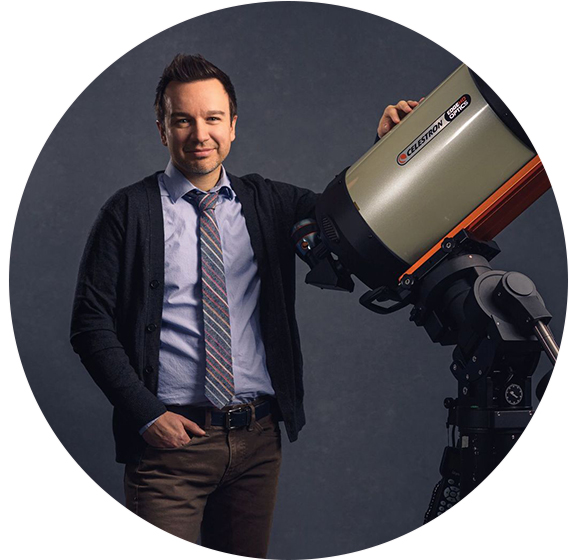
William McKinnon, the Clark Way Harrison Distinguished Professor in Arts & Sciences at WashU, studies the icy satellites of the outer solar system and the physics of impact cratering. His research concentrates on structure, origin, evolution, tectonics and bombardment history of outer planet satellites and Kuiper belt objects. McKinnon is a faculty fellow of WashU’s McDonnell Center for the Space Sciences and has taught classes on the solar system, planetary geophysics and dynamics, planetary geology, ice worlds and planetary exploration.
McKinnon is a science team member on NASA’s Europa Clipper mission. He is working on three of the Europa Clipper instruments: the Radar for Europa Assessment and Sounding: Ocean to Near-surface (REASON) instrument team (Principal Investigator: Donald Blankenship, University of Texas Austin); the MAss Spectrometer for Planetary EXploration (MASPEX) team (Principal Investigator: Jim Burch, SwRI); and the gravity/radio science team, led by Erwan Mazarico at NASA Goddard Space Flight Center. McKinnon also serves on the RIME sounding radar for the European Space Agency’s Jupiter Icy Moon Explorer and as deputy lead for geology (emeritus) for NASA’s New Horizons mission to the Pluto system and the Kuiper belt.
Plenary Speaker
Danny "Dan" Milisavljevic is an Associate Professor in the Department of Physics and Astronomy at Purdue University. He received his B.ArtSc from McMaster University, his MSc in the Philosophy and History of Science from the London School of Economics, and his PhD in Physics and Astronomy from Dartmouth College. He has held postdoctoral positions at Harvard University and the Smithsonian Astrophysical Observatory. His research investigates the physics of stellar explosions and disruptions, with particular attention to the progenitor systems and long-term evolution of core-collapse supernovae. His recent work with the James Webb Space Telescope has been featured by the White House and various news media, including interviews on CBS 60 Minutes and CNN.

Plenary Speaker
Jennifer Wiseman is a senior astrophysicist at the NASA Goddard Space Flight Center, where she serves as the Senior Project Scientist for the Hubble Space Telescope mission. She previously headed Goddard’s Laboratory for Exoplanets and Stellar Astrophysics. She studies nearby star forming regions using radio, optical, and infrared telescopes, with a particular interest in interstellar molecular gas cloud cores, protostars, and related outflows. Dr. Wiseman served as an APS Congressional Science Fellow. She is a former AAS Councilor and a Fellow and public dialogue leader for the American Association for the Advancement of Science.