Impacted Members/Scientists: Request a membership waiver, seek meeting support, and other resources. Learn more. For the latest public policy updates, please visit this page.




4 June 2026
Breakdown of OMB Proposed Rule: Regulation for Federal Financial Assistance

Colin Hamill American Astronomical Society (AAS)
Roohi Dalal American Astronomical Society (AAS)
On 29 May, the Office of Management and Budget (OMB) released a proposed rule titled Regulation for Federal Financial Assistance. The document proposes dozens of rule changes to Part 200 of Title 2 of the US Code of Federal Regulations on how the government handles the management of grants, cooperative agreements, and other forms of financial assistance.
In this post, we break down the main changes that would affect the scientific community — like changes to how merit review is used and restrictions on use of federal funds for publication costs, conference attendance, and international collaborations. Due to the length of the proposed rule, we do not mention every proposed change that could impact our community, and thus this post is not a comprehensive summary of the proposed rule. We encourage readers to peruse the full document here.
This proposed rule, if passed in its current form, would enact policies that would cause significant harm to the scientific community, research institutions, and professional societies — including the American Astronomical Society (AAS) and its approximately 9,000 members. It is up to all of us, as a community and as individuals dedicated to the advancement of our field, to speak out against this proposed rule designed to codify political control over the scientific process, obstruct our ability to collaborate with peers, and stifle our ability to publish our findings.
As explained by the Government Accountability Office, federal regulations are legally enforceable implementations of congressional statute, while guidance documents interpret existing regulations and statutes but are generally not legally binding. This system of financial-assistance rules that agencies have long operated under have always been at the guidance level, but with this proposal, OMB is both revising many sections in important and sometimes harmful ways while also elevating the overall status of these rules from non-binding guidance to legally enforceable regulation.
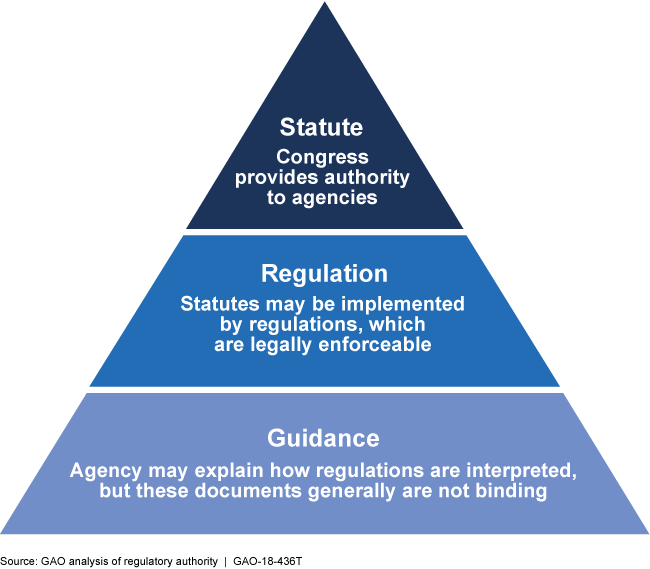
As a reminder, this is a proposed rule, meaning that the policy changes summarized below have not been finalized. The federal government has an elaborate set of procedures, often taking months or more, before a proposed rule is turned into a final ruling. You can read more about the federal rulemaking process here. This particular proposal has been fast-tracked, with all impacted agency heads releasing their agency-level implementation control to OMB.
We have broken down the proposed rule changes below into three main categories:
- Proposed rules on agency review and new grant requirements
- Proposed rules on foreign collaboration
- Proposed rules on conferences, professional society memberships, and publishing costs
How to Respond
We are calling on the scientific community to take action and provide input on this proposed rule. As required by the Administrative Procedures Act and substantial case law, government agencies must consider all public comments before issuing a final ruling. The proposed rule is open to public comment until 13 July, and AAS has created an Action Alert to easily submit comments.
While our action alert provides an example script to help you craft your message, we highly encourage you to write more details about your concerns and/or any personal insights for how this proposed rule may affect you, your research group, and/or your institution. As detailed in this post by the National Employment Law Project, the strongest public comments offer a unique perspective that agencies must respond to.
A robust public comment will also cite specific section numbers, tell a story of who will be harmed by the rule change, and answer questions like the following:
- How would you be harmed by the change? (If possible, use numbers to demonstrate the harm.)
- How certain is it that harm will take place?
- Did you make important life decisions based on the current rule?
- What scientific capabilities would be lost if international collaboration was terminated?
- What additional administrative burdens would this rule add in terms of time or money?
If you would prefer to submit a comment on your own (without the help of AAS software), you can do so at this web page. Follow the instructions to submit a comment on any/all parts of the proposed rule. You can choose to submit as an individual or anonymously. Any "interested person" can submit a comment.
Please email us at [email protected] if you have any questions about this proposed rule or how to submit a public comment. Please note that any messages with crude or inflammatory language will not be passed on, and please be respectful during any communications with our federal agencies. (Messages should align with the AAS Mission and Vision Statement and the AAS Code of Ethics.)
Proposed rules on agency review and new grant requirements
Section 200.205: Federal Agency Review of Merit of Proposals
OMB proposes establishing "a new pre-issuance review process," where:
“Federal agencies must ... ensure that Federal award proposals selected for funding are consistent with applicable law, Federal agency priorities, and the national interest. In doing so, Federal agency heads must designate one or more senior appointees to conduct a pre-issuance review of all discretionary awards.”
The proposed rule includes the following principles that would be applied to this pre-issuance review:
- Discretionary awards must, where applicable, demonstrably advance the President’s policy priorities.
- Discretionary awards must not be used to fund, promote, encourage, subsidize, or facilitate:
- Racial preferences or other forms of racial discrimination by the recipient, including activities where race or intentional proxies for race will be used as a selection criterion for employment or program participation;
- Denial by the recipient of the sex binary in humans or the notion that sex is a chosen or mutable characteristic;
- Illegal immigration; or
- Any other initiatives that compromise public safety or promote anti-American values.
- All else being equal, preference for discretionary awards should be given to institutions with lower indirect cost rates.
- Discretionary awards should be given to a broad range of recipients. Research grants should be awarded to a mix of recipients likely to produce immediately demonstrable results and recipients with the potential for potentially longer-term, breakthrough results, in a manner consistent with the notice of funding opportunity.
- In performing activities under Federal awards, applicants should commit to complying with administration policies, procedures, and guidance respecting Gold Standard Science.
- Discretionary awards should include benchmarks for measuring success and progress towards relevant goals and, as relevant for awards pertaining to scientific research, a commitment to achieving Gold Standard Science.
- To the extent institutional affiliation is considered in making discretionary awards, agencies should prioritize an institution’s commitment to rigorous, reproducible scholarship over its historical reputation or perceived prestige. For science grants, agencies should prioritize institutions that have demonstrated success in implementing Gold Standard Science.
The proposed rule notes that the pre-issuance review may form the basis of a decision not to select an applicant to receive a federal award. It also notes that “when conducting a pre-issuance review, senior appointees (or their designee) must not ministerially ratify or routinely defer to the recommendations of others, but must instead use their independent judgment when evaluating Federal award proposals.”
In practice, these rules could harm the ability of scientists at certain institutions to secure grants, irrespective of the strength of their grant proposal.
While Gold Standard Science is mentioned multiple times in this section but never explicitly defined, it is presumably referring to the broad definition listed within Section 3 of Executive Order 14303.
In Section 200.205(d), the document states “Nothing in this part must be construed to discourage or prevent the use of peer review methods to evaluate proposals for discretionary awards or otherwise inform agency decision making, provided that peer review recommendations remain advisory and are not ministerially ratified, routinely deferred to, or otherwise treated as de facto binding by senior appointees or their designees.”
While program officers and agency division/section leadership have historically reserved the right to overrule peer review panel recommendations for a variety of factors (see the National Science Foundation’s explanation of its proposal review process as one example), this new section bestows much more authority into the hands of political appointees, rather than peer review panels and subject-matter experts within a federal agency, into the decision-making process.
Much of the language in this section echoes the 7 August 2025 Executive Order on “Improving Oversight of Federal Grantmaking.” AAS led a coalition of more than 50 scientific societies in submitting a letter to Congress detailing our concerns with changes to the merit review and federal grantmaking process, which you can read here.
Section 200.300: Statutory and national policy requirements
This section includes the proposal that “the Federal agency or pass-through entity must ensure that Federal awards and subawards are not used to fund, promote, encourage, subsidize, or facilitate” diversity, equity, inclusion, and accessibility policies, principles, or practices that violate any applicable Federal anti-discrimination laws.
Section 200.340 and 200.341: Termination and suspension
OMB proposes to revise Section 200.340 to codify and expand the authority to terminate active grants at the discretion of the Federal agency or pass-through entity, to the extent permitted by law, “including if a Federal award does not effectuate program goals, Federal agency priorities, or the national interest as they exist at the time of the termination.”
The proposal also adds a provision for temporary suspension of grants as Section 200.340(e):
“The Federal agency or pass-through entity, to the extent permitted by law, may at any time issue a written order temporarily suspending a Federal award in part or its entirety if the Federal agency or pass-through entity determines that a suspension is in the interest of the Federal agency or pass-through entity. A suspension order under this provision must not exceed a period of 90 days unless the parties mutually agree to an extended period.”
On the notification of termination requirement listed in the proposed revision of Section 200.341, OMB adds the following regarding terminations at the discretion of federal agencies:
“A brief summary of the reason or reasons for finding that termination is in the interest of the Federal agency or pass-through entity. The reason or reasons may apply to an individual award or class of awards. The Federal agency or pass-through entity is not required to provide a detailed or exhaustive analysis.”
This proposed change would allow agencies to cancel grants with little explanation, creating an opaque and uncertain environment for grantees who rely on federal funding to perform their research.
Proposed rules on foreign collaboration
Section 200.202(e): Program planning and design: eligibility of entities for research and development awards
Section 200.202(e) would modify the eligibility of entities for research and development awards, where:
“Federal awards for research and development must be made to entities that are organized under the laws of the United States, a State, or Tribal government. Federal agencies may not issue Federal awards for research and development to foreign entities except where expressly authorized by statute or where a compelling interest exists for the agency’s mission, the administration’s priorities, and for the United States, as determined by the agency’s senior appointee.”
Furthermore, federal agencies must apply a "domestic-first framework," where international components of a federal grant may be included only if the agency deems it necessary for program objectives and national interest.
Section 200.220: Prohibition on using Federal funds for foreign collaborations
Section 200.220 would prohibit the use of funds "to support a bilateral or multilateral collaboration, agreement, program, or activity with a covered foreign country or covered foreign entity," where a "covered foreign country" refers to any country designated by statute, Executive order, or other federal law as a foreign adversary, a country of particular concern or a country subject to sanctions or restrictions relating to national security, defense, or intelligence activities. The prohibition defined here “applies regardless of whether Federal funds are used for direct programmatic activities, research, technical assistance, travel, or indirect costs allocable to such collaborations.”
Federal agencies would be able to authorize exceptions to this prohibition in Section 200.220 if they determine that the activity “does not pose a risk to national security and is in the national interest of the United States.”
In practice, these proposed changes would expand the authority of the Wolf Amendment — a law passed by Congress in the Department of Defense and Full-Year Appropriations Act, 2011 (and added annually to appropriations bills since then) that prohibited NASA and the Office of Science and Technology Policy from collaborating with China — for all US science agencies and for any collaborators deemed as a covered foreign entity. If you are interested in learning more about the Wolf Amendment and its repercussions, we recommend this discussion.
Proposed rules on conferences, professional society memberships, and publishing costs
Section 200.432: Conferences
OMB has proposed an addition that states “the costs for attending conferences are allowable only if participation in the conference is expressly approved by the Federal agency and included in the terms and conditions of the Federal award.” This proposed rule would directly stifle the ability of scientists to freely attend conferences of their choosing and hinder collaboration that is crucial to scientific progress.
Section 200.454: Memberships, subscriptions, and professional activity costs
This section would be revised to state that federal funds can only be used to pay for professional society memberships “if necessary to fulfill the award requirements. Such costs must receive prior written approval of the Federal agency.” This section also proposes changes to the current rule that would make costs of subscriptions to professional or academic periodicals and membership in organizations whose primary purpose is “issue advocacy” unallowable. Since it is not clear what constitutes a professional membership as “necessary” to fulfill award requirements, and since requiring explicit agency approval for society memberships causes a burden on both the granting agency and the grantee, this proposed rule could hinder the ability of the astronomical community to be members of the AAS and impact the Society’s ability to best serve its members.
Section 200.461: Publication and printing costs
Under this revised section, “publication costs (including page charges, article processing charges (APCs), or similar fees such as open access fees for professional journal publications and other peer-reviewed publications) are unallowable under Federal awards.” The only exception to this proposed rule would be if publication costs are required by federal statute or approved in advance by the federal agency “on a case-by-case basis.” It further notes that “a general requirement to make results publicly available must not be construed as authorizing publication costs.”
OMB states their rationale for this proposed rule on publishing costs as the following:
"Publication costs are not inherently necessary to carry out the core programmatic objectives of most Federal awards. In many cases, such activities are discretionary, vary widely in scope and costs, and may serve institutional, professional, or reputational interests rather than the specific objectives of the Federal program."
The AAS hosts multiple fully open-access journals across astronomy. The community, as embodied by the AAS, owns the journals. While we do not charge subscription fees, the relatively low publications costs for articles support our coordination of peer review, the management of the full editorial process, data editor support for authors, historically consistent copy-editing done by humans, and the preparation of articles for long-term digital archiving and discovery. Prohibiting the use of federal funds to support publishing costs would weaken the US’s ability to conduct, publish, and disseminate exemplary science and disproportionately harm non-profit scientific societies and publishers like the AAS.
Related content: Take the 2026 AIP Career, Work, and Current Issues Survey