Impacted Members/Scientists: Request a membership waiver, seek meeting support, and other resources. Learn more. For the latest public policy updates, please visit this page.




23 April 2026
The Early-Career Prizes — Not All the Same!

Alice Monet US Naval Obs. (retired)
The AAS prizes include three that are designed to honor astronomers in the early phases of their careers: the Annie Jump Cannon Award, the Helen B. Warner Prize, and the Newton Lacy Pierce Prize. These are distinct prizes with different selection criteria and rules. All are awarded annually. If you plan to nominate an early-career astronomer you know, or yourself, for one of these prizes, here’s the information you’ll need for a successful nomination.
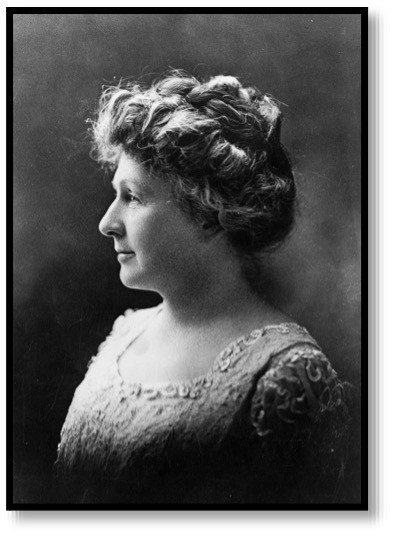
Annie Jump Cannon Award
Annie Jump Cannon (1863−1941) was an American astronomer whose work on cataloguing stars led to the development of the Harvard Classification Scheme. An informative biography is posted in Wikipedia. In 1933, the Cannon Committee was established to manage this prize, which was awarded for the first time, in 1934, to Cecilia Payne-Gaposchkin. In 1974, administration of the prize was turned over to the American Association of University Women. The AAS assumed responsibility for the prize in 2005.
The Cannon Award, given annually, is presented for outstanding research and the promise for future research by a postdoctoral woman researcher. To be eligible, a nominee must be a female astronomer and a resident of North America, or a member of a North American institution stationed abroad, as of the date the award is announced. The PhD will have been earned within five years of the award year. However, suspensions of career progress due to documented family or medical leave may be allowed as a factor in considering a person's eligibility. Because this prize is awarded, in part, on the promise for future research, the nominee must provide a five-year research plan as part of their nomination package.
Helen B. Warner Prize
Helen B. Warner was a philanthropist with an impressive portfolio. She is credited with establishing the Cummington (MA) Museum in honor of her father, Worcester Reed Warner, co-founder of the telescope-making firm Warner & Swasey. She was a benefactor for astronomy research at the Case Institute of Technology (now Case Western Reserve University) and supported the Cleveland Art Museum and the Phelps Memorial Hospital in Tarrytown, NY. She died in 1971 in her home in Ardsley-on-Hudson, NY, at age 76. The first recipient of the Warner Prize was Aden B. Meinel in 1954.
The Warner Prize recognizes an early-career individual for a significant contribution made to observational or theoretical astronomy during the five years preceding the award. To be eligible, an awardee will not have reached 36 years of age in the year designated for the award or will be within eight years of receipt of their PhD. Unlike the Cannon Award, there is no consideration given to career interruptions. A nominee must be a resident of North America or a member of a North American institution stationed abroad as of the date the award is announced.
Please note that no candidate is eligible for both the Warner and Pierce prizes.
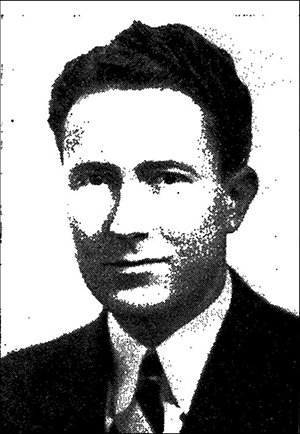
Newton Lacy Pierce Prize
Newton Lacy Pierce was a member of the Princeton University Department of Astrophysical Sciences for the last 13 years of his life. He died in 1950 at the age of 45. Pierce was an observational astronomer with a particular interest in eclipsing binary stars. The Pierce Prize recognizes outstanding achievement of an early-career individual over the past five years in observational astronomical research based on measurements of radiation from an astronomical object.
The inaugural Pierce Prize was awarded in 1974 to Edwin M. Kellogg.
The successful candidate must be an astronomer who has not attained 36 years of age in the year designated for the award. (Note, however, that suspensions of career progress due to documented family or medical leave may be allowed as a factor in considering a person's eligibility.) The candidate must be a resident of North America or a member of a North American institution stationed abroad at the time of the award announcement.
As noted above, no candidate is eligible for both the Pierce and Warner prizes.
Recipients of the Cannon, Warner, and Pierce prizes receive an honorarium (currently $1,500), an invitation to present a lecture at one of the semiannual AAS meetings, meeting registration for the prize recipient, travel expenses for the meeting at which the lecture is given, and a framed prize certificate.
These three awards comprise the full set of AAS prizes for early-career astronomers. Nominations are being accepted through 30 June for all three prizes. Complete descriptions of each prize, including past winners, can be found on the AAS prize webpages. You can also find detailed instructions on the nomination process. If you plan to nominate a colleague, a friend, or yourself, please start now!