Impacted Members/Scientists: Request a membership waiver, seek meeting support, and other resources. Learn more. For the latest public policy updates, please visit this page.




28 May 2025
AAS 246 Special Session — The Eclipse Effect: Organizing for Extraordinary Events

Richard Fienberg Running Hare Observatory
Debra E. Ross
KidsOutAndAbout.com
Welcome to the AAS Education Committee Blog! Our blog features posts from astronomers and educators in the extended AAS community, curated by the AAS Education Committee. Subscribe here to receive future posts and other astronomy education news directly into your inbox every two weeks; also follow us on Bluesky and Instagram. We welcome guest article submissions! — AAS Education Committee.
If you’re attending the 246th AAS meeting in Anchorage, Alaska, and plan to engage in any type of public activity, you may find a special session on Monday afternoon, June 9th, of interest. Organized by the AAS Solar Eclipse Task Force, it is not about eclipses per se, but instead focuses on something we learned a lot about while working on eclipse planning over the last decade: how bringing diverse stakeholders together to create awesome experiences for diverse audiences can strengthen existing communities and foster new ones.
Extraordinary moments create extraordinary possibilities — but only if leaders know how to harness them. The AAS Solar Eclipse Task Force successfully prepared millions of people across North America to experience the 2017, 2023, and 2024 solar eclipses, and in so doing became a case study in large-scale community coordination. Across the country, leaders from science, education, government, tourism, and advocacy had to prepare, educate, and collaborate in ways they had never done before. In the process, they built something lasting: new networks of people with widely diverse backgrounds, skills, and resources. We are calling this phenomenon — the transformation of a temporary network formed in response to a unique challenge or opportunity into a lasting community — the Eclipse Effect.
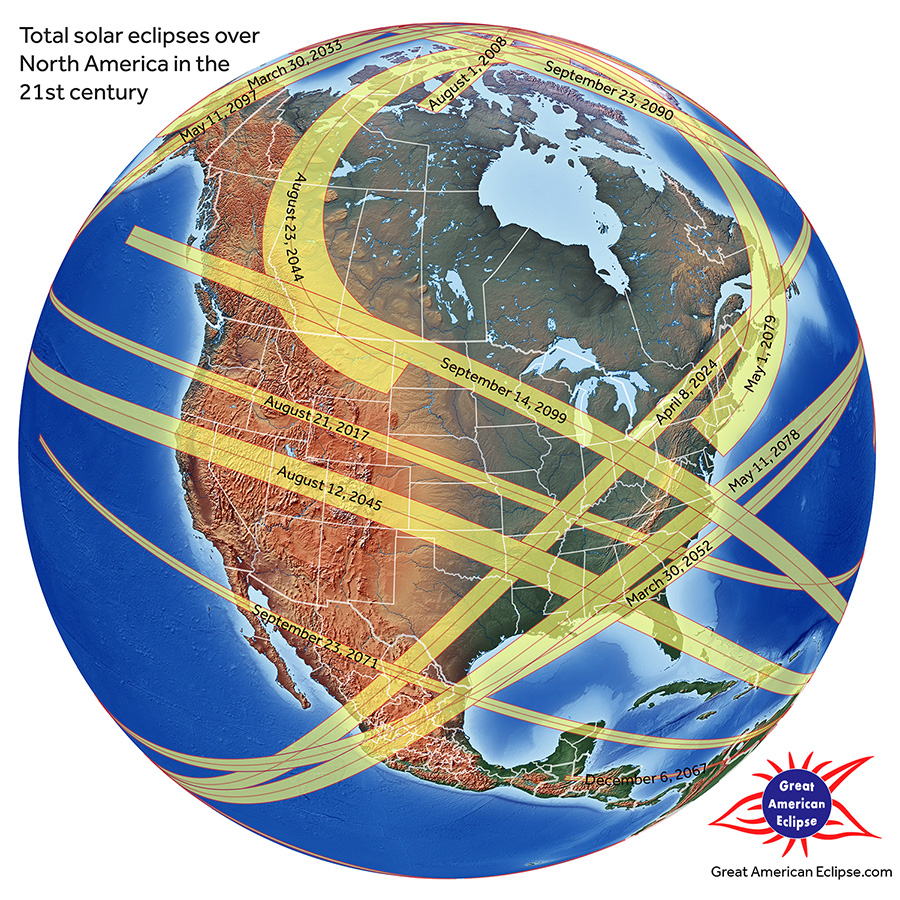
The next total solar eclipse to touch US soil occurs on 30 March 2033, when the path of totality crosses Alaska but no other states. That may seem a long way off, but as we learned from the recent eclipses, it’s never too early to start planning. Furthermore, the lessons of the Eclipse Effect go far beyond eclipses. The scientific community is currently experiencing a very different catalyst for organizing: the sudden, sweeping budget cuts and funding freezes from the new administration. Researchers, institutions, and early career scientists find themselves in a moment of uncertainty, fear, and rapid change. But just as happened with the American solar eclipses, extraordinary moments can be leveraged to create new, powerful collaborations that strengthen the field for the long term. This session will explore how the strategies that helped communities organize for the eclipse can help the astronomical community respond to today’s challenges and those of the future.
This Special Session will feature six speakers, each of whom played a pivotal role in organizing diverse communities for the recent eclipses. Their experiences span astronomy, tourism, accessibility, indigenous outreach, citizen science, and conservation. Each speaker will share key lessons in community-building that apply not only to eclipse organizing but also to the urgent challenges facing the scientific community today.
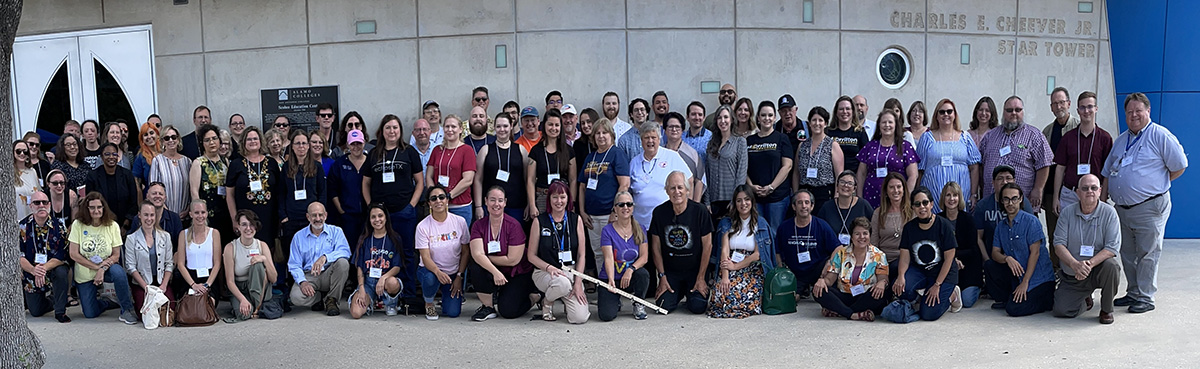
- Debra Ross (Co-Author, The Eclipse Effect; Co-Chair, AAS Solar Eclipse Task Force): How to turn a moment of crisis or opportunity into a long-term gain — why some efforts fade while others create lasting communities.
- Rick Fienberg (Project Manager, AAS Solar Eclipse Task Force): The power of cross-disciplinary collaboration — how bringing in partners beyond your immediate field leads to more successful initiatives.
- Cody Cly (Graduate Student, UT San Antonio; Navajo/Diné Tribe Member): Navigating multiple communities at once — how to bridge cultural, scientific, and institutional divides to build stronger networks.
- MaryKay Severino (Education Director, ARISA Lab; Eclipse Soundscapes Project Co-lead): Eclipse Soundscapes — how designing for broad, multisensory participation leads to greater engagement, innovation, and success in citizen science.
- Trish Erzfeld (Director of Tourism, Perry County, MO): Communicating complex topics to the public — how to build trust, interest, and engagement in any large-scale effort.
- Dawn Davies (Night Sky Program Manager, Texas Hill Country Alliance): Managing competing interests in public initiatives — how to balance differing priorities while keeping the big picture in focus.
The session will include an interactive Q&A period, providing attendees with an opportunity to discuss how these lessons can be applied to their own work and to the challenges currently facing the astronomy and science education communities.
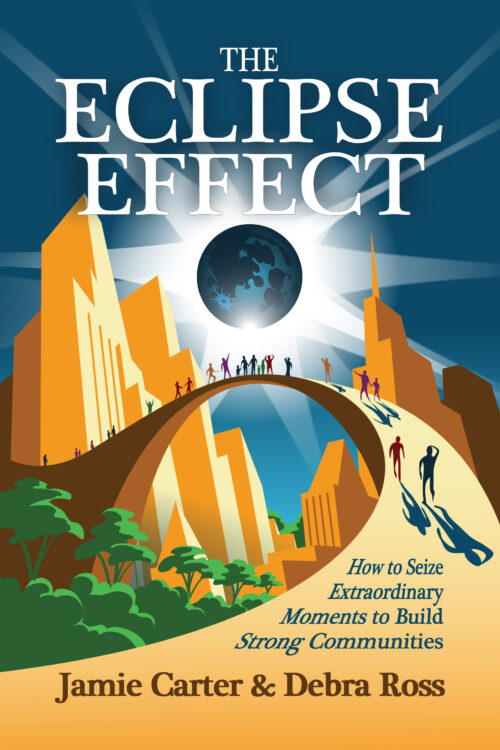
These ideas will be explored in greater depth in the forthcoming book The Eclipse Effect: How to Seize Extraordinary Moments to Create Strong Communities (Post Hill Press, December 2025) by Jamie Carter and Debra Ross.