Impacted Members/Scientists: Request a membership waiver, seek meeting support, and other resources. Learn more. For the latest public policy updates, please visit this page.




24 February 2025
The University of Mars Gamified Astronomy Course
Jane Charlton Pennsylvania State University / AstroVenture
Welcome to the AAS Education Committee Blog! Our blog features posts from astronomers and educators in the extended AAS community, curated by the AAS Education Committee. Subscribe here to receive future posts and other astronomy education news directly into your inbox every two weeks; also follow us on Twitter and Instagram. We welcome guest article submissions! — AAS Education Committee.
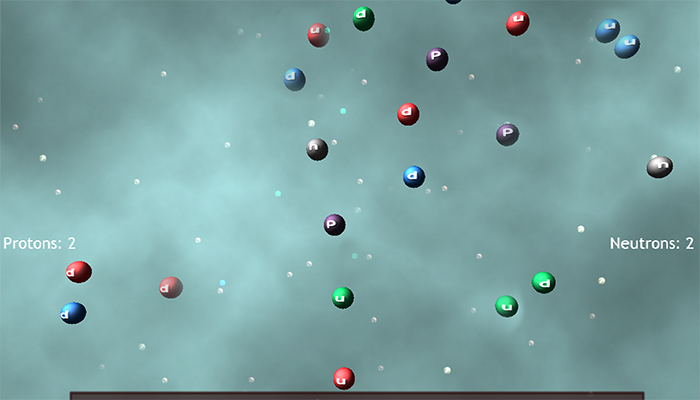
Most students at Penn State University study “abroad” at the University of Mars at some point during their college years! The University of Mars experience includes mini-games, online labs, interactive lessons, virtual simulations, and an exciting storyline. All of the content usually covered in a general education astronomy class is presented in an interactive way in this single application, designed by Jane Charlton, Andrew Mshar, and Nahks Tr’Ehnl at Penn State. Students first explore the differences between Mars and Earth, then visit planets and moons in our solar system and explore nearby stars and exoplanets. Finally, University of Mars students venture out into the Universe and combine particles to build the Universe, starting from its basic constituents, quarks, and leptons.

Student impressions about the University of Mars experience are almost universally positive. Students often comment that a gamified interactive approach is fun and makes science more interesting. They are immersed in the Universe, and flying between planets, stars, and galaxies gives a more meaningful impression of the vast scale of the Universe. Students also indicate that difficult concepts are more understandable when presented in such an interactive way. One student commented that "the process of learning is really joyful with the University of Mars," while another said, "Playing through the game was a great new way to experience learning, and I feel like a lot more of the information stuck as opposed to sitting in a lecture."
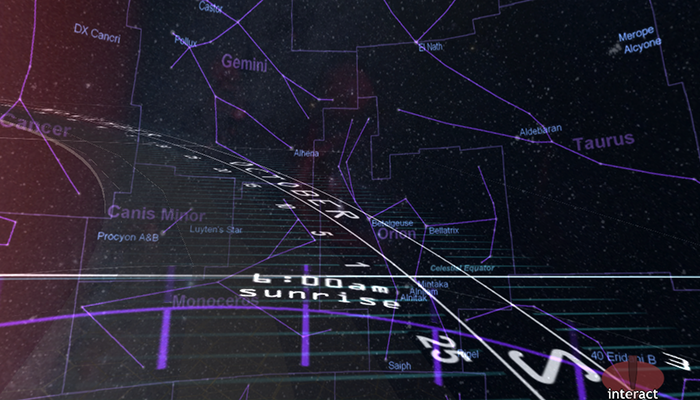
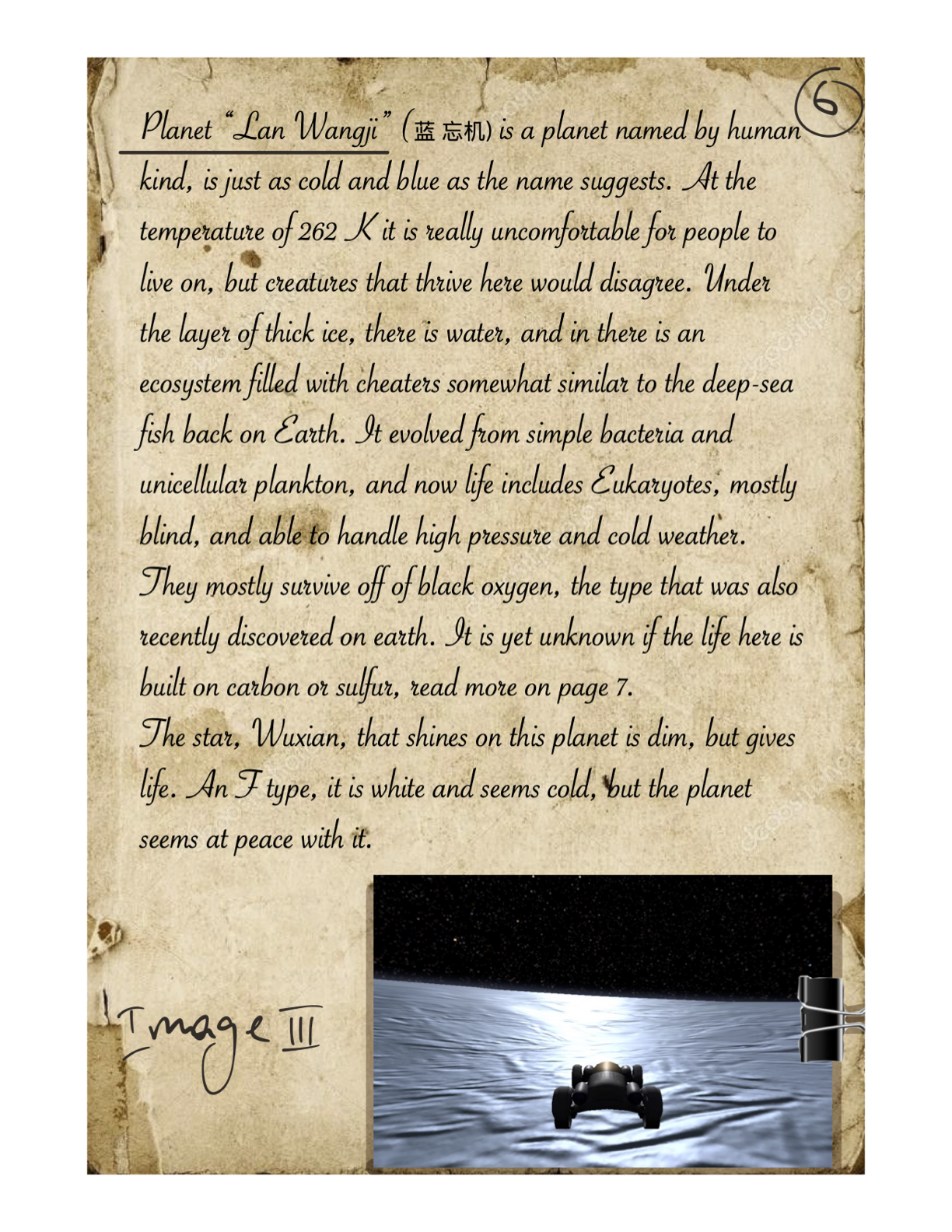
The most popular astronomy offering at Penn State is an interdomain general education course called “Astro 7N: The Artistic Universe.” This course includes not only astronomy but engaging related art projects and creative writing assignments. This gives nearly every student a feeling of confidence because at least one of these areas is a strength for them. For the art projects, students begin with learning the principles of photography and then they apply them to taking sunset photos. In the second project, they create a planetary landscape, using a medium of their choice. The third project asks them to create artwork depicting an alien that has characteristics coincident with exoplanets that they design using an interactive tool that makes a world they can explore by flying through the scene. The fourth project teaches them about color, and they are able to combine Hubble Space Telescope images and colorize them using Photoshop. Students often mention how much they have missed such artistic pursuits, which they put aside due to their busy college schedules.

University of Mars students also enjoy role-playing by writing (or recording) creative diary entries or letters home that describe experiences they have had exploring space. Topics include getting used to life on Mars, encountering alien life for the first time, and even considering whether collective consciousness is an appealing idea. Despite the rubric being very simple (to earn 100%, write 500-800 words “on topic”), students are often motivated to excel. They enjoy participating in a two-stage ranking process that leads to the top three in each section of 750 students. Students receive no higher grade for being in the top three. They are motivated simply because they choose to engage in the activity. This connects them in a meaningful and personal way with the storyline of the University of Mars application.

With well over half the student body taking astronomy, many consider it to be a part of the "Penn State experience," and our department is known around campus. We aim to do more than teach concepts and reasoning. The immersive experience can convey to students an impression of how what humans have learned about astronomy can impact one's pondering of the nature of one's own life. The unique combination of story, game, creative writing, and projects provides an environment conducive to such personal growth.

Students at other colleges can also study at the University of Mars if their professors adopt it instead of a textbook. The company, AstroVenture, allows students to purchase the University of Mars app for $40, and provides a database that collects student game progress and in-game quiz scores and automatically transfers them to the course grade book. Some of our client faculty use the game to teach the concepts so that they can provide more discussion, guest speakers, and demonstrations in class. Others use the game as the centerpiece of a purely online course. Prof. Ohad Shemmer of the University of Northern Texas said, "First and foremost, it is clear that our students are loving the University of Mars platform as indicated by student evaluations. As a consequence, our department is finally seeing a resurgence in intro-level astronomy enrollment that is reaching new highs." If you are interested in a free instructor inspection copy of the University of Mars, or if you have any questions, you can reach AstroVenture at [email protected], or you can learn more about the game at their website.