Impacted Members/Scientists: Request a membership waiver, seek meeting support, and other resources. Learn more. For the latest public policy updates, please visit this page.




Impacted Members/Scientists: Request a membership waiver, seek meeting support, and other resources. Learn more. For the latest public policy updates, please visit this page.
The National Science Board (NSB) is essentially the board of directors for the National Science Foundation. By law, NSB must report to the President and the Congress on "indicators of the state of science and engineering in the United States" in each even-numbered year. The Science and Engineering Indicators report (SEI) fulfills this requirement.
The press release, "U.S. Science and Technology Leadership Increasingly Challenged by Advances in Asia," has a top-level summary of the report.
The report presents data on 58 science and engineering indicators; this includes indicators that measure the performance and preparedness of K-12 students and teachers, the number of science, technology, engineering, and mathematics (STEM) degrees conferred, the size of the STEM workforce, the level of investment in research and development (R&D), and the level of return on that investment in R&D. The NSB SEI 2016 website allows you to delve into the report as much or as little as you'd like. I'll highlight some of the portions that have data specific to the physical sciences, and I encourage you to browse the website and report.
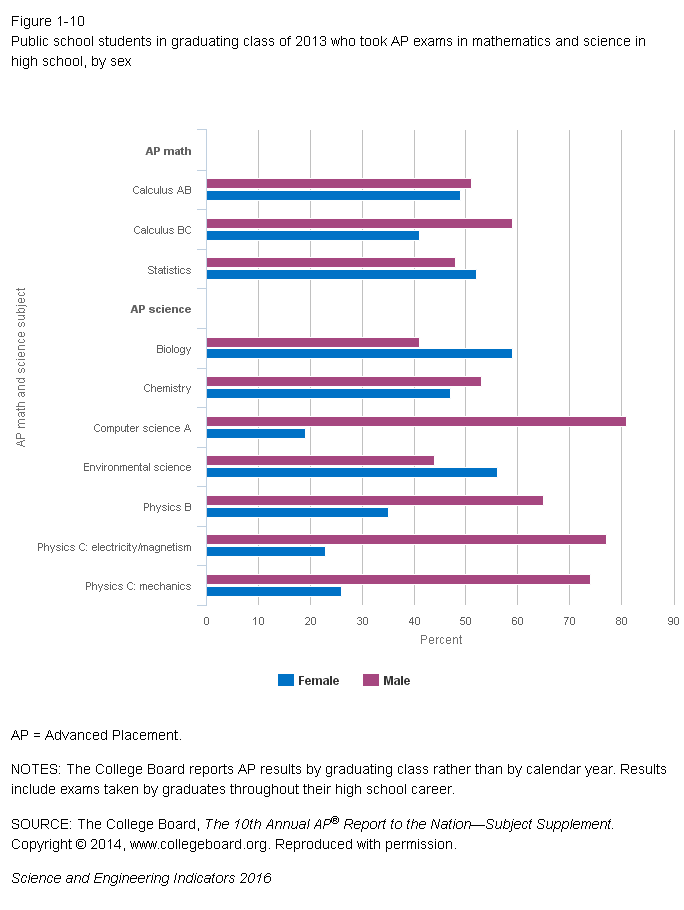
Chapter 1. Elementary and Secondary Mathematics and Science Education
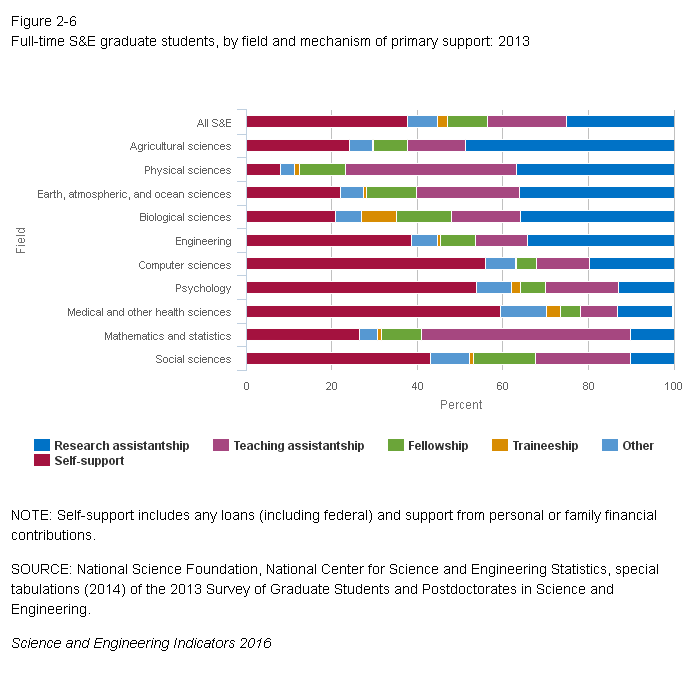
Chapter 2. Higher Education in Science and Engineering
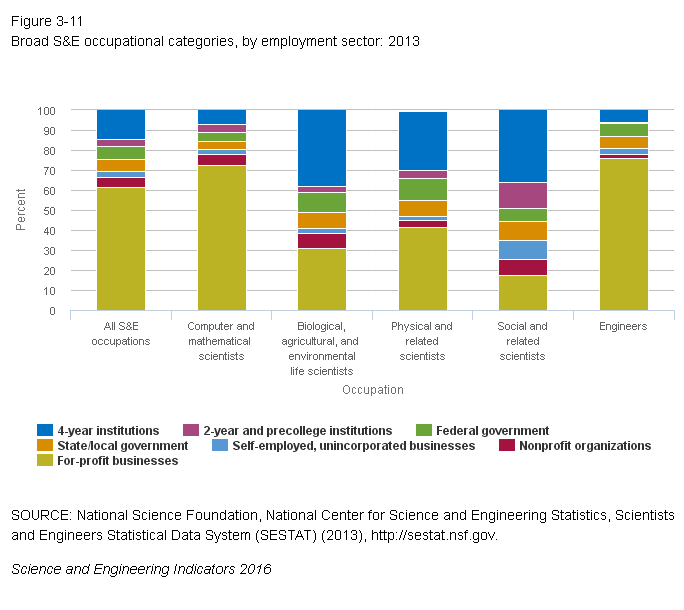
Chapter 3. Science and Engineering Labor Force
Chapter 4. Research and Development: National Trends and International Comparison
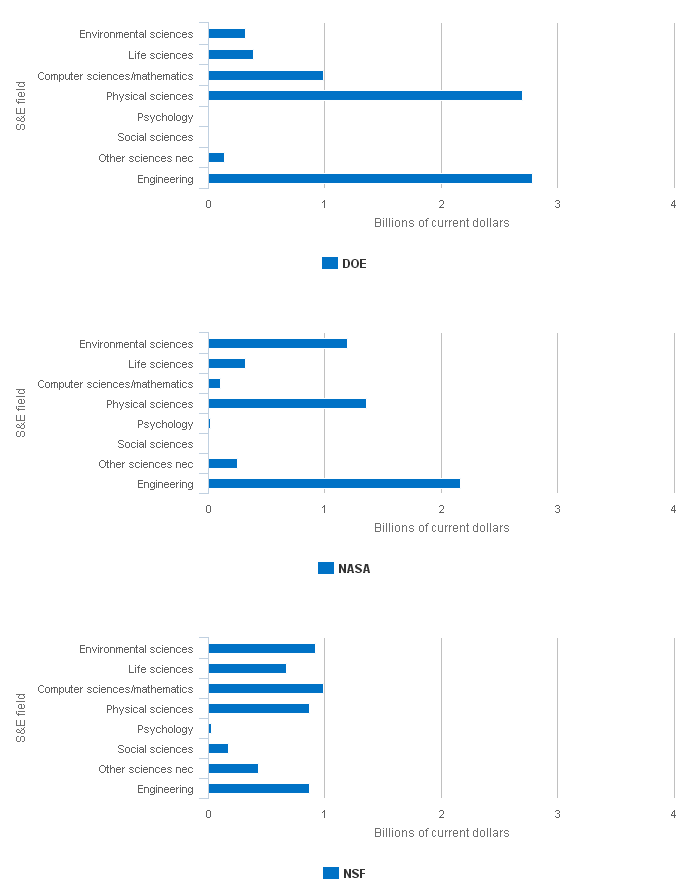
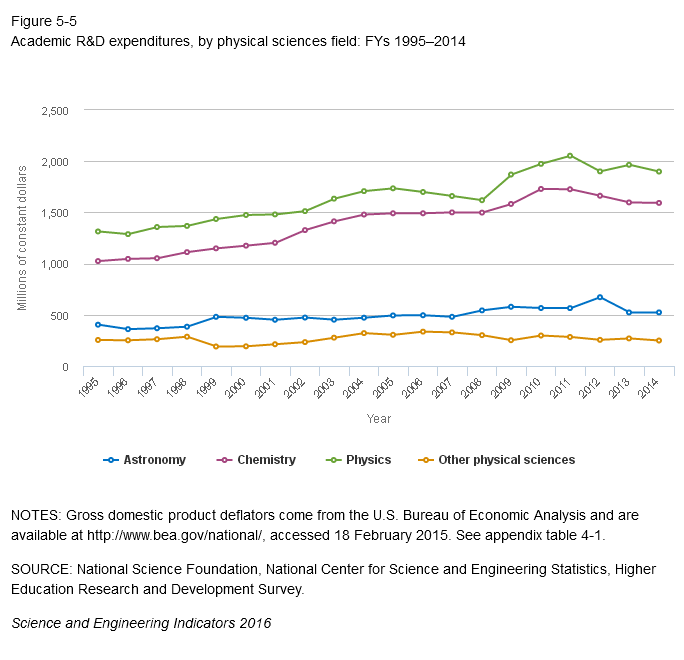
Chapter 5. Academic Research and Development
Chapter 6. Industry, Technology, and the Global Marketplace
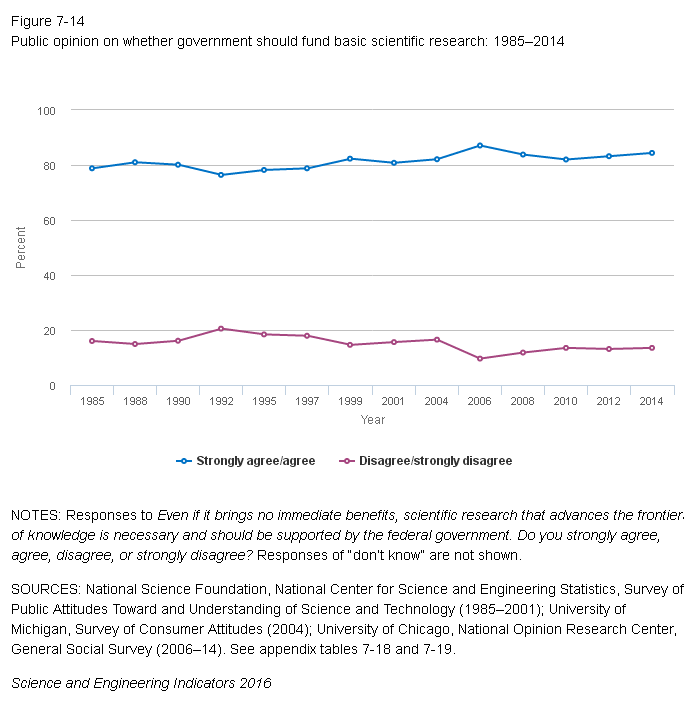
Chapter 7. Science and Technology: Public Attitudes and Understanding