Impacted Members/Scientists: Request a membership waiver, seek meeting support, and other resources. Learn more. For the latest public policy updates, please visit this page.




248th meeting
Meeting Program

248

248th
meeting of the American Astronomical Society
Pasadena, California
14
–
18 June 2026
Speaker Bios
Plenary Speaker
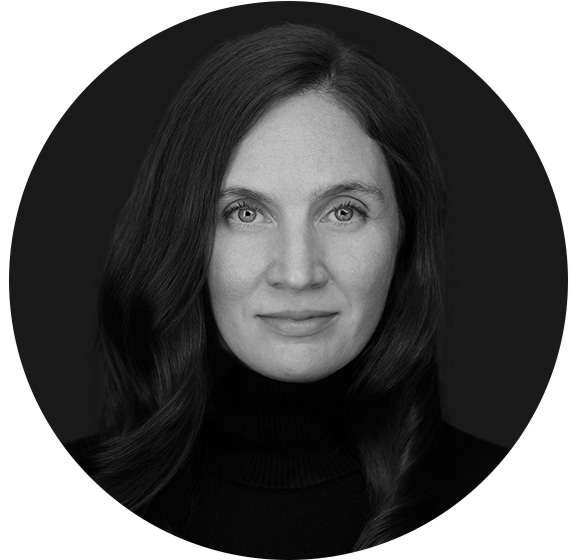
Cara Battersby is an associate professor of physics at the University of Connecticut, where she leads the Milky Way Laboratory. The lab works to uncover the secrets of our Galaxy's Center and the formation process of stars in varied environments, using large observational surveys, advanced numerical simulations, and their intelligent combination through machine learning. Dr. Battersby is an NSF CAREER awardee, Co-PI on two large ALMA and one large SMA program, and a Co-I on the PRIMA NASA Phase A Mission Concept. Dr. Battersby champions work-life balance, secretly wants to be Carl Sagan when she grows up, and works for a future with equal access to education.
Plenary Speaker
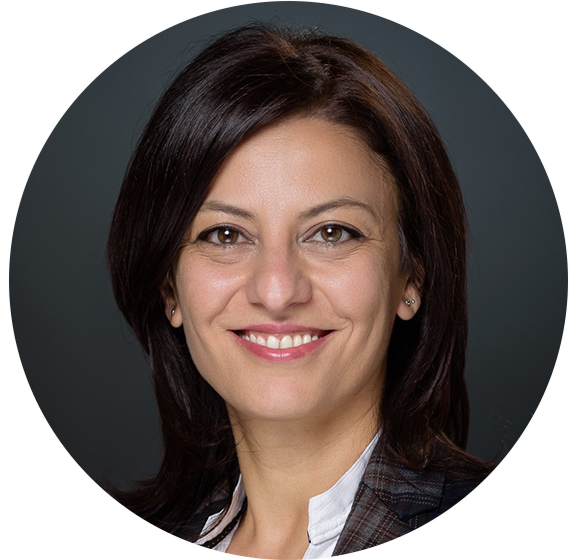
Esra Bulbul is a Turkish-American astrophysicist and group leader at the Max Planck Institute for Extraterrestrial Physics in Garching, Germany, where she leads the galaxy clusters and cosmology science within the High Energy Group. She is also a lecturer in physics at Ludwig Maximilian University of Munich. Her research focuses on the large-scale structure of the Universe, galaxy clusters, and the nature of dark matter and dark energy using multi-wavelength astronomical surveys. She is the lead scientist for cluster science and cosmology in the SRG/eROSITA collaboration and studies galaxy clusters to probe the growth of cosmic structure and constrain cosmological parameters. Bulbul received her Ph.D. in physics from the NASA Marshall Space Flight Center. Before joining Max Planck, she held positions at NASA’s Goddard Space Flight Center, MIT, and the Harvard-Smithsonian Center for Astrophysics.
Her work has been recognized with a European Research Council Consolidator Grant and the Mid-Career Prize from the American Astronomical Society High Energy Astrophysics Division. Her work on dark matter was selected by the American Physical Society as one of the top ten research highlights of the decade.
Plenary Speaker
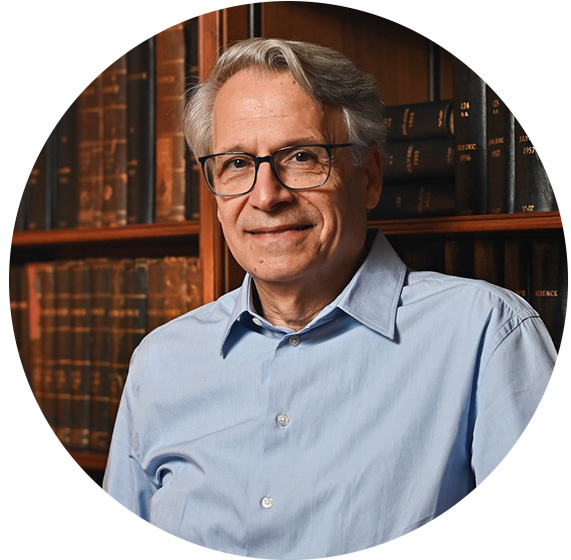
George Helou, Research Professor of Physics at Caltech, has worked on questions ranging from cosmology to the solar system, with an abiding interest in understanding galaxies, their empirical behavior, physical processes and evolutionary paths.
During his time as Executive Director of IPAC at Caltech, he oversaw science operations for a dozen space telescopes, ground-based surveys and major astronomical archives. He also participated in science advocacy, design and planning for several space missions.
His awards include the Kuwait Prize in Basic Sciences – Physics (2016), the Gruber Cosmology Prize (2018) recognizing the Planck Team, the AUB Doctorate of Humane Letters Honoris Causa (2018), and the NASA Distinguished Public Service Medal (2022). He was elected Fellow of the American Astronomical Society in 2022.
Plenary Speaker
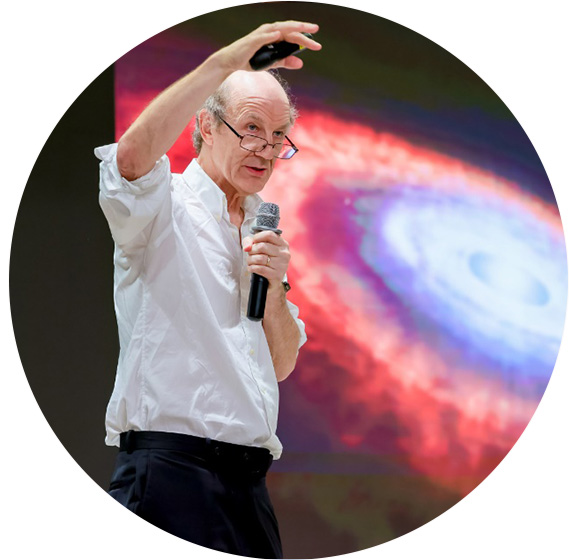
David Jewitt is a professor of astronomy in the Department of Earth, Planetary and Space Sciences at UCLA, where he telescopically investigates the small bodies of the solar system. These objects provide our best window into the early stages of solid body accumulation, and the best preserved material from the Sun's protoplanetary disk. At UCLA he has taught thousands of students in planetary science and oceanography. He is a member of the US and Norwegian Academies of Science and a recipient of the Shaw Prize in Astronomy and the Kavli Prize in Astrophysics.
Plenary Speaker
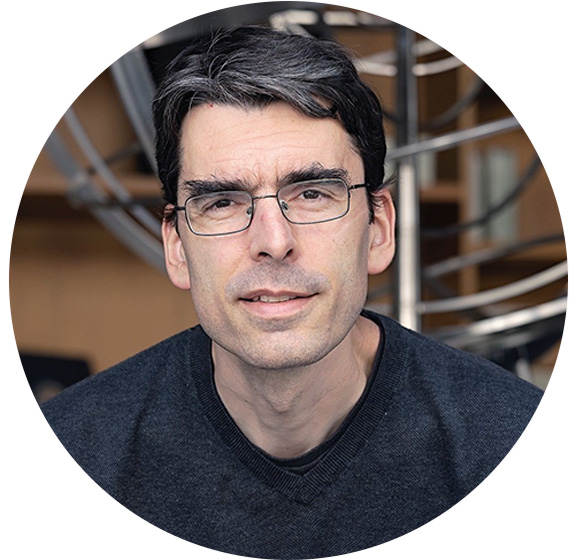
Mario Juric is a professor of astronomy at the University of Washington (UW) and director emeritus of UW's Institute for Data-intensive Research in Astrophysics and Cosmology (DiRAC). He is the P.I. of UW's contribution to the construction and operations of the Rubin Observatory, and leads the Observatory's efforts to discover and catalog asteroids, comets, and trans-Neptunian objects. His work focuses on using sky surveys to explore the solar system and the Milky Way, and astronomical data analytics with large datasets and AI.
Plenary Speaker
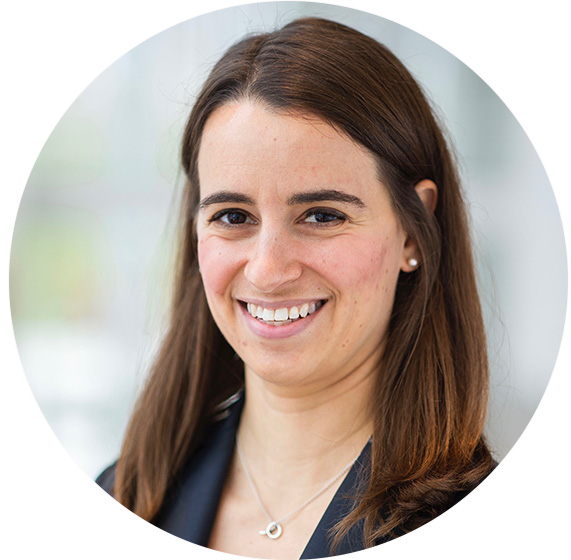
Eliza Kempton is a Professor of Astronomy & Astrophysics at the University of Chicago. Her research focuses on the atmospheres of extrasolar planets. She is a theorist who uses a range of modeling approaches combined with observational data as a means of probing the chemistry, thermal structures, and dynamics of exoplanet atmospheres. She is motivated by questions relating to the diversity of exoplanets that populate our galaxy and how that informs our understanding of our own solar system as well as planet formation and evolution more broadly.
Plenary Speaker
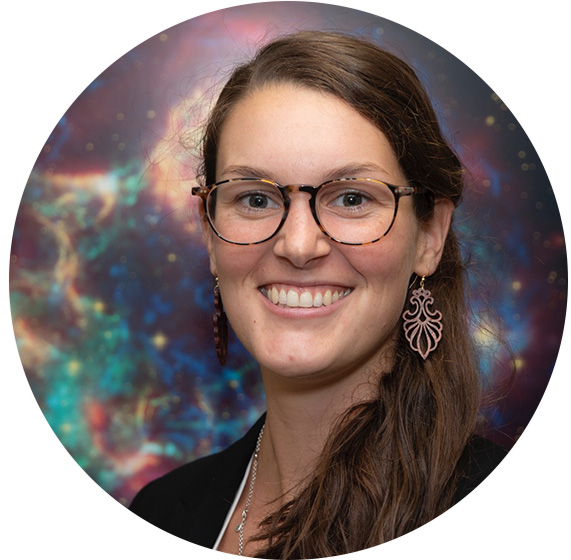
Carolyn Kierans is a Research Astrophysicist at NASA Goddard Space Flight Center. Her research focuses on deciphering the source of Galactic positrons, gamma-ray line astronomy, and the design and development of gamma-ray imaging telescopes. She received her undergraduate degree in physics from Simon Fraser University in Canada, and her PhD in physics from University of California, Berkeley working on the COSI balloon mission. She was awarded a NASA Postdoctoral Program fellowship to work at GSFC in 2018 and was hired there as a civil servant in 2020. Dr. Kierans is the Data Pipeline Scientist for the Compton Spectrometer and Imager (COSI) Small Explorer mission, the lead of the COSI Positron Science Team, and she is the recipient of the 2025 AAS HEAD Early Career Prize for her leadership as the Principal Investigator of the ComPair balloon mission.
Plenary Speaker
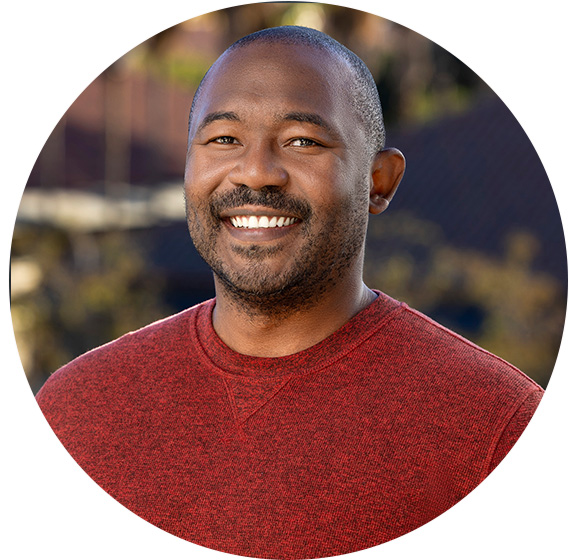
Sanmi (Oluwasanmi) Koyejo is an Assistant Professor in the Department of Computer Science at Stanford University and an adjunct Associate Professor at the University of Illinois at Urbana-Champaign. He leads the Stanford Trustworthy AI Research (STAIR) lab, which develops measurement-theoretic foundations for trustworthy AI systems, spanning AI evaluation science, algorithmic accountability, and privacy-preserving machine learning, with applications to healthcare and scientific discovery. His research on AI capabilities evaluation has challenged conventional understanding in the field, including work on measurement frameworks cited in the 2024 Economic Report of the President.
Koyejo has received the Presidential Early Career Award for Scientists and Engineers (PECASE), Skip Ellis Early Career Award, Alfred P. Sloan Research Fellowship, NSF CAREER Award, and multiple outstanding paper awards at flagship venues, including NeurIPS and ACL. He has delivered keynote presentations at major conferences, including ECCV and FAccT. He serves in key leadership roles, including Board President of Black in AI, Board of Directors of the Neural Information Processing Systems Foundation, and other leadership positions in professional organizations advancing AI research and broadening participation in the field.
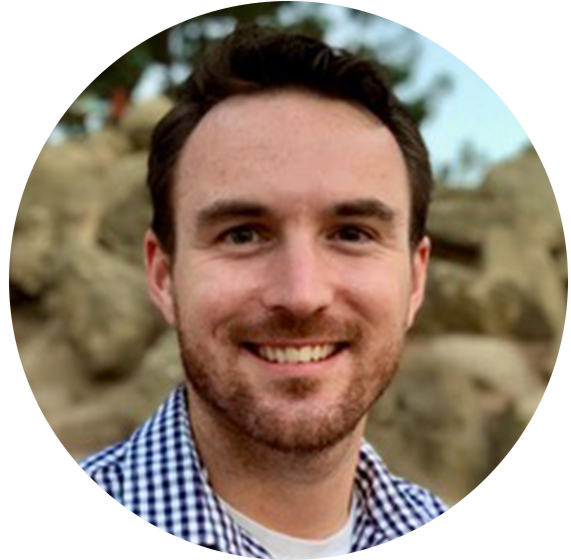
Helen B. Warner Prize for Astronomy
Kyle Kremer is an Assistant Professor of Astrophysics at the University of California, San Diego. His research focuses on compact objects in dense star clusters and their role in gravitational waves and high-energy astrophysics. Kremer combines large-scale N-body simulations with observational searches for compact object binaries to understand how stellar interactions in clusters produce binary black hole mergers, tidal disruption events, fast radio bursts, and other transients. Before joining UC San Diego in 2024, he was a NASA Einstein Fellow at Caltech and an NSF Astronomy & Astrophysics Fellow at Carnegie Observatories. Kremer received his PhD in Astronomy from Northwestern University in 2019.
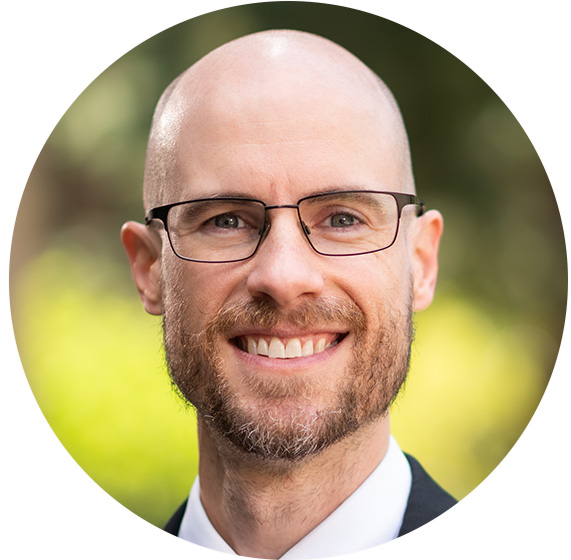
Plenary Speaker
Ian Roederer is an Associate Professor of Physics and Astronomy at North Carolina State University. His research addresses fundamental problems in nuclear astrophysics and near-field cosmology, using stellar chemistry to understand the formation and evolution of the Milky Way and Local Group and the origin of the heaviest elements. He is particularly interested in ultraviolet spectroscopy of metal-poor stars. Ian received his PhD in astronomy from the University of Texas at Austin.
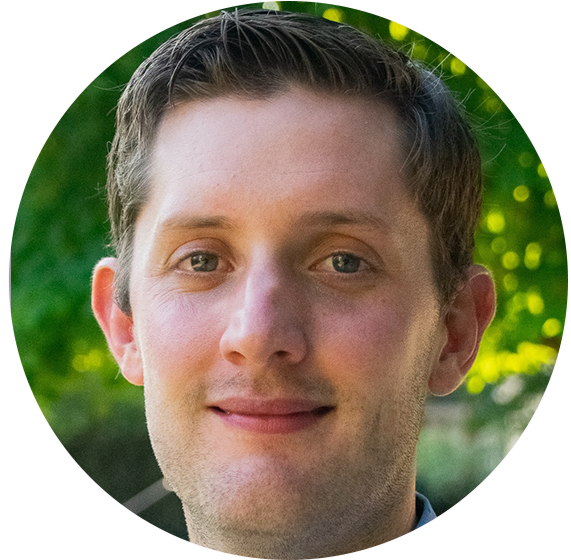
Fred Kavli Plenary Lecturer
Richard Teague is an astronomer working on understanding the formation of planetary systems through the lens of sub-millimeter interferometry. He earned PhD in Astronomy at Heidelberg University before moving onto a postdoctoral researcher position at the University of Michigan and then as a Submillimeter Array Fellow at the Center for Astrophysics | Harvard & Smithsonian. He is currently an Assistant Professor in the Department of Earth, Atmospheric and Planetary Sciences at MIT where he leads the Planet Formation Lab. Dr. Teague has made significant leaps in our understanding of protoplanetary disks, specifically in the mapping the physical and dynamical structures in three dimensions. Techniques that he developed allowed for the identification of localized dynamical perturbations which have been associated with embedded planets and the large-scale (magneto-)hydrodynamical instabilities which govern the evolution of the protoplanetary disk.
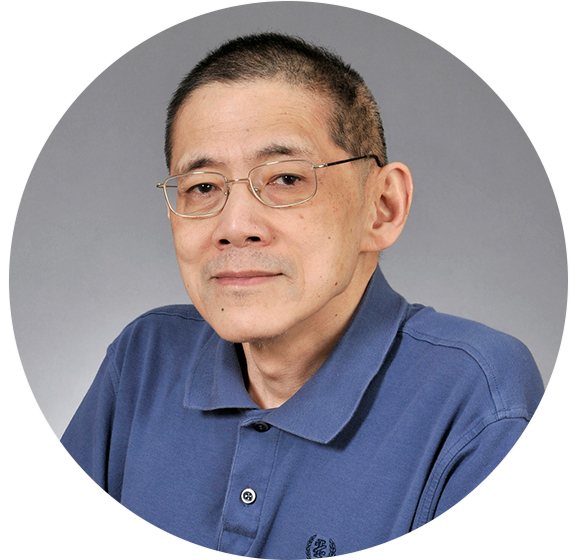
George Ellery Hale Prize
As an astronomy major, Yi-Ming Wang wrote his undergraduate thesis under the supervision of Eugene Avrett and George Withbroe at the Smithsonian Astrophysical Observatory; the thesis included an analysis of OSO-4 observations of a coronal hole near the Sun's south pole, although the author and his supervisors failed to recognize that it was a source of solar wind. He then switched to high-energy astrophysics and obtained an Sc.D. in physics at MIT under the supervision of the plasma physicist Bruno Coppi. Subsequently, he worked at the University of Sussex Astronomy Centre and at Bonn University, developing models for pulsar magnetospheres and accretion onto neutron stars. In 1986, he was offered a job in radio astronomy at the Naval Research Laboratory, but, due to a delay in his arrival, ended up working in solar physics instead. Over the next 40 years, he has collaborated with Neil Sheeley, Judith Lean, and many others on a wide range of topics, including the rotation and evolution of coronal holes, the evolution of the Sun's polar fields, modeling and predicting the solar wind, the role of meridional circulation in the solar dynamo, the role of interchange reconnection in coronal streamers, plumes, and jets, the long-term variation of total solar irradiance, the origin of impulsive energetic particle events, the interplanetary field strength as solar cycle predictor, and small-scale fields as the main source of coronal heating.